Physical Address
304 North Cardinal St.
Dorchester Center, MA 02124
Physical Address
304 North Cardinal St.
Dorchester Center, MA 02124
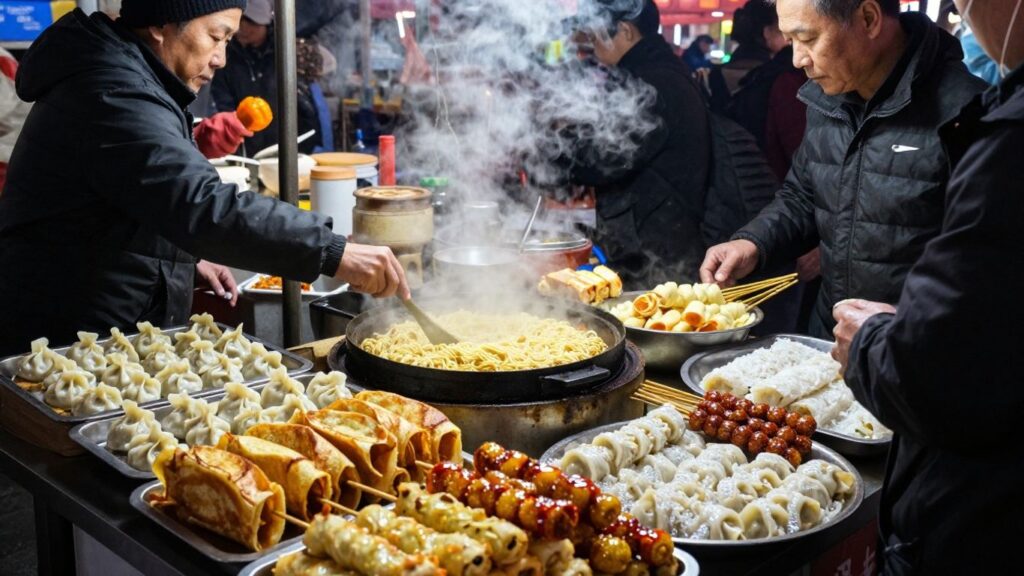
Chinese street food in China changes noticeably from one region to the next, so eating well means following local habits as much as choosing famous dishes.
Chinese street food is not one fixed cuisine. It is a collection of local habits shaped by climate, crops, migration, religion, work schedules, and generations of cooking at home. A breakfast stall in Tianjin feels different from a late-night skewer shop in Chengdu, even when both serve food from a wok or griddle. For international visitors, that variety is part of the pleasure of exploring beyond major landmarks.
We can use street food as a practical introduction to a city. The portions are often manageable, preparation is visible, and a short walk may reveal several specialties at once. For a broader sense of regional traditions, this Chinese cuisine guide is a useful companion to a market visit.
Local ingredients give street food its accent. Wheat is especially prominent in northern China, where we find chewy noodles, stuffed buns, pancakes, and flatbreads. Rice and rice flour are central farther south, appearing in noodle rolls, steamed cakes, rice noodles, and many breakfast dishes. Coastal cities add seafood, while inland regions often build flavor around preserved vegetables, lamb, beef, or chili.
The same cooking idea can change with the local pantry. A filled pancake may be crisp and eggy in one city, soft and layered in another, and folded around different herbs or sauces elsewhere. Rather than looking for a single national version, we should ask what the stall is doing with ingredients that are easy to find nearby.
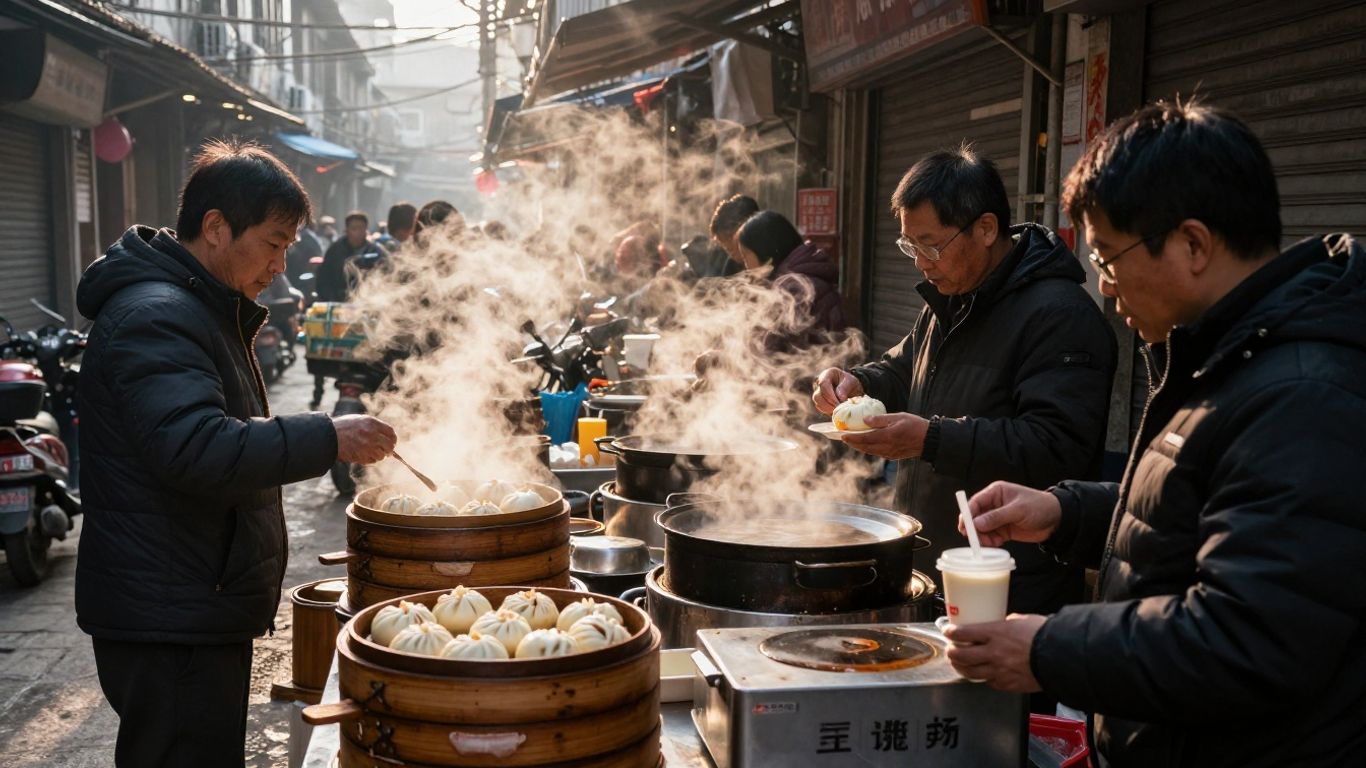
Street food fits into the rhythm of the day. Breakfast stalls may open before offices and schools become busy, serving soy milk, youtiao, baozi, or a hot griddle pancake to people on their commute. Afternoon snacks are more flexible: fruit on skewers, noodles, dumplings, or a small fried bite can bridge the gap between meals. At night, food streets become social places where friends share skewers, noodles, grilled seafood, and cold drinks.
We should not assume that “street food” means only an evening market. A morning walk often gives us a quieter, more local experience, while late-night districts reveal a city’s appetite after dark. This Chinese breakfast guide can help us recognize several morning staples before we arrive.
Some foods are made to order, while others are prepared in batches and served quickly. Watching a vendor stretch noodles, spread batter, fold a pancake, or lift dumplings from a steamer is part of the experience, but speed and turnover matter too. A busy stall may have a well-organized system: ingredients are portioned, cooking surfaces stay hot, and finished food does not sit for long.
Fresh preparation does not automatically mean every stall is right for us. We can observe whether raw and cooked ingredients are handled separately, whether utensils look clean, and whether food is protected from dust and excessive heat. Visible, steady turnover is often a more useful clue than a stall’s appearance alone.
Street food shows how people work, travel, socialize, and share space. A breakfast counter may be designed for a quick purchase, while a night market invites wandering and sampling. In Guangzhou, morning tea and dim sum connect food with conversation; in Xi’an, noodles and breads reflect northern and Silk Road influences; in Chengdu, spice and communal eating are woven into everyday life.
We can learn a great deal by noticing what local customers order, how they add sauces, and whether dishes are eaten standing, seated, or carried home. The best approach is curious rather than judgmental. A dish may look unfamiliar, but its place in the neighborhood usually makes more sense once we see who eats it and when.
A regional list is useful, but it should be treated as a starting point rather than a strict checklist. The dishes below are recognizable entry points into five major city food cultures, and each one has many local variations. We can try a famous specialty, then follow the crowd toward something less familiar.
The key is to order modestly at first. One snack rarely tells the whole story of a city, while two or three small portions can create a much more balanced meal.
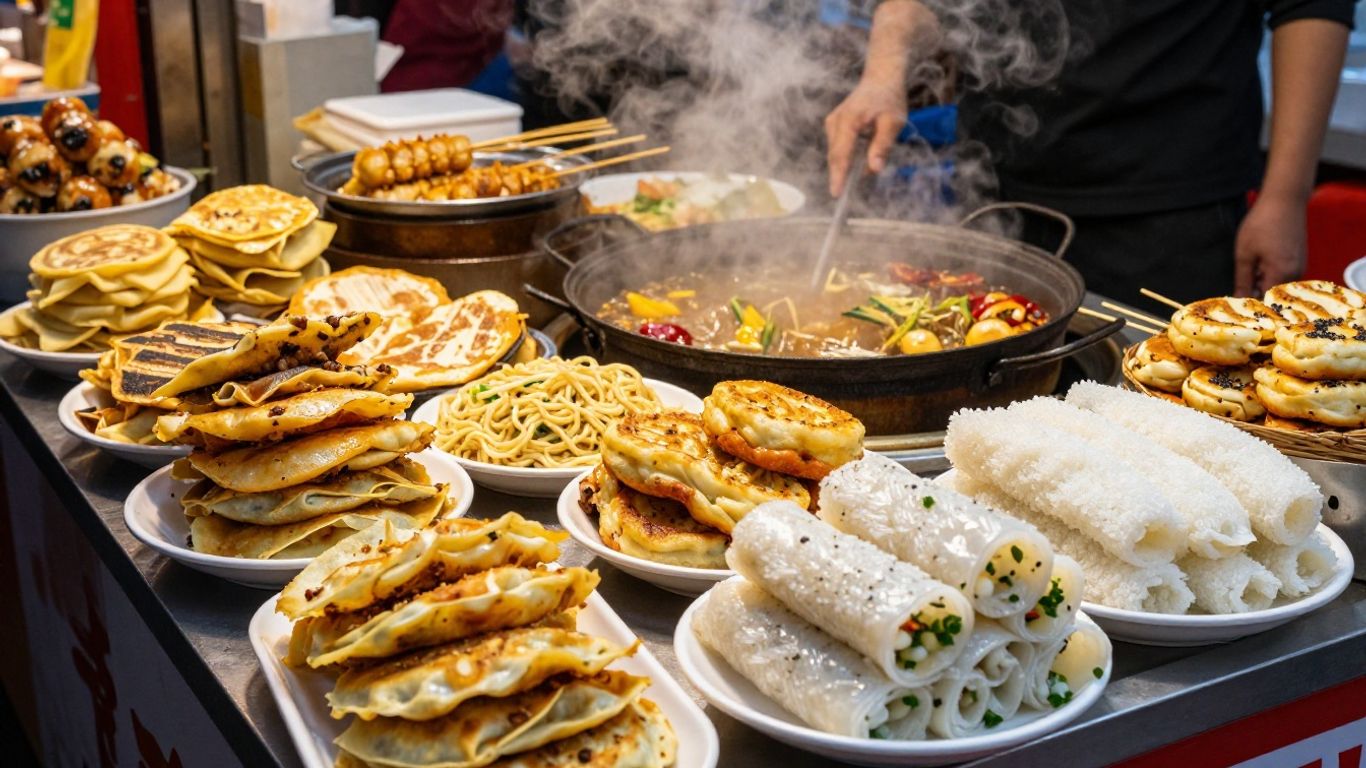
Beijing jianbing is a thin savory breakfast crepe made on a griddle, commonly layered with egg, sauces, herbs, and a crisp element. Baozi offer a softer contrast, with steamed dough wrapped around fillings such as pork, vegetables, or other seasoned mixtures. Tanghulu, usually fruit coated in a hard sugar shell, adds a bright sweet finish and is especially recognizable by its glossy skewers.
We might begin with jianbing early in the morning, when the batter is spread to order, and save tanghulu for an afternoon stroll. Beijing’s snack traditions are broad, and this Beijing street food guide offers another route through familiar stalls and food streets.
Xi’an is a rewarding place for travelers who enjoy wheat-based foods. Roujiamo places seasoned meat inside a crisp, split flatbread, while biangbiang noodles are wide, hand-pulled noodles dressed with oil, chili, and other toppings. Yangrou paomo is a more substantial lamb and bread soup, often eaten slowly rather than as a quick bite.
The city’s food also reflects its Muslim Quarter and long history of exchange. We should expect bold seasoning, generous textures, and plenty of breads and noodles. A good first visit can pair one handheld item with a bowl dish instead of ordering several versions of the same thing.
Shanghai’s shengjian mantou are pan-fried buns with a browned base and a juicy filling, so we should bite carefully and allow the steam to escape. Scallion pancakes are flaky, crisp, and aromatic, often eaten as a snack while walking. Soup dumplings are delicate and better suited to a seated stop, where we can use a spoon and take our time.
Shanghai street eating rewards patience. The most appealing item may be the one that requires a few minutes at the counter rather than the one already stacked and ready. We can watch for the rhythm of steamers, frying pans, and small batches moving steadily to customers.
Chengdu is a natural choice for travelers who enjoy layered heat and the numbing fragrance of Sichuan pepper. Dan dan noodles are usually a compact bowl with noodles, savory toppings, chili oil, and a rich, spicy aroma. Chuan chuan lets us choose skewered ingredients before they are cooked in a seasoned broth, while other stalls may offer spicy tofu, cold noodles, or grilled snacks.
We should begin with a manageable spice level and avoid treating heat as a competition. Ask whether a dish can be made less spicy, and keep a plain drink or simple side nearby. The best meal is one that lets us notice the sesame, pepper, fermented flavors, and aromatics beneath the chili.
Guangzhou’s street and neighborhood food culture leans toward rice, seafood, delicate seasoning, and careful texture. Rice noodle rolls are soft and slippery, usually served with a savory sauce and filling. Dim sum may appear in small teahouses rather than on a literal pavement stall, but it belongs to the same culture of sharing several modest dishes. Roasted meats, including glossy barbecue pork and roast goose, are often ordered by weight or portion.
For a deeper regional introduction, we can browse this Guangzhou food guide before choosing a neighborhood. Guangzhou is especially good for building a meal gradually: one rice noodle dish, a few dim sum plates, and perhaps a small serving of roasted meat.
The right market depends on the experience we want. Some are built around commuters and early breakfasts, some around evening leisure, and others around visitors who want a concentrated introduction to local food. A popular market can be convenient, but popularity alone does not guarantee the most distinctive cooking.
We should choose a market that fits our schedule, appetite, and comfort level. A short visit to a neighborhood street may be more satisfying than crossing a large city for a famous snack and finding a crowded, rushed setting.
Morning markets are often the easiest place to see daily food habits. Vendors may serve hot soy milk, fried dough, filled buns, pancakes, noodles, or rice-based dishes to residents heading to work. The pace can be brisk, so it helps to watch one transaction before ordering and to have small notes or a payment app ready.
Arriving early also gives us more choice and cooler weather. We can walk once to see which stalls have a steady line, then return to the one that looks appealing. Breakfast streets are usually best approached with curiosity and a small appetite rather than a fixed list.
Night markets offer more variety in one outing: skewers, grilled seafood, fried snacks, cold dishes, noodles, fruit, and sweets may all be close together. They are lively, but crowds can make ordering and carrying food awkward. We should keep our belongings secure, avoid blocking the stall, and share several small portions if traveling with others.
A local night-market guide can make the first visit easier. For example, this Xilang Night Market guide gives travelers a practical sense of the food and setting before they go. We can use that kind of information to choose a market with a convenient route home, not just a long list of dishes.
Tourist markets are not automatically poor choices. They can be accessible, visually engaging, and useful when we are still learning what to order. Neighborhood stalls may offer more ordinary prices and local routines, but they may have fewer pictures, less English, and no obvious system for first-time visitors.
We can combine both. Visit a well-known market for one or two signature foods, then eat another meal in a residential area where customers are ordering breakfast or dinner for themselves. This balance keeps the trip comfortable without making every meal feel staged for visitors.
A queue is only one clue. We should look for a clean working surface, ingredients stored sensibly, hot food served hot, and a vendor who keeps the process moving. If the stall is busy but organized, food is more likely to be turned over quickly than left waiting in open trays.
Before choosing, we can check four simple details:
These observations do not remove every risk, but they help us make a sensible choice without becoming overly anxious. A market should feel enjoyable, and practical awareness lets us stay present.
Ordering is part of the adventure, but we do not need fluent Mandarin to manage a meal. A few words, a photo, a translation app, and patient gestures can take us a long way. We should first identify the basic item, then clarify spice, quantity, and price before the food is prepared.
It also helps to remember that a short exchange is normal. Vendors serve many people quickly, so a clear request is usually more useful than a long explanation.
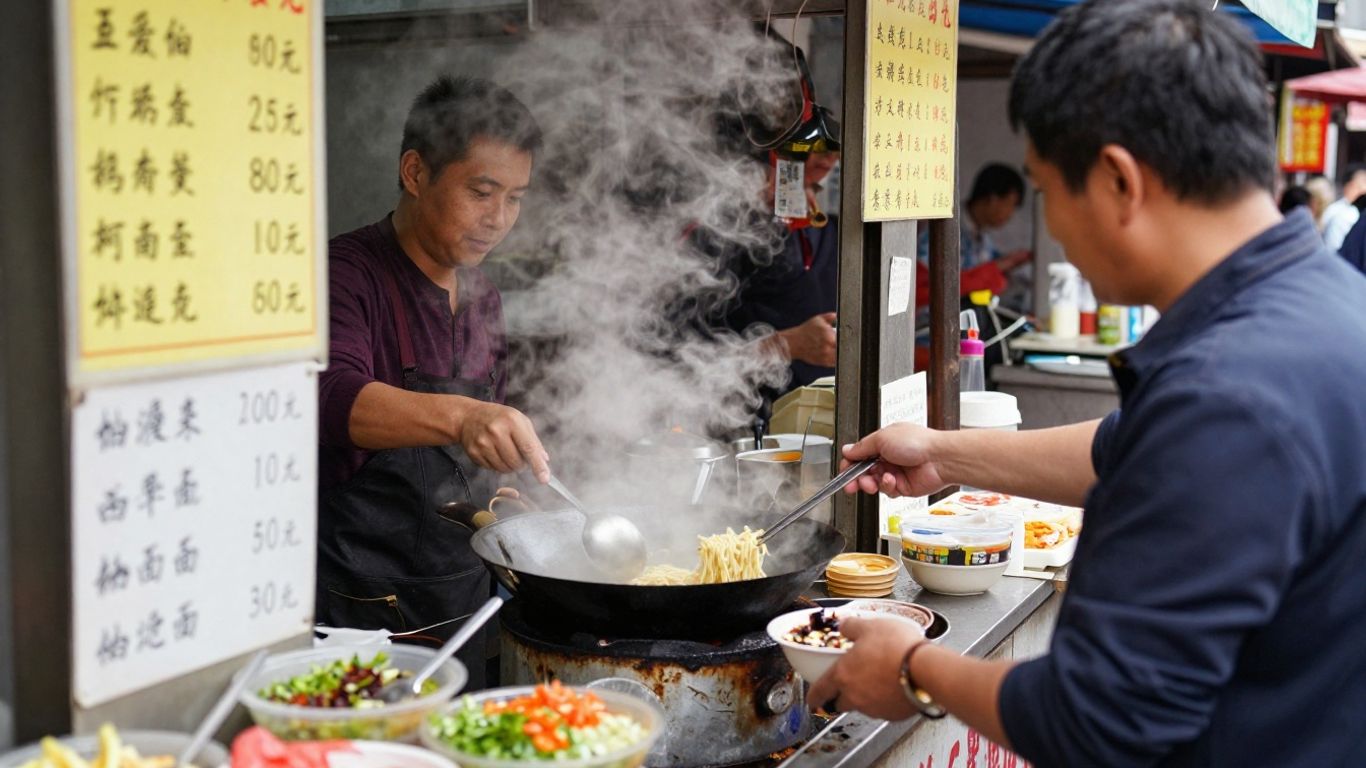
We can learn a handful of phrases before leaving the hotel. “Nǐ hǎo” is a friendly hello, “xièxie” means thank you, and “duōshao qián?” asks how much something costs. “Wǒ yào zhège” means “I want this,” which becomes especially useful when pointing to a picture or another customer’s dish.
Food words help us narrow the choice: miàn means noodles, fàn means rice or a rice meal, bāozi means steamed bun, and là means spicy. “Bù là” asks for no spice, while “shǎo là” asks for less spice. We can say the phrase slowly and show the written version on our phone if pronunciation feels uncertain.
Spice preferences are often easy to communicate, but allergies and serious dietary restrictions need more preparation. We should carry a translated note that clearly names the ingredient we must avoid, rather than relying only on gestures. Cross-contact can still happen at a busy stall, so we should choose simple foods when the risk is significant.
For vegetarian travelers, “sù” can help indicate vegetarian food, though we should clarify whether eggs, dairy, or animal-based stock are acceptable. Seafood allergies deserve particular care because sauces and broths may contain shrimp or other seafood even when the main ingredient looks vegetarian.
Street-food portions range from a single skewer to a meal-sized bowl. Before ordering several items, we can ask the price and watch the portion another customer receives. Some stalls charge by skewer, weight, bowl, or number of dumplings, so a quick confirmation prevents surprises.
| Ordering detail | What we can check | Useful approach |
|---|---|---|
| Portion | Bowl, skewer, piece, or weight | Watch one order first |
| Price | Item price or total weight | Ask “duōshao qián?” |
| Payment | Cash, QR code, or both | Carry small cash as backup |
| Timing | Eat now or take away | Say “dǎbāo” for takeaway |
After the vendor confirms, we can pay and move aside so the next customer can order. Mobile payment is common in many places, but a little cash remains useful for small stalls, transport, or a dead phone battery.
Pictures are helpful, but they do not always show every ingredient. We can point to a dish, ask whether it is spicy, and use a translation app to inspect unfamiliar characters. If a menu has no pictures, looking at the food being prepared or asking for the most popular item can simplify the decision.
We should avoid pretending to understand when we do not. A smile, a written number, and a calm repetition usually work better than rushing. The same approach is useful when comparing a food street with a sit-down restaurant; this guide to finding Chinese food nearby also offers a practical way to think about local choices when we are not eating at a stall.
Street food safety is mostly about sensible observation and knowing our own limits. We do not need to reject every open-air stall, but we should pay attention to heat, turnover, water, hand hygiene, and how ingredients are stored. Travelers with medical conditions, allergies, or sensitive digestion should be more selective.
We can also plan for the possibility of an upset stomach instead of letting it ruin the trip. This travel diarrhea guide explains symptoms, prevention, risk groups, and when medical attention may be needed.
Look at the work area before ordering. A stall does not need to look polished, but its tools, ingredients, and cooking surfaces should appear reasonably maintained. Raw meat and seafood should not sit for long in strong heat, and ready-to-eat food should be protected from unnecessary handling.
Busy periods can help because ingredients move quickly, though a long queue can also make a stall hectic. We should trust our judgment: if food smells spoiled, oil looks heavily degraded, or the preparation area seems careless, choose another option. There will almost always be another stall nearby.
In hot weather, freshly cooked dishes are generally easier to assess than foods that have been sitting at room temperature. Steamed buns, noodles made to order, grilled items, and pancakes served directly from the griddle are practical choices when turnover is visible. We should be cautious with raw garnishes, uncovered sauces, and chilled foods whose storage we cannot judge.
This does not mean avoiding every cold dish. It means choosing one from a busy, reputable vendor and paying attention to temperature and handling. We can also visit earlier in the day, before heat has built up and ingredients have been exposed for hours.
A sudden increase in chili, oil, or unfamiliar ingredients can make a trip uncomfortable even when the food is perfectly fresh. We can share dishes, start with half portions, and keep meals simple until we know how our body reacts. Plain rice, noodles, soup, or steamed buns can provide a gentler reset between adventurous snacks.
We should not feel pressured to finish something simply because it is traditional or popular. Curiosity works best when paired with choice. If symptoms become severe or persistent, we should seek local medical advice rather than trying to push through the itinerary.
Bottled water is a convenient choice when we are uncertain about the local water supply, especially for drinking and brushing teeth during the first days of a trip. Hand sanitizer or a quick hand wash is useful before eating, particularly when we have handled cash, railings, phones, or market baskets.
Napkins and tissues are worth carrying because not every stall provides them. Small habits—clean hands, sealed drinks, and avoiding food that has been exposed too long—make street eating easier without turning every meal into a safety inspection.
There is no single best first dish because travelers arrive with different appetites, spice tolerances, and dietary needs. We can choose foods by texture as well as flavor: soft buns, crisp pancakes, slippery noodles, fragrant grilled items, or sweet fruit. This makes it easier to explore gradually.
A useful strategy is to order one familiar item and one new item. That way, the meal remains comfortable while we still learn something about the local food culture.
First-time visitors often enjoy dishes whose ingredients and preparation are easy to recognize. Jianbing, baozi, scallion pancakes, roujiamo, dumplings, and freshly grilled skewers offer a broad introduction without requiring a leap into the most unusual specialties. We can start with a small order and add another dish after seeing how filling it is.
Breakfast foods are particularly approachable because they are usually made quickly and eaten by many local customers. A simple bun or pancake also gives us a chance to practice ordering before tackling a crowded night market.
Milder choices include steamed buns with vegetable or meat fillings, scallion pancakes without extra chili, rice noodle rolls with a light sauce, and plain or lightly seasoned noodles. In Guangzhou, delicate rice-based dishes can be a good counterpoint to heavier fried foods. Soup dumplings are flavorful without necessarily being spicy, though we should still check the filling and dipping sauce.
We can ask for less chili and keep sauces on the side when possible. “Bù là” is worth remembering, but we should also point clearly to the dish and confirm before the vendor begins cooking.
Chengdu and many other regions offer plenty for travelers who enjoy heat. Dan dan noodles, chuan chuan, grilled skewers, and spicy soups can be wonderfully complex, combining chili with Sichuan pepper, sesame, fermented bean flavors, garlic, and aromatics. The sensation may be numbing as well as hot, which is different from simple chili burn.
We should increase the intensity gradually. Sharing several dishes lets us compare sauces and textures, while a bowl of rice or a mild side can keep the meal balanced. Adventurous eating is more rewarding when we can still taste the ingredients beneath the seasoning.
Vegetarian options may include scallion pancakes, vegetable baozi, steamed corn, tofu dishes, rice noodle rolls, fruit, and some noodle preparations. We should ask about lard, meat stock, dried shrimp, and oyster sauce because these may not be obvious from the finished dish. A translated dietary note is especially useful when the distinction matters.
Seafood lovers can look for grilled squid, oysters, shrimp, fish cakes, and coastal rice or noodle dishes. Freshness and storage matter more with seafood, so we should favor busy stalls where ingredients are kept cold or cooked immediately.
Sweet snacks provide a welcome pause between savory dishes. Tanghulu has a crisp sugar shell around fruit, while steamed cakes, sweet buns, sesame treats, and fresh fruit offer different textures. Some desserts are only mildly sweet compared with Western pastries, which makes them easy to enjoy after a substantial meal.
We can also use dessert as a low-pressure way to join a busy food street. A single skewer or small cake is easy to share, photograph, and eat while walking, provided the market allows it.
A good food itinerary leaves room for detours. We can choose one or two specialties in each city, group nearby markets together, and avoid crossing town repeatedly for individual snacks. Food should support the travel route rather than turn every day into a race between queues.
Sharry’s China Travel Guide is built around authentic food, local neighborhoods, practical travel routes, and regional specialties, so that same local-first approach works well here: begin with the neighborhood, then plan the meal around it. We can also use this China travel planning guide to balance major cities, regional stops, travel times, and local food experiences.
Start by choosing a signature breakfast, a snack street, and one substantial regional dish. In Beijing, that might mean jianbing in the morning, a walk through a historic neighborhood, and a northern noodle or dumpling meal later. In Guangzhou, we might pair morning rice noodle rolls with dim sum, roasted meat, or a night market visit.
A simple route is easier to enjoy than an overfilled map. We should group stops by walking distance or public transport line, and leave space for an unexpected bakery, tea shop, or busy counter that catches our attention.
Breakfast markets are best early, when vendors are serving commuters and the food is fresh from the griddle or steamer. Night markets generally become livelier after dinner hours, but exact timing varies by city, season, and neighborhood. Arriving slightly before the busiest period can make the first order easier.
Weather matters too. Hot afternoons are less comfortable for long walks, while rain may change which stalls operate. We can keep one indoor meal or covered market as a backup and check local opening information before setting out.
Street snacks can be deceptively filling, especially fried foods, noodles, stuffed breads, and skewers. We can share larger portions, alternate rich items with fruit or soup, and pause between stops. A full meal at a neighborhood restaurant may provide a better setting for dishes that need time, such as soup dumplings or a shared hotpot.
Our itinerary should include ordinary meals, not only famous bites. Sharry’s China Travel Guide also covers local food discoveries beyond a single market, which encourages us to treat street food as part of a wider regional food culture rather than a separate tourist activity.
Street food is often an economical way to sample several flavors, but budgets vary by city, neighborhood, portion, and ingredient. Seafood, roasted meats, and restaurant-style dim sum may cost more than a bun, pancake, or noodle bowl. We should carry a mix of payment methods and check whether prices are listed by piece, bowl, skewer, or weight.
A practical daily food budget can include a small breakfast, two or three snacks, one proper meal, and a little extra for an unplanned stop. We can spend modestly while still choosing quality, especially when we follow local demand and avoid ordering more than we can eat.
Chinese street food in China becomes much easier to enjoy when we slow down, follow regional habits, and let each market set the pace. With a few Mandarin phrases, sensible food-safety habits, and an itinerary built around local neighborhoods, we can move from famous staples to everyday discoveries without losing the simple pleasure of eating well.
Jianbing, baozi, scallion pancakes, dumplings, roujiamo, and freshly cooked noodles are approachable starting points because their ingredients and preparation are relatively easy to understand.
It can be, especially when we choose busy stalls with clean preparation areas, quick food turnover, and thorough cooking. We should use personal judgment and be more cautious with raw, chilled, or uncovered ingredients.
Popular options include jianbing, baozi, soy milk, youtiao, rice noodle rolls, noodles, and regional savory pancakes. Breakfast varies considerably by city.
Use photos, translation tools, pointing, and a few phrases such as “I want this,” “less spicy,” and “how much?” Watching another customer order can also clarify portions and payment.
Beijing, Xi’an, Shanghai, Chengdu, and Guangzhou are excellent starting points, but smaller cities and ordinary residential neighborhoods can offer equally memorable regional specialties.
Ask whether dishes contain meat, lard, seafood, dried shrimp, oyster sauce, or animal-based stock. A translated dietary note is useful when strict vegetarian eating is necessary.
A few small snacks plus one or two proper meals is usually more comfortable than trying every specialty at once. Sharing portions helps us taste more while avoiding unnecessary waste.