Physical Address
304 North Cardinal St.
Dorchester Center, MA 02124
Physical Address
304 North Cardinal St.
Dorchester Center, MA 02124
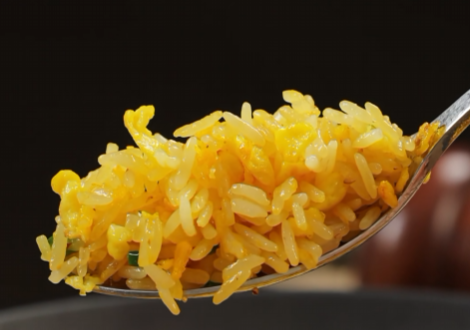
Fried rice in China is not one fixed recipe. A bowl may carry only egg and scallion, or it may hold shrimp, chicken, ham, mushrooms, and peas. This Chinese fried rice guide compares four styles: Yangzhou, home-style egg, street-stall, and Cantonese-style fried rice.
They are useful examples, not an official “best of China” ranking. Together, they show how rice moisture, egg, heat, seasoning, and added ingredients change the dish.
Good fried rice needs firm grains that move without turning into paste. Cooled rice often works because it has less surface moisture. Fresh rice can also work when cooked firmly and cooled. The goal is separate grains, not “overnight rice” as an absolute rule.
Egg adds aroma, color, and softness. Oil carries the aroma and helps the grains move. High heat removes moisture, but a crowded pan can still steam the rice. Small batches help it stay loose.
There is no sauce shared by all four styles. Salt keeps the color pale; soy sauce adds color and depth. Sesame oil, white pepper, or oyster sauce may appear, but too much seasoning can hide the egg and rice.
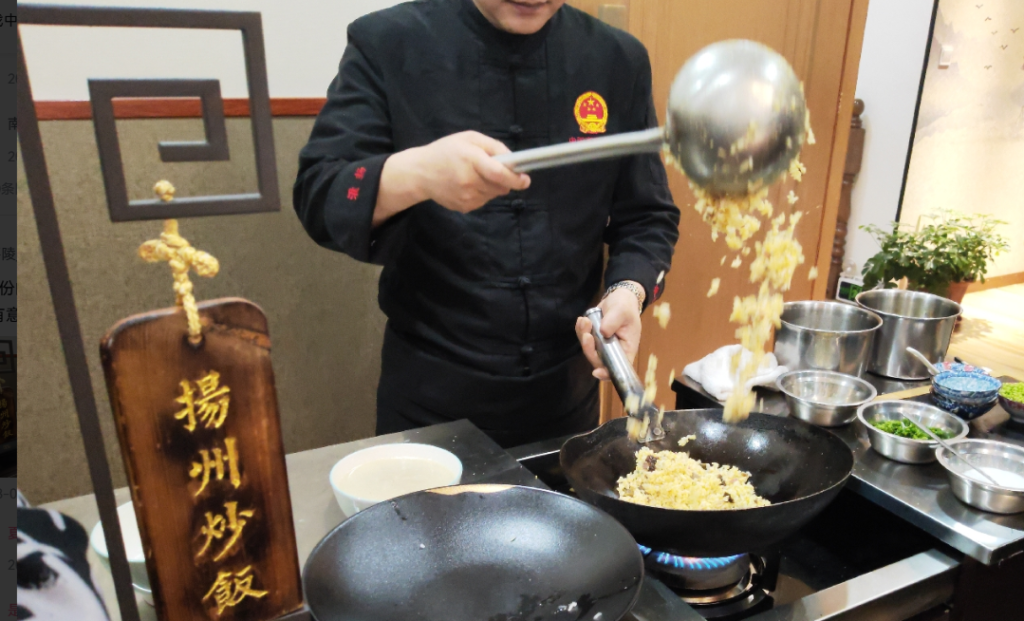
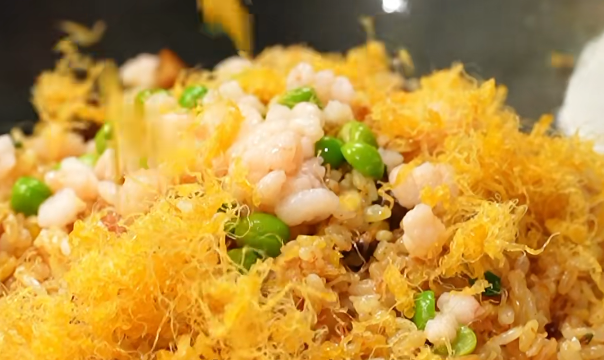
Yangzhou fried rice, or Yángzhōu chǎofàn (扬州炒饭), has separate grains and small bursts of flavor. Egg, shrimp, peas, bamboo shoots, mushrooms, chicken, or ham may appear. Yangzhou protects fried-rice-making as a local traditional skill, but one restaurant’s method is not the only valid form.
At Dongyizhenwei, chef Xia Chaobing demonstrated a halal banquet variation. He cooked diced ingredients in chicken stock. In a separate wok, beaten egg went in just before the rice, coating the grains while still soft. Stock and prepared ingredients followed in stages, then raw shrimp, peas, and scallions. This documented “gold-wrapped silver” method is not a universal formula.
This is the hardest style here to copy in full because it needs prepared ingredients and careful moisture control. A home version can use egg, shrimp, peas, and fewer additions.
China’s price-monitoring center reported a February 2025 delivery average of RMB 18.10 (about US$2.70) across 36 cities. A later Yangzhou report listed specialist-shop sets at RMB 38–298 (about US$5.60–43.90). Dongyizhenwei quoted RMB 268 (about US$39.50) with other dishes or RMB 588 (about US$86.60) alone. These premium prices are not ordinary averages.
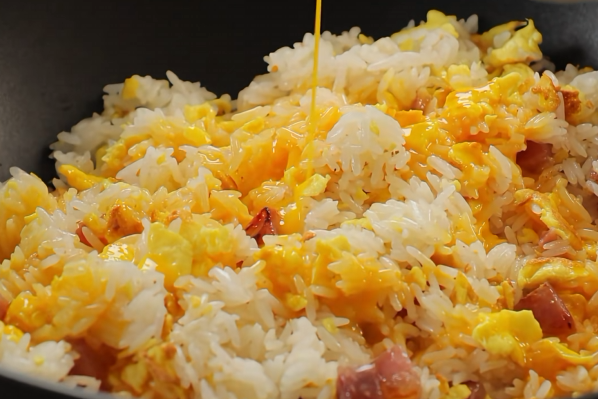
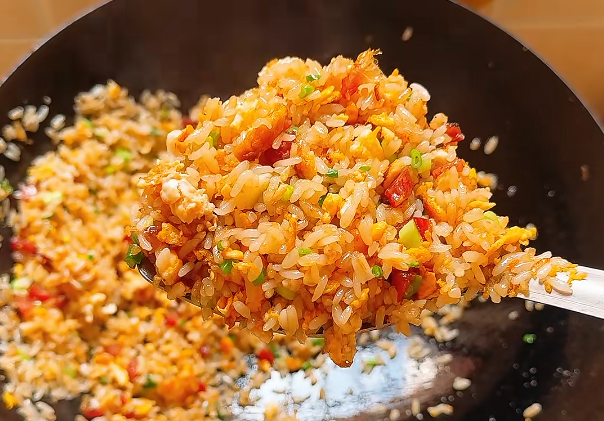
Home-style egg fried rice, dàn chǎofàn (蛋炒饭), centers on rice and egg. Scallion adds freshness, while salt or a little soy sauce sets the flavor. Some cooks scramble the egg first; others add rice while it is still soft. Small amounts of vegetables or meat can join without changing its identity.
It needs fewer ingredients and less prep than the other styles. A household wok or skillet can work. Keep the batch small, loosen the rice first, and stop before the egg dries. No trustworthy national menu average was found.
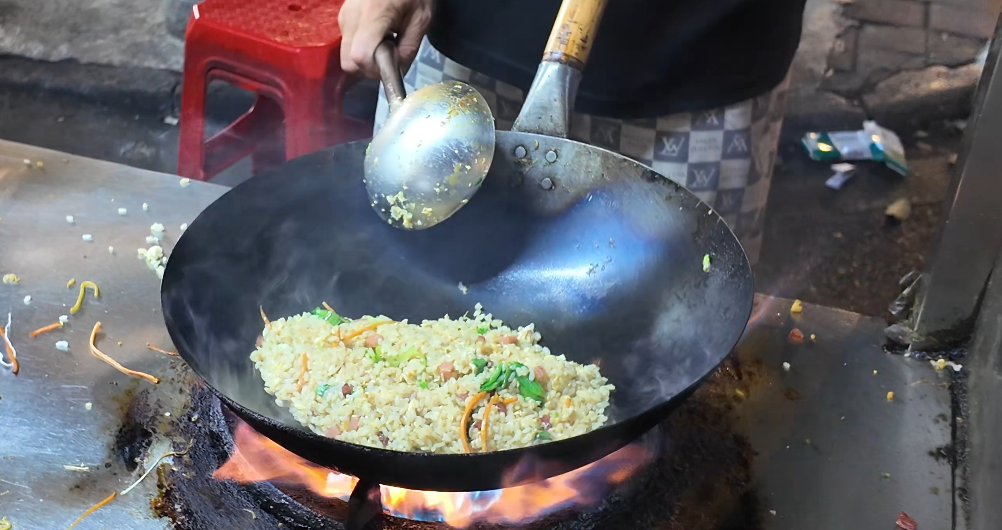
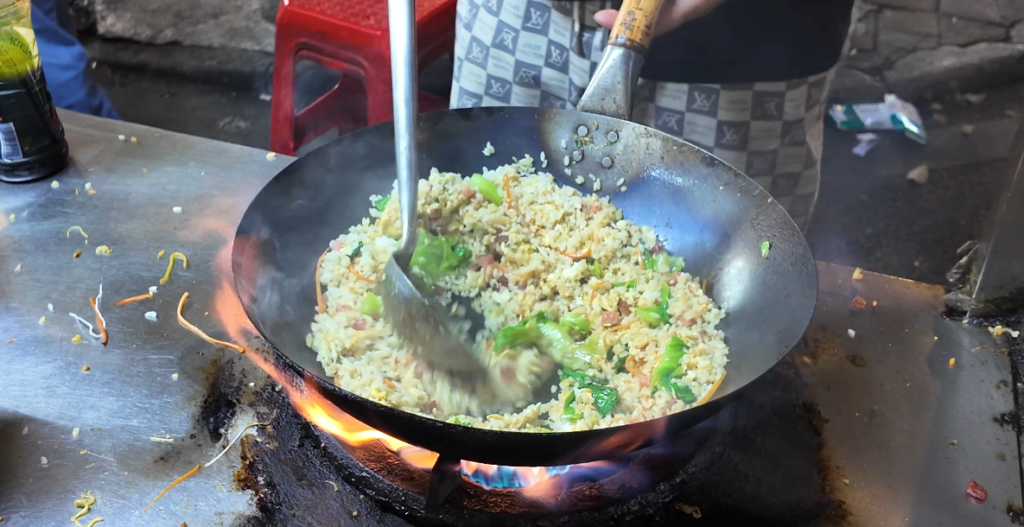
“Street-stall fried rice” describes a setting, not one national recipe. A vendor may add scallion, garlic, vegetables, sausage, or meat. Its appeal is immediate aroma from hot oil, toasted rice, garlic, and scallion.
The cook heats the wok, adds ingredients quickly, and keeps the rice moving. A 2025 Beijing report said the former mobile “Menghuo Fried Rice” stall relied on intense heat, garlic, scallion, and rice. Its fixed shop charged RMB 15 (about US$2.20) in December 2025. This is one example, not a national street price.
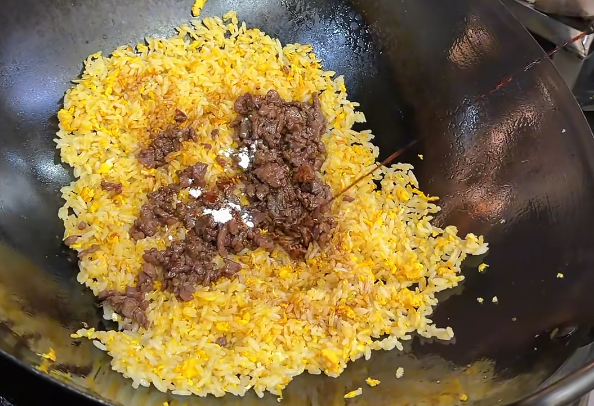
Cantonese-style fried rice is a broad restaurant family, not a protected recipe. Here it means a lightly seasoned style with egg, scallion, and diced additions. Char siu, Cantonese barbecue pork called chāshāo (叉烧) in Mandarin, is a classic choice. Shrimp and peas are also common. Menu names and ingredients can differ.
Much of the work happens before frying. Warm shrimp and meat without adding excess water, and cut additions small. Fry the rice and egg, then combine everything briefly. The main challenge is prep and moisture control, not extreme flame. No solid national price series was found.
Yangzhou fried rice is savory, aromatic, and layered rather than sauce-heavy. Egg coats or mixes through separate rice grains, while shrimp, peas, mushrooms, meat, or other diced ingredients add sweetness, springiness, and umami. Exact flavor depends on the restaurant and version.
Home-style egg fried rice is usually made by frying beaten egg and cooked rice with oil, scallion, and simple seasoning. Some cooks scramble the egg first; others add rice while the egg remains soft. Both methods can work when the rice stays loose.
Since home stoves are usually less powerful than those used by street vendors and restaurants, it’s better to stir-fry the rice patiently over medium-high heat, allowing the moisture to evaporate gradually until every grain is separate and distinct.
Street-stall flavor usually comes from a very hot wok, quick movement, aromatic oil, garlic, scallion, and fast moisture loss. There is no national stall recipe. The exact seasoning and additions vary by vendor, city, available ingredients, and customer choice.
Cantonese-style fried rice is a broad group of lightly seasoned restaurant-style dishes, not one protected formula. Egg, scallion, char siu, shrimp, and peas are common examples. Careful dicing and dry, separate grains often matter more than a dark, heavy sauce.
Prices vary depending on where you eat.
At a typical restaurant, a plate of fried rice usually costs around RMB 30 (about US$4.40).
While at a roadside stall, it can cost as little as RMB 10 (about US$1.50).