Physical Address
304 North Cardinal St.
Dorchester Center, MA 02124
Physical Address
304 North Cardinal St.
Dorchester Center, MA 02124
Guangzhou wakes up hungry.
Before the lunch rush begins, teahouses are already busy with bamboo steamers, while wonton noodles and claypot rice fill the streets with steam and smoke.
As the capital of Guangdong Province, Guangzhou is one of the best places to experience Chinese food and Cantonese cuisine at their source, from dim sum, har gow shrimp dumplings and rice noodle rolls to bamboo-pressed noodles, roasted meats and slow-cooked soups.
This Guangzhou food guide introduces seven established local restaurants, ranging from century-old teahouses to neighborhood favorites and newer Cantonese restaurants that balance tradition with fresh ideas. They may not all be polished or designed for tourists, and that is exactly why they are worth visiting.
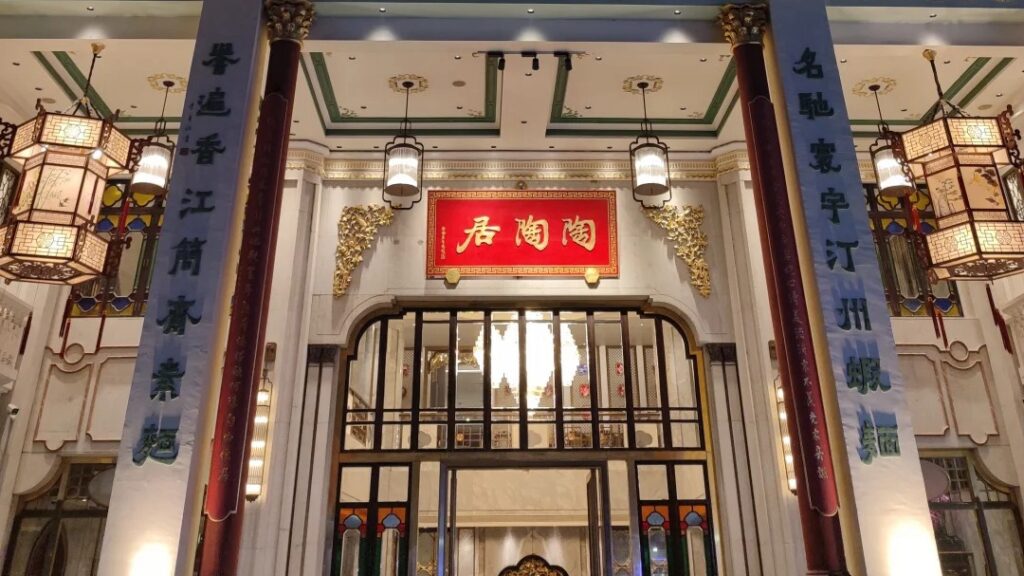
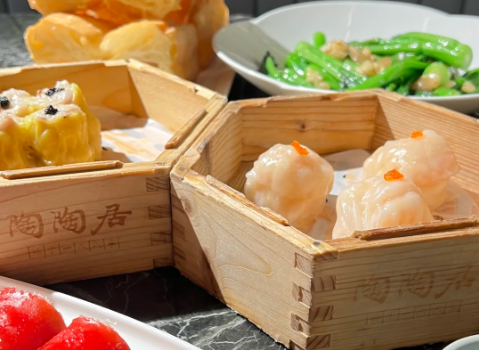
Tao Tao Ju is one of the most recognizable names in Guangzhou dim sum. The brand has a history stretching back more than a century, and its Dishifu Road flagship remains a popular stop in the old Xiguan area.
This is the most obvious dim sum restaurant on the list, but it earns its place. The dining room offers a broad Chinese menu, making it useful for first-time visitors who want to sample several famous Cantonese dishes in one sitting.
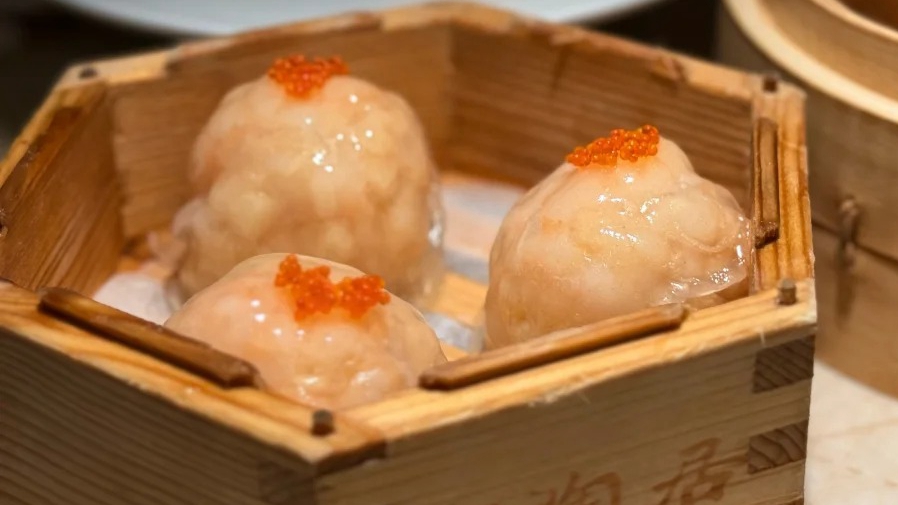
Start with the har gow. The translucent wrappers should be thin enough to show the shrimp inside while remaining firm enough to hold their shape.
The red rice noodle rolls are another house favorite. They combine a soft outer layer with a crisp filling, giving you two completely different textures in the same bite.
What to order: Har gow shrimp dumplings and red rice noodle rolls
Average price: About CNY 102 per person
Address: No. 20 Dishifu Road, Guangzhou
Chinese address: 广州市第十甫路20号
Most online Guangzhou restaurant guides point visitors toward Xiangqun’s original location on Longjin East Road.
This time, however, I want to recommend its Chengguanghui branch.
One of the first things you notice outside the restaurant is the queue, filled with older local diners waiting for a table. In Guangzhou, a Cantonese restaurant that wants to last needs the approval of local aunties and uncles. There are few endorsements more convincing than that.
People often joke that no chicken can escape Guangdong. There is very little exaggeration in that sentence.
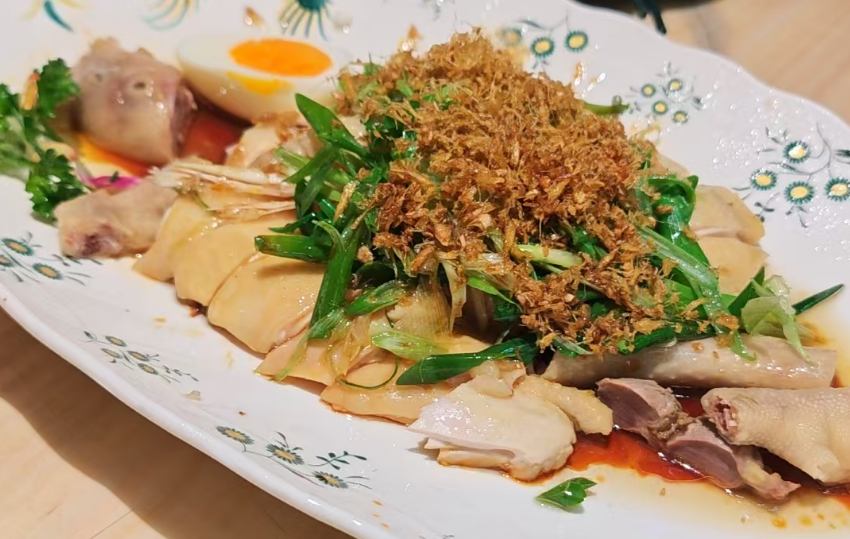
Xiangqun’s signature dish is its Scallion Oil Chicken. Fresh white-cut chicken is served with a fragrant fried ginger relish, allowing the natural flavor and texture of the chicken to remain at the center of the dish.
The restaurant does not limit itself to traditional Cantonese food.
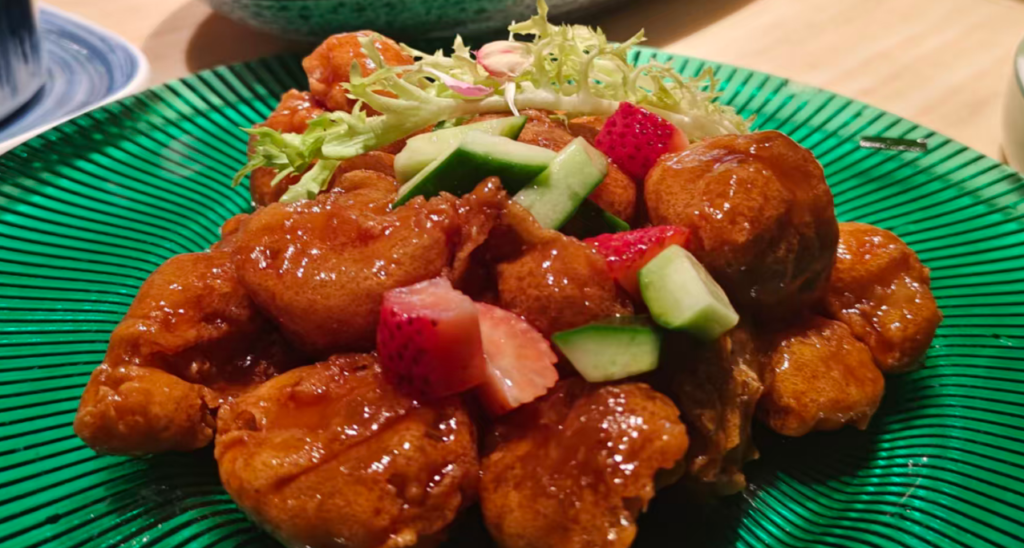
Its Strawberry Sweet and Sour Pork brings a more playful idea to a familiar Chinese dish. The batter is the most memorable part. It is crisp and thin without becoming greasy, while the strawberry adds a fresh sweet-and-sour note.
The only real drawback is the queue.
It is safer to arrive one or two hours early to collect a number. Phone reservations are also available, although advance booking is limited to booth seating.
What to order: Scallion Oil Chicken and Strawberry Sweet and Sour Pork
Average price: About CNY 100–150 per person
Address: 5F, Chengguanghui Mall, No. 600 Kangwang Middle Road, Liwan District, Guangzhou
Chinese address: 广州市荔湾区康王中路600号城光荟商场5楼
Claypot rice is one of those Chinese dishes that looks straightforward until you try a good version.
Rice, meat and sauce arrive in a hot clay pot. The rice on top stays tender, while the grains touching the pot develop a golden, crunchy crust.
That crust is the part people wait for.
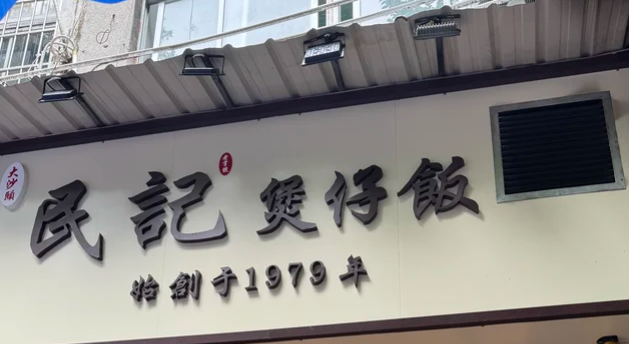
Minji has been serving claypot rice in Guangzhou for more than 40 years. Its Beijing Road branch is a practical choice for travelers exploring central Guangzhou and looking for a filling meal without spending too much.
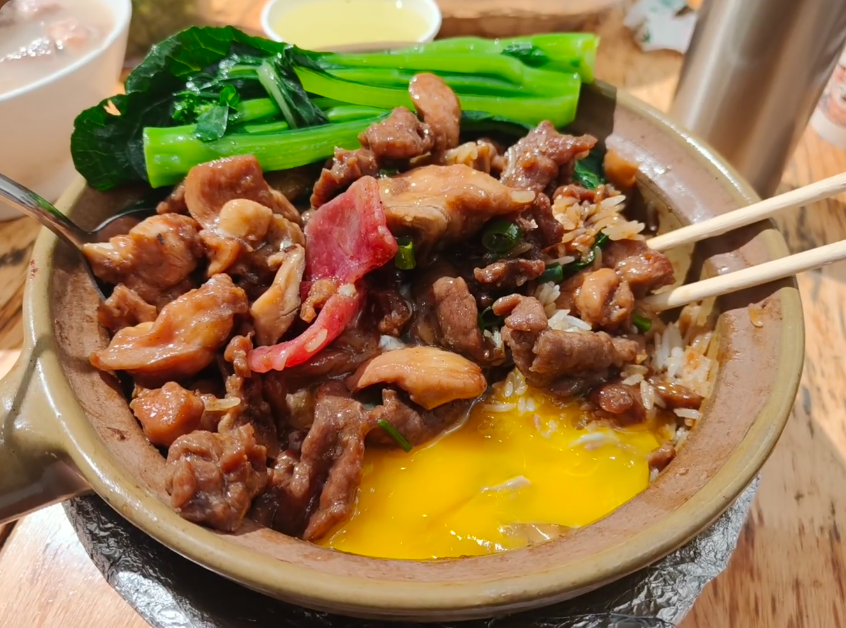
Cantonese cured meat is the traditional order. Let the pot sit briefly before mixing so the sauce can spread through the rice without softening the entire crust.
The daily soup is worth adding. In many Cantonese restaurants, soup is not an afterthought. It is part of the meal’s rhythm.
What to order: Cantonese claypot rice and daily soup
Average price: About CNY 31 per person
Address: No. 452 Huifu East Road, Guangzhou
Chinese address: 广州市惠福东路452号
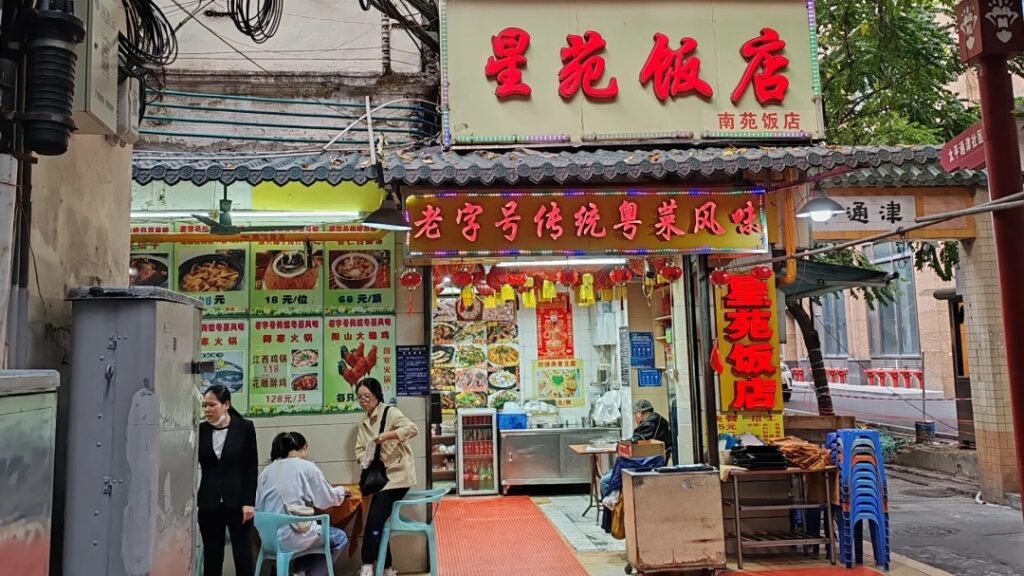
Not every good Guangzhou restaurant comes with a century-old signboard.
Xingyuan feels more like a neighborhood Cantonese eatery than a formal destination restaurant. Local diners come for dinner and late-night food, the tables turn quickly, and the menu leans toward dishes designed for sharing.
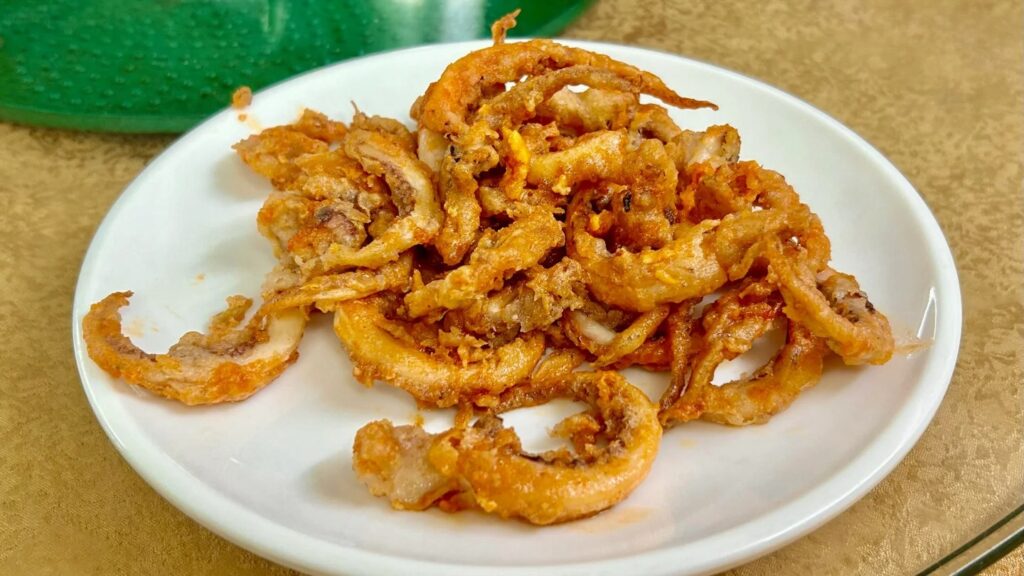
The salted egg yolk squid tentacles are rich, crisp and unapologetically savory. The dried tangerine peel pork ribs have a deeper fragrance, with the citrus cutting through the fattiness of the meat.
This is the place to visit when you have a small group and want a proper Chinese dinner rather than a single bowl of noodles.
Do not expect a quiet dining room. Come for the food and the atmosphere.
What to order: Salted egg yolk squid tentacles and dried tangerine peel pork ribs
Average price: About CNY 76 per person
Address: No. 1 Taiping Tongjin, Yanjiang Middle Road, Guangzhou
Chinese address: 广州市沿江中路太平通津1号
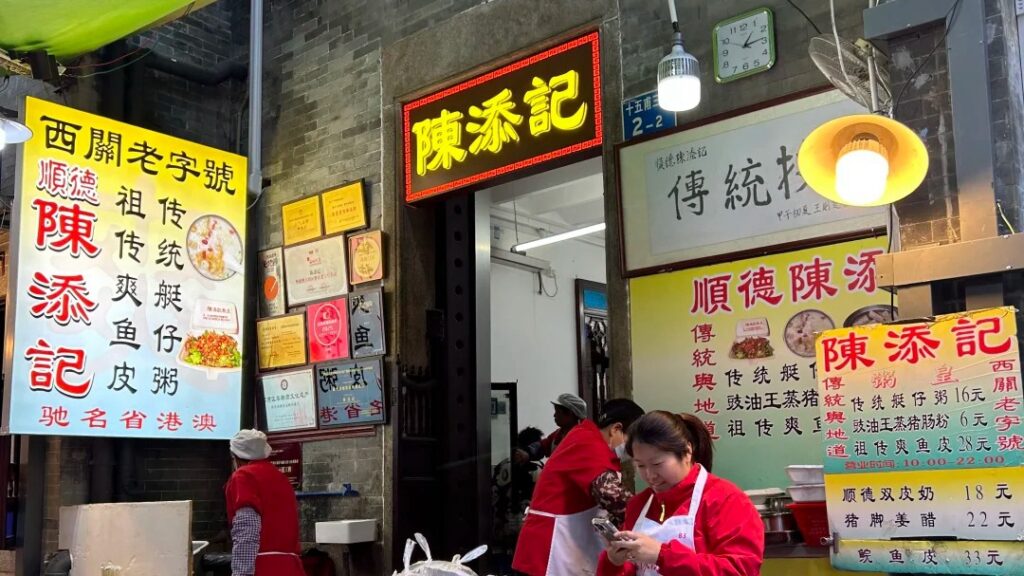
Chen Tian Ji is tucked inside a narrow lane off Baohua Road. The setting is simple, the seating is limited, and the food arrives without ceremony.
Its most famous dish is tossed fish skin.
The fish skin is served cold with soy sauce, sesame, peanuts and other seasonings. When prepared properly, it is crisp rather than rubbery, with a clean flavor that works especially well in Guangzhou’s humid weather.
Pair it with a bowl of sampan congee. The warm congee and chilled fish skin make a much better combination than either dish would alone.
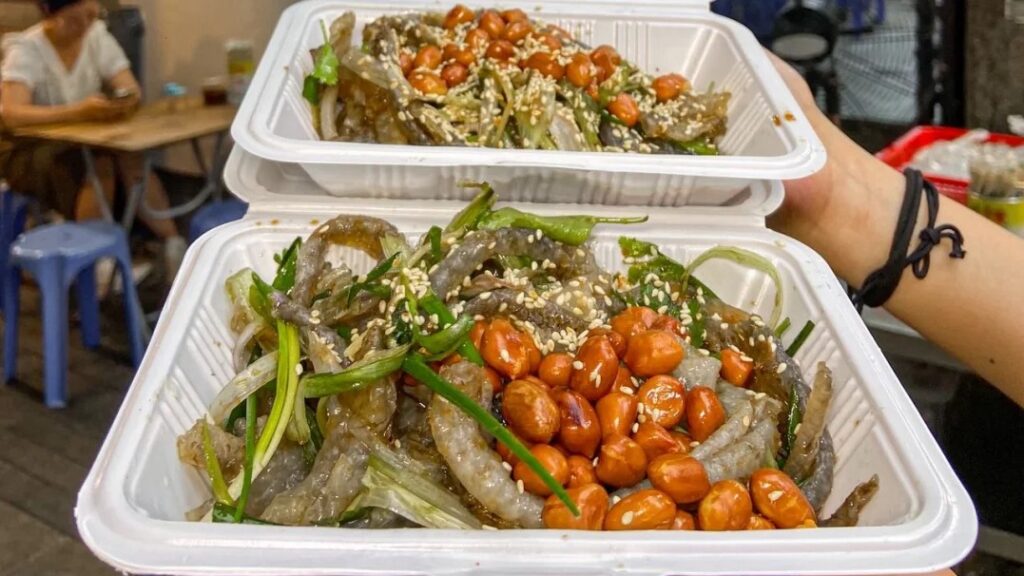
This is less of a full restaurant meal and more of a classic Guangzhou street food stop.
What to order: Tossed fish skin and sampan congee
Average price: About CNY 27 per person
Address: No. 2, Shiwufu Third Lane, Baohua Road, Guangzhou
Chinese address: 广州市宝华路十五甫三巷2号
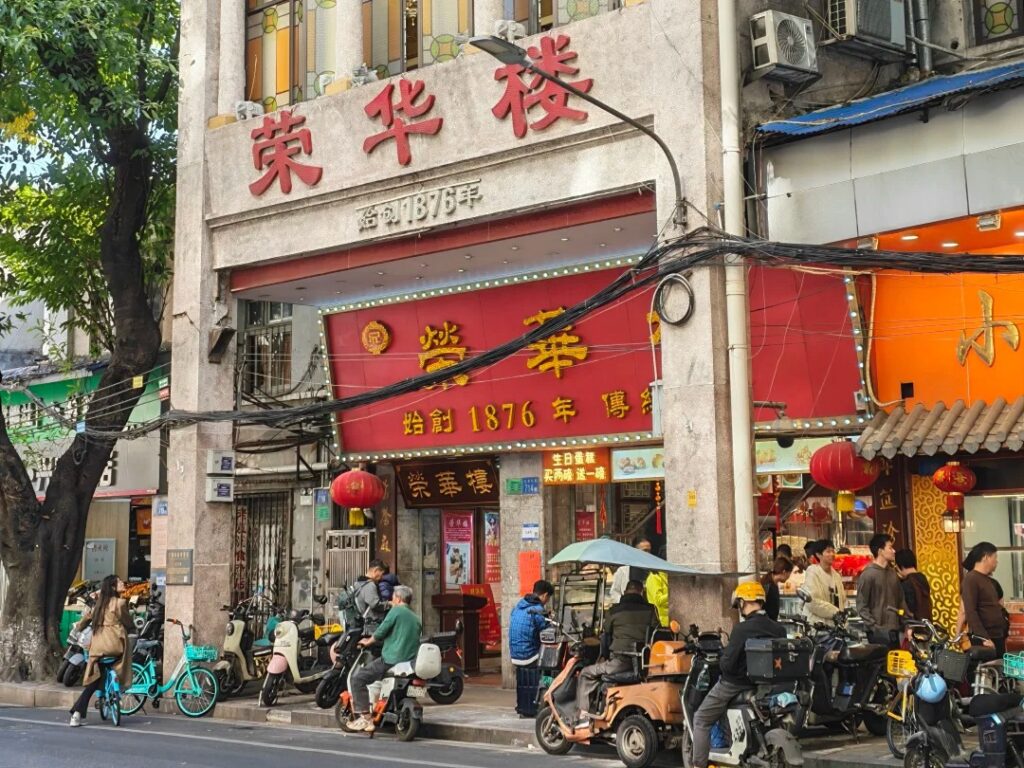
Ronghua Lou offers an older, less polished version of the Guangzhou dim sum experience.
Many customers are neighborhood residents rather than visitors. Service can feel direct, and the room does not try to imitate a luxury hotel tea salon. That is exactly why some diners like it.
Order a pot of tea, har gow and steamed chicken feet. The shrimp dumplings offer the familiar side of dim sum, while the chicken feet show how much texture and flavor Cantonese cooking can build from an ingredient many first-time visitors overlook.
If BBQ pork buns, egg tarts or other steamed buns are available, add one basket rather than ordering the entire menu at once.
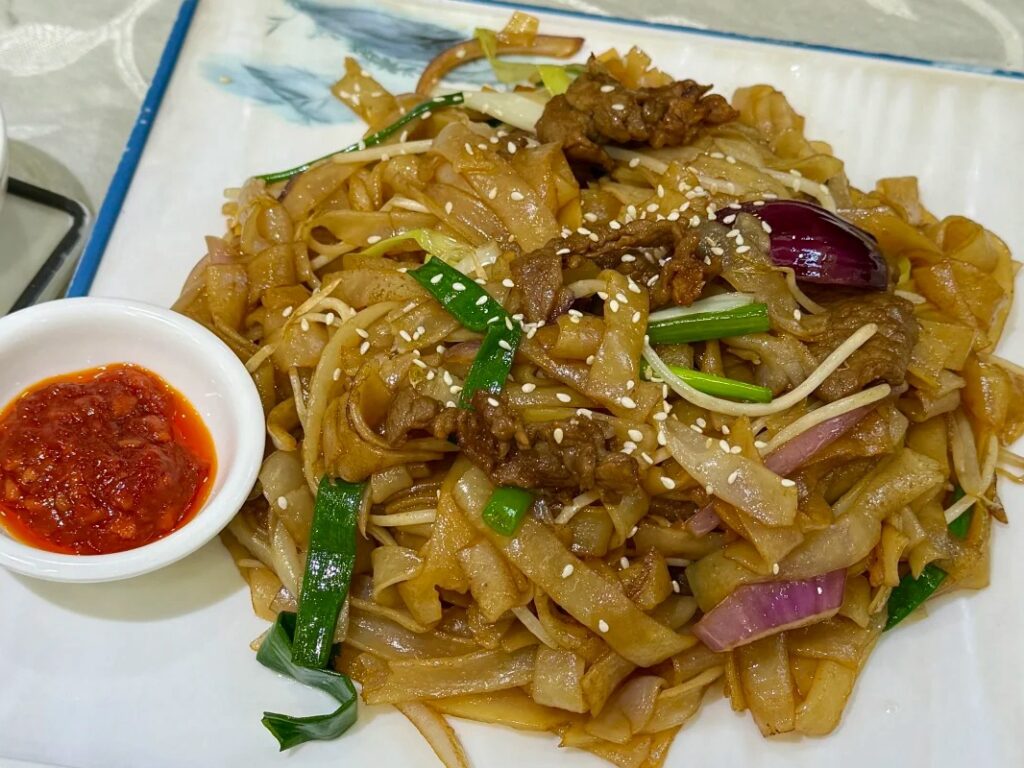
Morning is the best time to go, before the dining room becomes too crowded and popular dishes begin selling out.
What to order: Har gow and steamed chicken feet
Average price: About CNY 73 per person
Address: No. 714 Longjin East Road, Guangzhou
Chinese address: 广州市龙津东路714号
Bamboo-pressed noodles are one of the most distinctive noodle traditions in southern China.
The dough is traditionally worked with a long bamboo pole, producing noodles with a noticeably firm and springy texture. They are quite different from soft rice noodle dishes and deserve to be tried in a proper noodle shop.
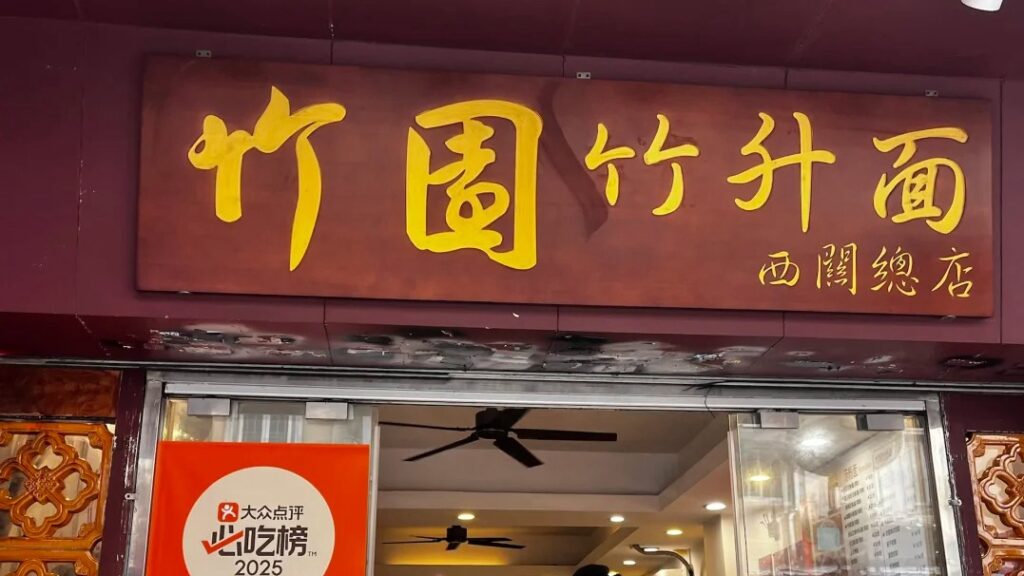
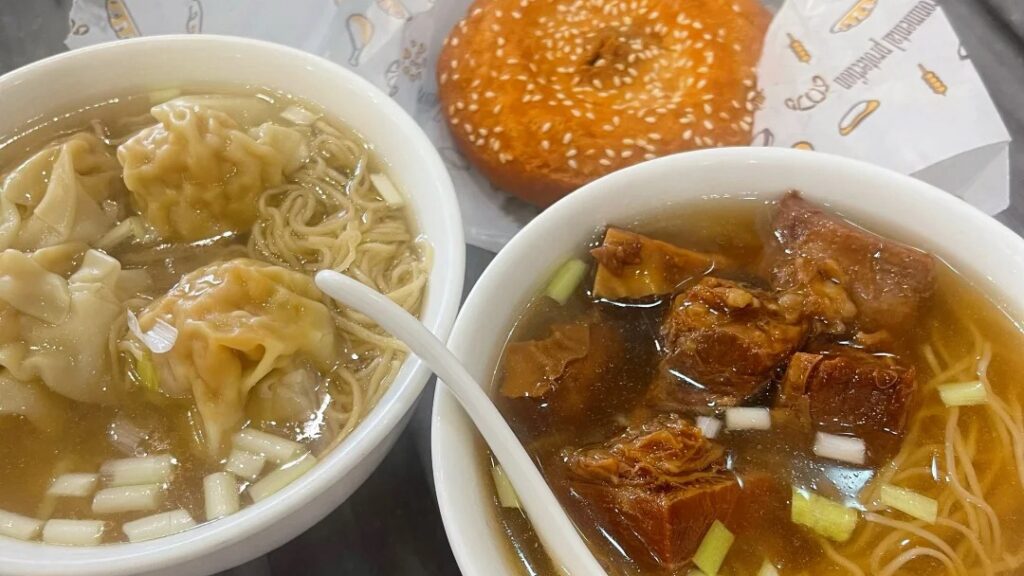
Zhuyuan is an old Xiguan restaurant specializing in this style. Its shrimp wonton noodles are the safest first order. The bowl looks simple, but the balance matters. The noodles need bite, the wontons need enough whole shrimp to remain juicy, and the broth should stay clear rather than oily.
For something richer, order the crab roe wontons.
This is a good stop when you want a quick meal rather than another long restaurant sitting.
What to order: Shrimp wonton noodles and crab roe wontons
Average price: About CNY 28 per person
Address: No. 107 Shibafu South Road, Guangzhou
Chinese address: 广州市十八甫南路107号
These seven restaurants reveal different sides of Guangzhou’s food culture. Some preserve the rituals of traditional morning tea, while others bring fresh ideas and modern touches into Cantonese cooking.
Guangzhou itself is also a city shaped by openness and inclusion. Its food respects old techniques without insisting that every dish remain frozen in the past.
Famous dishes matter, of course. But what stays in the memory is often the sound of the dining room, the look of the surrounding streets and the everyday life that continues to unfold around each meal.