Physical Address
304 North Cardinal St.
Dorchester Center, MA 02124
Physical Address
304 North Cardinal St.
Dorchester Center, MA 02124
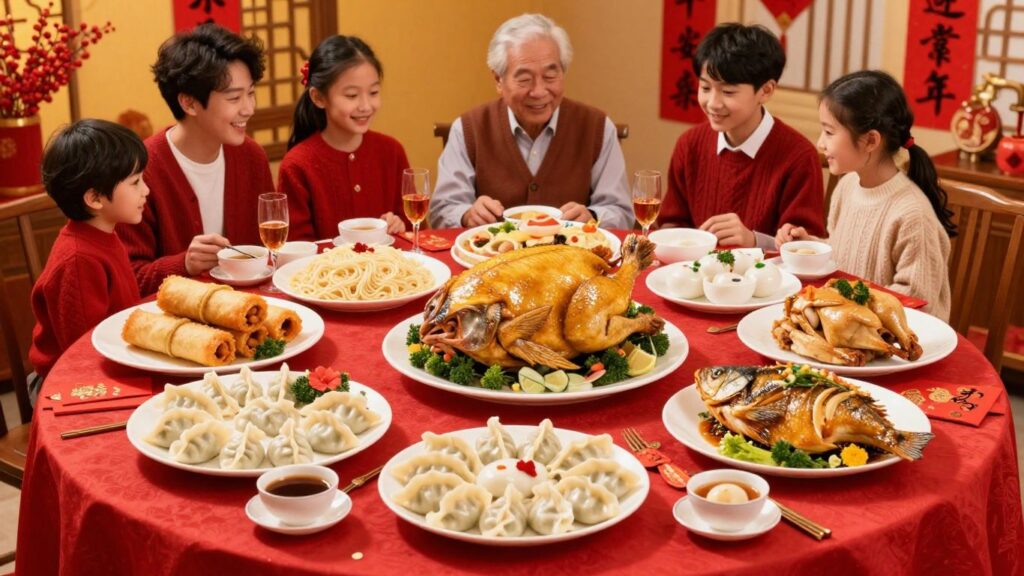
Chinese New Year foods bring flavor, family, and good wishes to the table. We can enjoy the symbolism while leaving room for regional tastes and personal traditions.
Food is one of the most visible ways we welcome the Lunar New Year. At a reunion meal, familiar dishes carry memories alongside their flavors, and a shared table gives relatives time to reconnect. For international visitors, learning these meanings can make a meal feel more approachable rather than mysterious. Our guide to lucky New Year foods offers another useful look at the tradition.
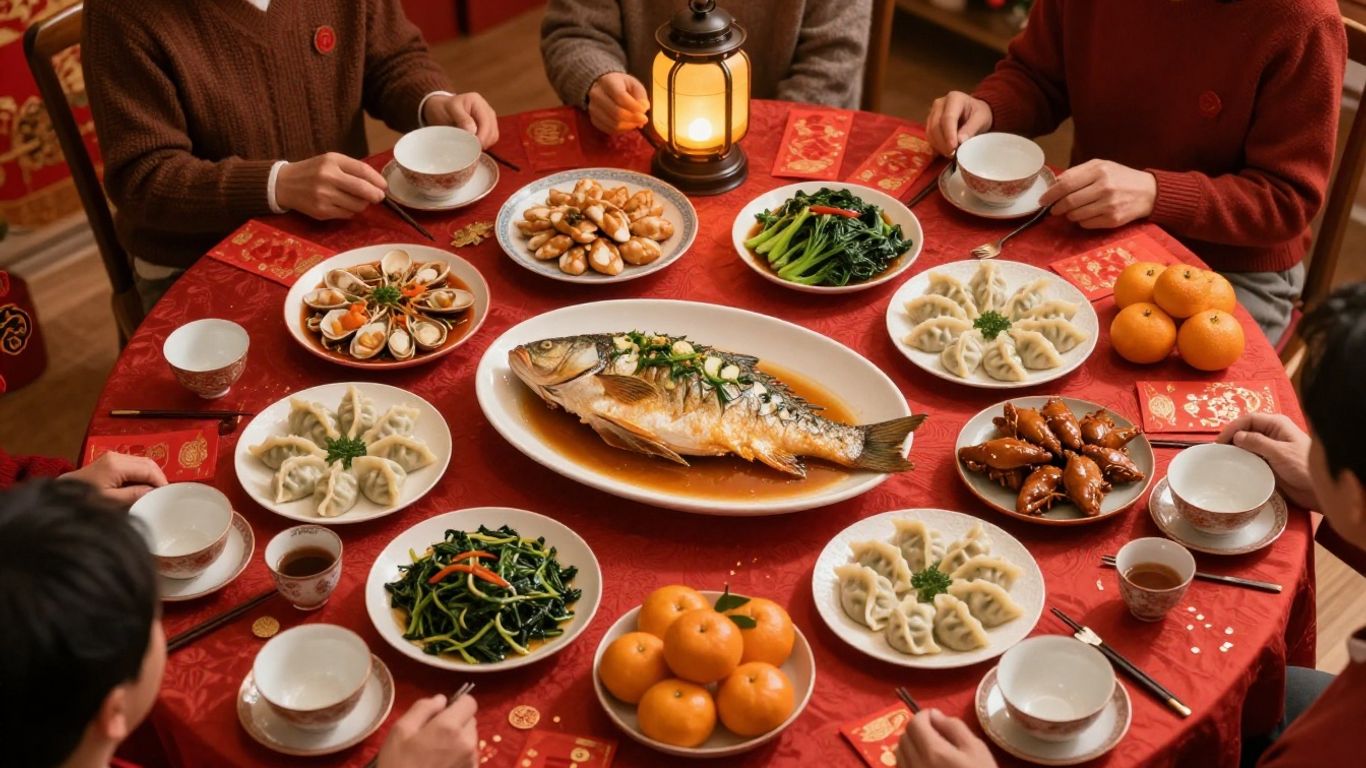
The holiday is not only a change of date; it is a season of visits, greetings, and family gatherings. The New Year’s Eve dinner is especially meaningful because people make an effort to sit together, even when they have traveled from different places. We often see the meal as a warm beginning to the year, with every dish contributing a small wish for health, prosperity, or harmony.
Some meanings come from pronunciation, while others come from appearance. A dumpling can resemble an old ingot, a spring roll can look like a roll of gold, and a round rice ball can suggest reunion. Color, abundance, and the way food is served also matter, so the symbolism is often woven through the entire meal rather than attached to one ingredient.
China’s food traditions vary enormously from one region to another. Northern families may favor wheat-based dumplings, while southern tables often include rice cakes, seafood, or dishes shaped by local produce and climate. Travelers who want a wider view can browse China’s regional food guide, then pay attention to how the same holiday is expressed differently from city to city.
There is no single menu that every household follows. One family may insist on a whole fish, while another may focus on hot pot, vegetarian dishes, or a beloved dessert made by a grandparent. We can respect the traditional meanings without treating personal variations as mistakes; a dish becomes part of the holiday through repetition, affection, and shared memory.
Starters give the meal an inviting rhythm, especially when several people gather in the kitchen to fold, fill, fry, or arrange them. Many are easy to prepare in batches, which makes them practical for a busy reunion dinner. Their shapes and names also make them natural conversation pieces for guests encountering these Chinese New Year foods for the first time.
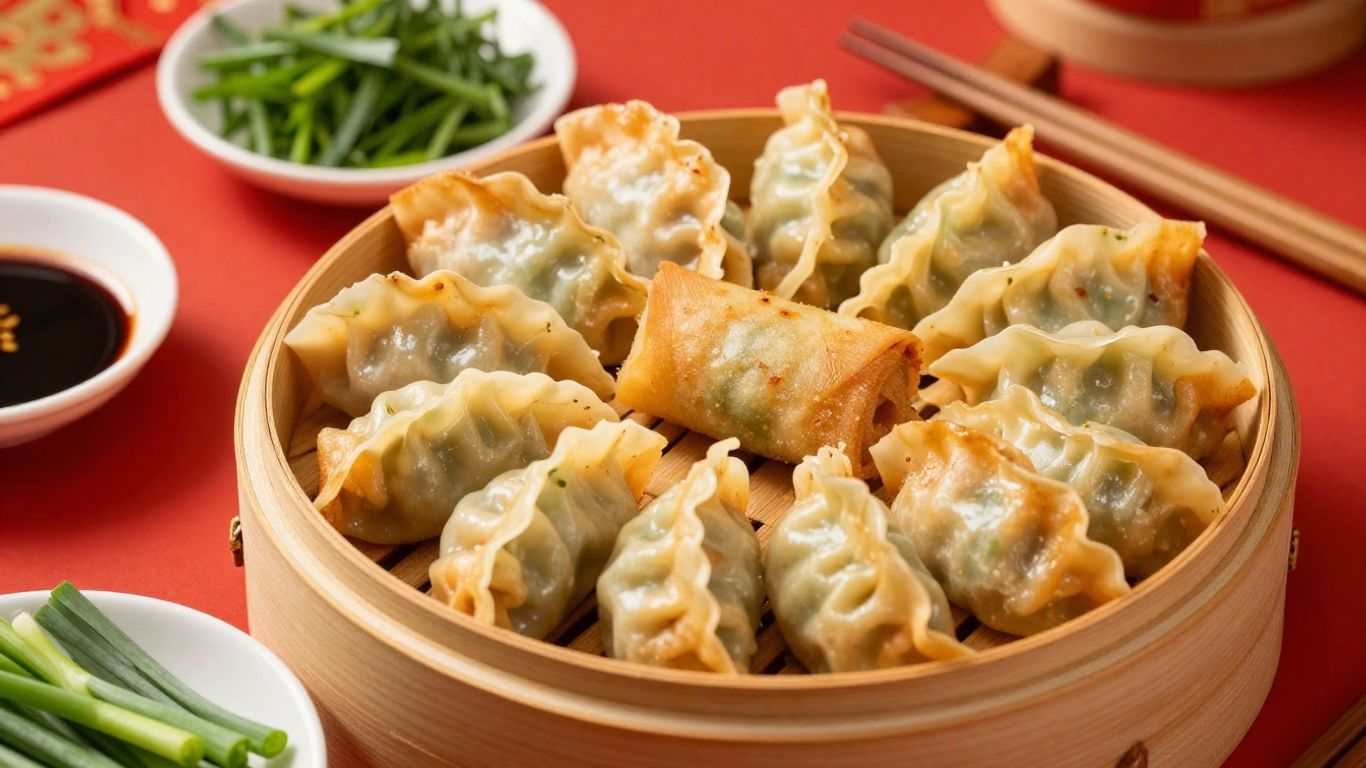
Jiaozi are folded dumplings commonly associated with wealth because their shape recalls traditional Chinese silver or gold ingots. Families may fill them with pork, vegetables, shrimp, or other local combinations, and making them together turns preparation into part of the celebration. We can serve them boiled, steamed, or pan-fried, depending on the household’s preference.
Crisp spring rolls are linked with prosperity through their golden color and cylindrical shape. They work well as a starter because their texture contrasts with softer dumplings and rice dishes. A platter of freshly fried rolls feels festive, but we can also bake or air-fry them when a lighter cooking method suits the gathering.
Nian gao, or glutinous rice cake, is associated with progress and a higher year. Its sticky texture and name give the food a particularly hopeful place in the holiday spread. We may find sweet or savory versions, and regional recipes can differ in color, ingredients, and method while keeping the same broad connection with advancement.
Longevity noodles are served in long strands to suggest a long life. The customary gesture is to avoid cutting them before serving, and diners often lift them carefully with chopsticks. We can keep the rest of the dish simple—vegetables, mushrooms, egg, or seafood—so the long noodles remain easy to notice and enjoy.
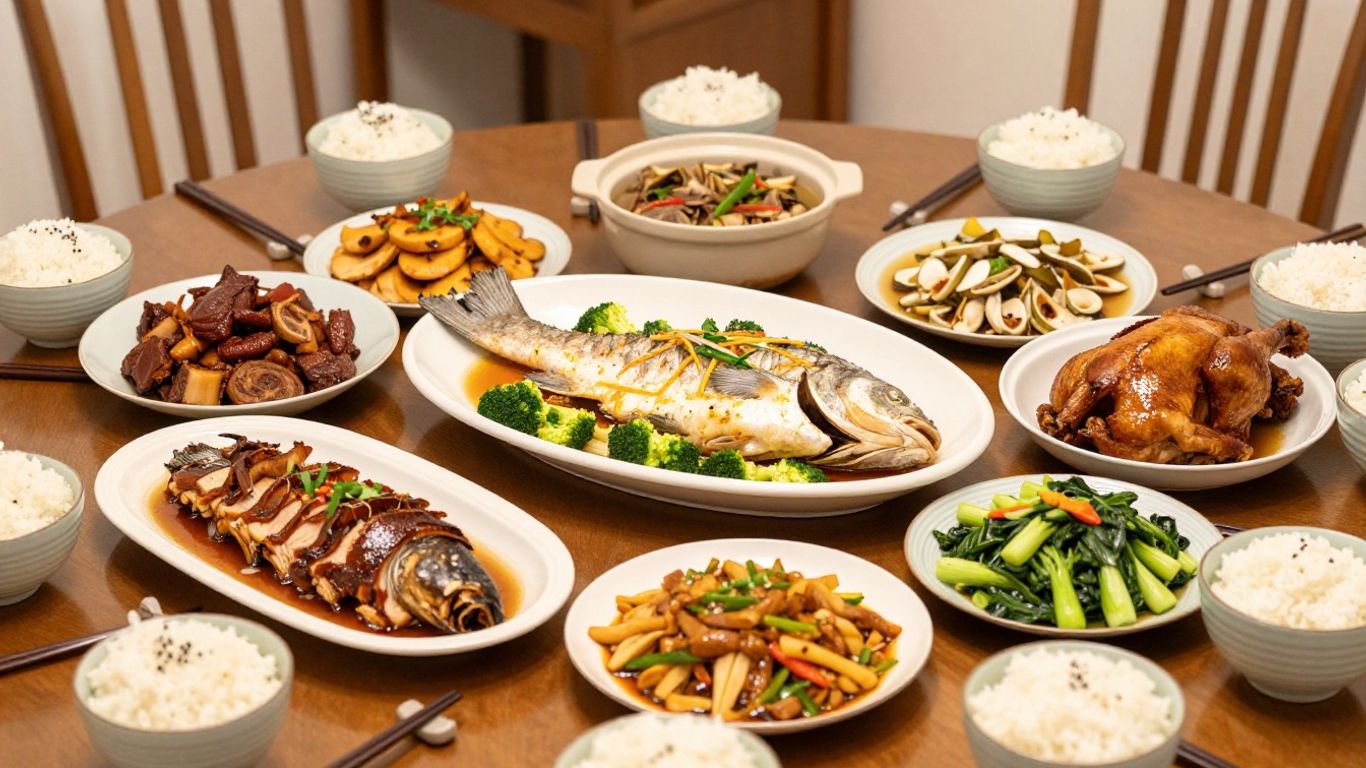
A main course anchors the reunion dinner and gives the table a sense of generosity. Rather than preparing every symbolic dish, we can choose a few that suit our guests and make them well. The most successful feast usually balances a centerpiece with vegetables, rice or noodles, and smaller dishes that invite everyone to take a little of everything.
Fish is widely associated with abundance because the Mandarin word for fish, yú, sounds like a word connected with surplus. Serving it whole keeps the head and tail visible and gives the dish a feeling of completeness. We can place it at the center of the table and let the person hosting the meal decide how to portion it respectfully.
A whole chicken can express unity and wholeness, particularly when it arrives at the table intact rather than divided into separate pieces. Steaming, poaching, braising, and roasting all appear in different family traditions. The preparation may be modest, but the presentation gives the dish its ceremonial character.
Pork appears in many celebratory meals because it is hearty, versatile, and suited to generous cooking. Braised pork, roast pork, and pork paired with taro or preserved vegetables can bring richness to the menu. We can counter that richness with greens, soup, or a fresh vegetable dish so the meal remains comfortable over several courses.
Hot pot turns dinner into an activity: broth simmers in the middle while everyone cooks thinly sliced meat, seafood, tofu, mushrooms, and vegetables. It is especially useful when guests have different tastes because each person can choose what to add. For travelers curious about a local version, an account of Chaoshan beef hot pot shows how a meal can stay simple, social, and centered on fresh ingredients.
A practical menu can be mapped by role rather than by a fixed number of recipes. This keeps the feast generous without making the cooking schedule unnecessarily complicated.
| Menu role | Possible dish | What it adds |
|---|---|---|
| Centerpiece | Whole steamed fish | Abundance and a shared focal point |
| Savory side | Jiaozi or spring rolls | A lucky, hands-on starter |
| Vegetable dish | Stir-fried greens | Freshness and balance |
| Staple | Longevity noodles or rice | Substance and continuity |
| Dessert | Tangyuan or nian gao | Reunion and good wishes |
The table is a guide, not a rulebook. We can replace any dish with something our family genuinely enjoys while keeping a balance of textures, colors, and cooking methods.
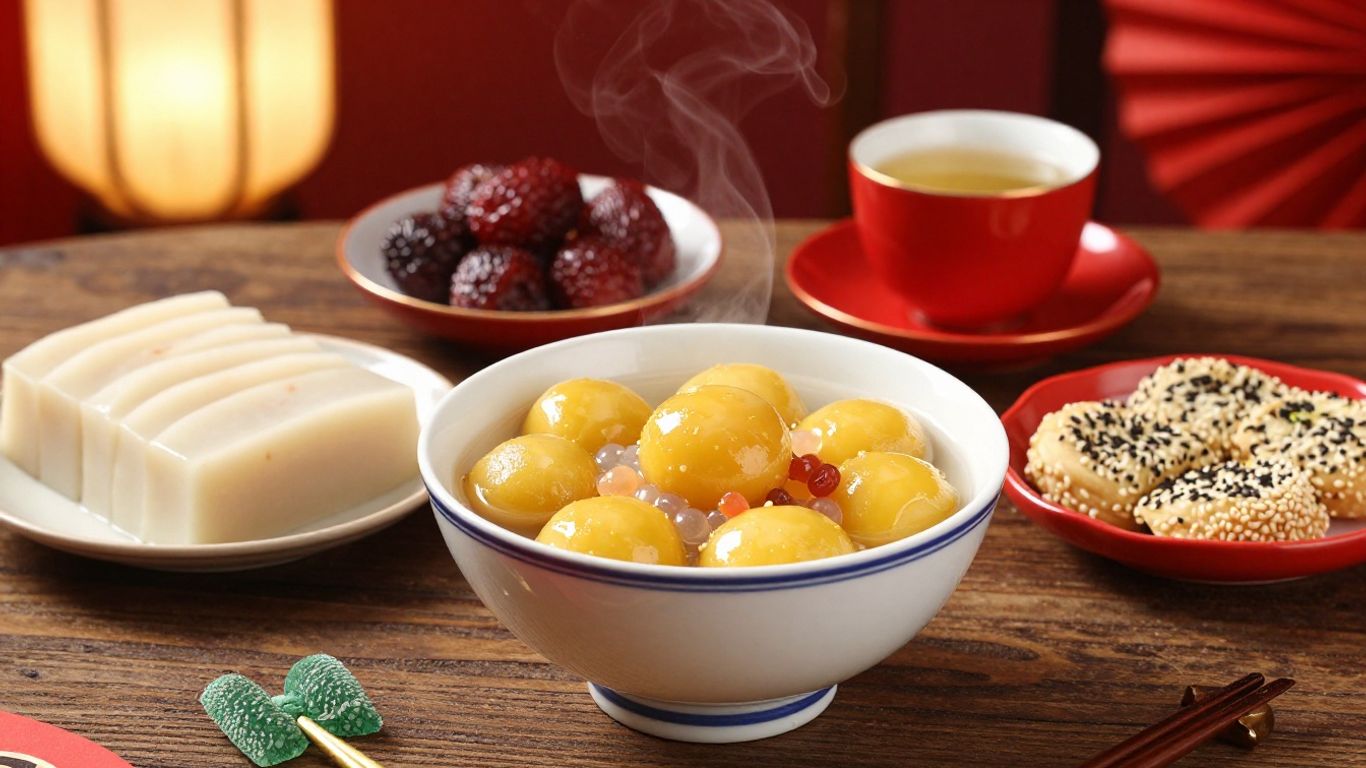
Desserts soften the close of a long meal and give children and adults an easy way to keep celebrating. Their round shapes, sticky textures, bright colors, and sweet flavors often carry wishes for reunion, progress, and a pleasant year. We can serve several small sweets rather than one elaborate finale, especially when the main meal is already substantial.
Tangyuan are glutinous rice balls, often filled with sesame, peanut, or another sweet paste and served in a warm liquid. Their round form and name are associated with togetherness and family reunion. They are especially connected with the Lantern Festival, though many families enjoy them during the wider Spring Festival period as well.
Nian gao is often translated as New Year cake, and its name sounds like a phrase related to getting higher year by year. That makes it a natural food for wishes about study, work, and personal progress. Depending on the region, it may be steamed, pan-fried, or prepared with savory ingredients rather than served as a simple dessert.
Candied fruits bring bright color and a concentrated sweetness to the table. Citrus, melon, coconut, and other preserved fruits may appear in different households, often arranged in trays for visiting guests. The idea is straightforward: begin the year with pleasant tastes and hope that daily life will be equally sweet.
Pastries and small cakes are convenient for serving with tea when relatives drop by throughout the holiday. Their designs may include flowers, animals, or auspicious colors, though the exact forms vary widely. When we choose treats, freshness and enjoyment matter more than forcing a symbolic explanation onto every decoration.
Planning becomes easier when we begin with the people at the table rather than a long list of supposedly essential dishes. We can consider allergies, cooking equipment, preparation space, and whether guests will eat at one sitting. A menu should feel festive, but it should also leave the host enough time to greet everyone.
A balanced menu might include one symbolic centerpiece, a dumpling or spring-roll starter, a vegetable dish, a staple, and a sweet. We should look for variety in texture and color rather than adding several dishes that all taste rich or require last-minute frying. A small menu made with care often feels more abundant than a crowded table of rushed food.
Vegetarian guests can enjoy vegetable dumplings, tofu, mushrooms, greens, rice cakes, and hot pot ingredients without losing the spirit of the celebration. We should label broths and sauces clearly when guests have allergies, and keep separate utensils available where needed. For practical meal ideas, foods for better sleep can also inspire lighter choices when the holiday meal is served late, though it is not a substitute for medical advice.
Several components can be handled in advance: dumplings can be folded and chilled, sauces can be mixed, vegetables can be washed, and desserts can be portioned. We can write down the cooking order and reserve the final minutes for noodles, greens, and anything that is best served hot. Even a simple preparation plan reduces the feeling that the host is missing the gathering.
For a smooth day, we might organize the work in this order:
This sequence gives us flexibility if guests arrive at different times. It also keeps the kitchen from becoming the only place where the celebration happens.
Family-style service suits a reunion table because dishes pass from person to person and the meal feels shared. A buffet can be easier for a large group, a mixed-age gathering, or guests with different dietary needs. We can use smaller serving plates and replenish them gradually, preserving warmth and keeping the table from feeling overcrowded.
Etiquette varies by family, region, and setting, so curiosity is usually more helpful than rigid rules. We can watch how the host begins, ask when unsure, and make room for older relatives or honored guests to receive food first. The table is a place for generosity, but also for attentiveness.
Some households avoid cutting noodles, sweeping on the first day, or breaking objects because these actions can be associated with shortening life, sweeping away luck, or losing good fortune. Avoided foods also differ, and not every family follows the same list. We should treat these customs as meaningful preferences rather than universal requirements.
A whole fish is usually placed so that diners can see it clearly, while noodles are served in long strands. Dumplings are offered generously, often in shared plates, and guests can take portions with serving chopsticks when available. We should avoid turning or mishandling a whole fish casually, since presentation is part of its meaning in many homes.
Red envelopes are gifts rather than food, but they belong to the same atmosphere of goodwill. Tea gives guests something warm to drink between courses and during visits, while shared dishes keep attention on the group rather than on individual plates. These small gestures help a reunion feel welcoming even when the menu is modest.
We can preserve a grandmother’s dumpling filling, learn a regional recipe during a trip, or add a vegetarian dish that has become a household favorite. Visiting a neighborhood restaurant or food street can also broaden our sense of what a holiday meal may include. A good example of practical local exploration is finding Chinese food nearby, where comparing regional menus can turn an ordinary meal into a small cultural discovery.
Tradition remains alive when people use it, adapt it, and pass it on with care. We might also enjoy a short Chinese New Year cooking video before preparing a dish, especially when a technique is unfamiliar.
Chinese New Year foods bring together flavor, family memory, regional identity, and hopeful wishes for the year ahead. We can build a meaningful feast with a few well-chosen dishes, thoughtful serving, and enough flexibility for our own table. What matters most is not perfect imitation, but the shared act of welcoming one another through food.
Common choices include dumplings, spring rolls, whole fish, whole chicken, pork dishes, longevity noodles, nian gao, and tangyuan. Menus vary by region and family.
Their folded shape is often compared with traditional Chinese ingots, so dumplings are associated with wealth and prosperity. Making and eating them together also adds a strong communal element.
A whole fish suggests completeness and togetherness, while the word for fish sounds like a word connected with surplus in Mandarin. Serving it intact preserves both ideas.
Nian gao is associated with rising higher or making progress year by year. It may be sweet or savory, and recipes differ across regions.
Yes. Vegetable dumplings, tofu, mushrooms, greens, rice cakes, and vegetarian hot pot can all fit comfortably into a festive meal and its spirit of abundance.
Some families avoid cutting longevity noodles, breaking objects, or actions believed to sweep away luck. Customs differ, so following the host’s preferences is the safest approach.
Choose one centerpiece, prepare several components ahead, include a vegetable dish and staple, and finish with a simple sweet. Family-style service can make a modest menu feel generous.
A small note for curious travelers: digital planning tools can be useful for organizing an itinerary, and readers exploring custom AI agents may find broader planning ideas there. Likewise, those comparing urban transport might come across Zoot Scooters, though scooters are separate from the food traditions discussed here.