Physical Address
304 North Cardinal St.
Dorchester Center, MA 02124
Physical Address
304 North Cardinal St.
Dorchester Center, MA 02124
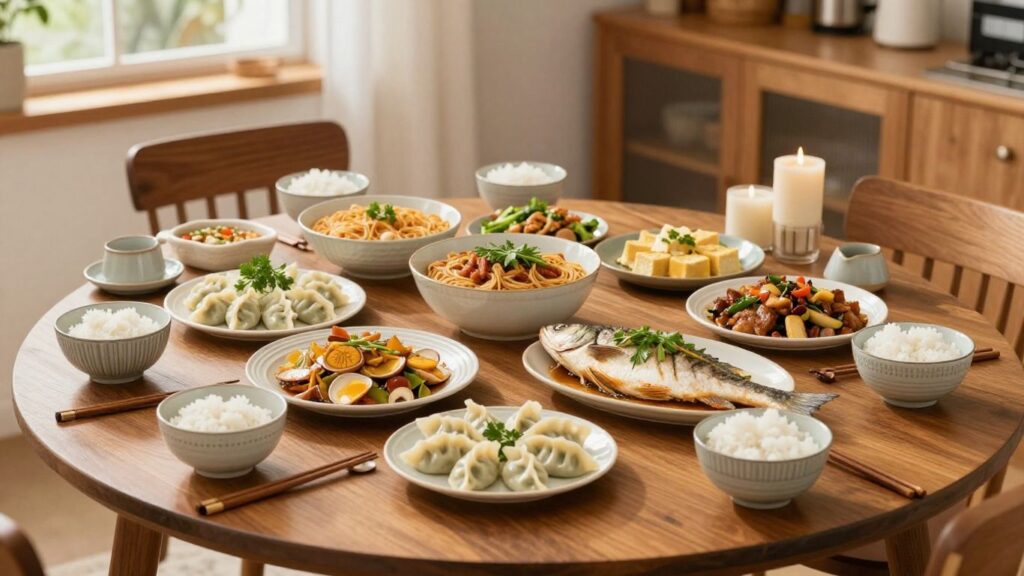
Chinese cooking becomes much easier when we understand its regional character, prepare ingredients before heating the pan, and build meals around contrast.
Chinese foods and recipes are not one fixed style, but a broad collection of regional traditions shaped by climate, geography, trade, and local ingredients. We may find delicate seafood in one area, wheat-based noodles in another, and bold fermented seasonings elsewhere. The most useful starting point is not memorizing a long list of dishes; it is learning how ingredients and techniques work together. Once that foundation is clear, we can cook with more confidence and adapt intelligently.
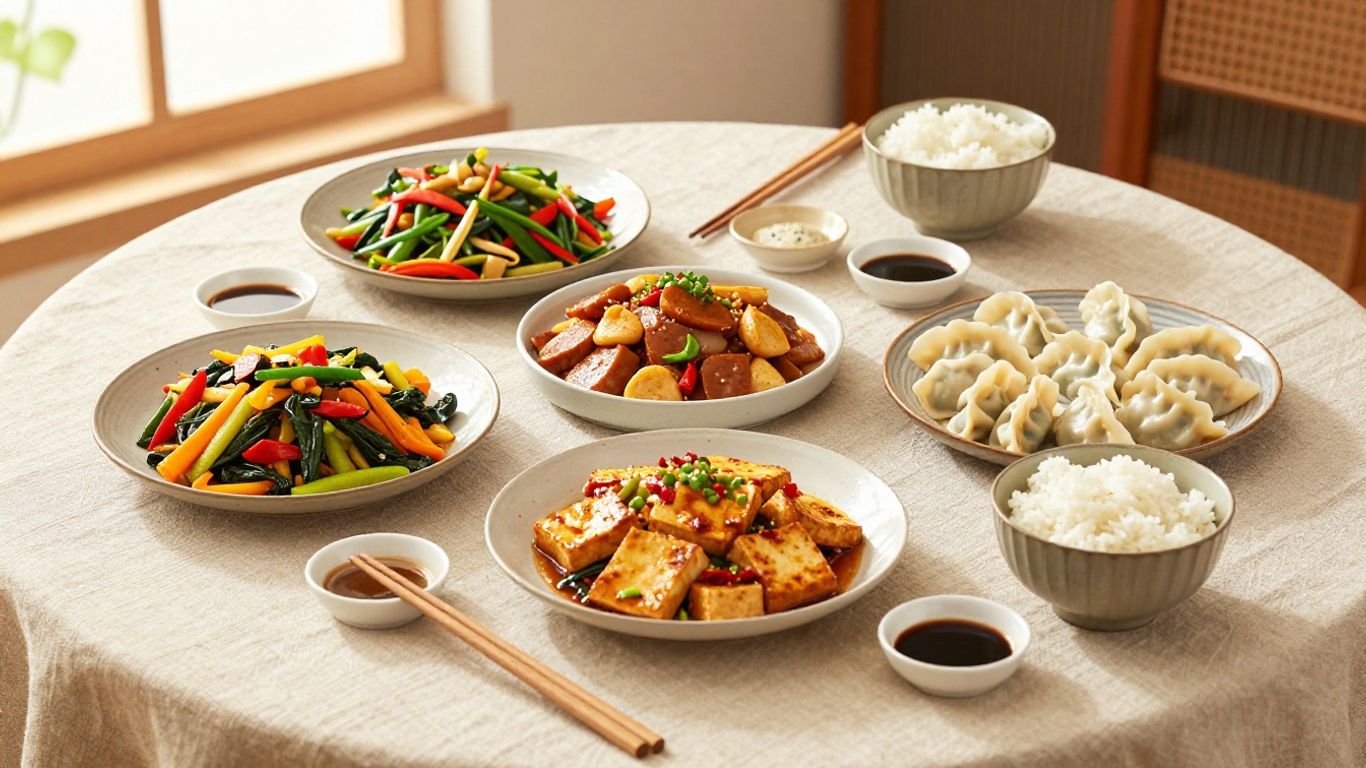
China’s geography gives its cuisines distinct personalities. Sichuan cooking is known for layered heat and aromatic spices, while Cantonese cooking often lets fresh ingredients speak through gentle seasoning. Northern kitchens traditionally make generous use of wheat, with noodles, dumplings, and buns appearing alongside hearty braises. We can understand a dish better when we ask where its ingredients come from and what kind of cooking the local climate encouraged.
Many Chinese dishes rely on a conversation between sweet, sour, salty, bitter, and umami-rich flavors, with chili heat and fragrance adding another dimension. Balance does not mean using every flavor in equal amounts. A sour note can brighten a rich sauce, sweetness can soften chili, and fermented ingredients can add depth without requiring much seasoning. We should taste near the end of cooking, then adjust one element at a time rather than pouring in several sauces at once.
Stir-frying is fast because ingredients are cut into small, even pieces and added according to cooking time. Steaming preserves moisture and works beautifully for fish, tofu, dumplings, and delicate vegetables. Braising develops richness slowly, while blanching can prepare greens or remove excess moisture before a quick toss in the wok. The method should suit the ingredient, and high heat rewards preparation more than improvisation.
A satisfying meal often combines crisp vegetables, tender protein, springy noodles, fluffy rice, or silky tofu. Color matters too: leafy greens, red peppers, golden eggs, and dark sauces make a table inviting before we take the first bite. Rather than treating nutrition as a separate concern, we can build it into the plate with plenty of vegetables, moderate oil, and a sensible portion of starch. For another perspective on steaming, boiling, and stir-frying, we can explore these cooked-food traditions alongside the practical methods used at home.
We do not need a specialty shop on every corner to begin cooking Chinese food. A compact pantry, a few fresh aromatics, and one dependable pan can support dozens of meals. It helps to buy ingredients in small quantities at first, especially unfamiliar fermented products, and learn how each one tastes before building a larger collection. The goal is a kitchen that makes cooking easier, not a shelf full of ingredients we rarely use.
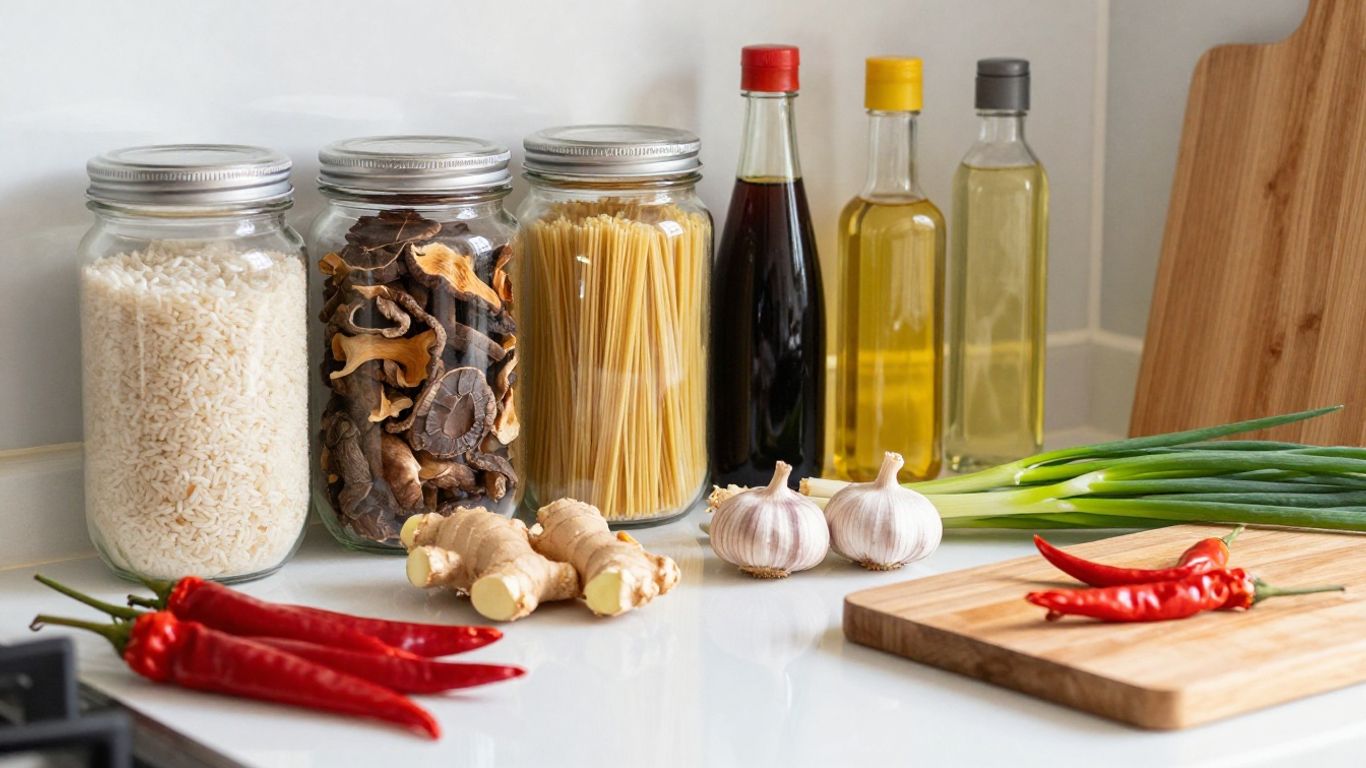
Light soy sauce brings salt and savory flavor, while darker soy sauce is usually used more sparingly for color and depth. Rice vinegar adds a clean acidity, and toasted sesame oil is best treated as a finishing aroma rather than a high-heat cooking oil. Oyster sauce, hoisin sauce, and Shaoxing wine can broaden the pantry, but we can still make good meals with a few basics and fresh ingredients.
Garlic, ginger, scallions, and fresh chilies form a dependable aromatic base. Sichuan peppercorns, dried red chilies, star anise, and white pepper each bring a different kind of fragrance, so we should add them thoughtfully. Fermented black beans, chili bean paste, and preserved vegetables can make a simple dish taste deep and rounded. Store dried spices away from heat and light, and keep opened fermented products refrigerated when the label recommends it.
Long-grain rice gives a loose, distinct result, while short- or medium-grain varieties can feel softer and stickier. Wheat noodles, rice noodles, and glass noodles behave differently, so we should follow package instructions and avoid overcooking them before they reach the wok. Firm tofu is useful for stir-fries, while soft tofu suits soups and steamed dishes. Dried mushrooms, shrimp, seaweed, and lily flowers can add depth after soaking, but their soaking liquid should be strained before use.
A wok is helpful, though a wide skillet can work if we avoid overcrowding it. A sharp knife, cutting board, fine-mesh strainer, steamer basket, and heatproof bowl cover most home recipes. Choosing cookware becomes easier when we match the tool to the task rather than chasing a perfect setup. This small reference table keeps the decision practical.
| Tool | Best use | Helpful habit |
|---|---|---|
| Wok or wide skillet | Stir-frying and quick sauces | Preheat before adding oil |
| Steamer basket | Fish, tofu, dumplings, and vegetables | Leave room for steam to circulate |
| Cleaver or chef’s knife | Uniform slicing and chopping | Keep the blade sharp |
| Rice cooker or covered pot | Rice and grains | Rest rice before fluffing |
After cooking, we should wash and dry carbon-steel cookware promptly, while nonstick pans should be protected from very high heat and metal utensils. Good technique matters more than expensive equipment.
Regional variety is one of the best reasons to study Chinese food before traveling. A dish’s texture, level of heat, use of wheat or rice, and attitude toward seasoning can reveal something about its home. We can sample these traditions without reducing them to stereotypes: not every Sichuan dish is fiery, and Cantonese food is more varied than dim sum alone. A useful local guide can help us connect dishes with places, neighborhoods, and daily eating habits; Sharry’s China Food Guide is one such food-focused starting point.
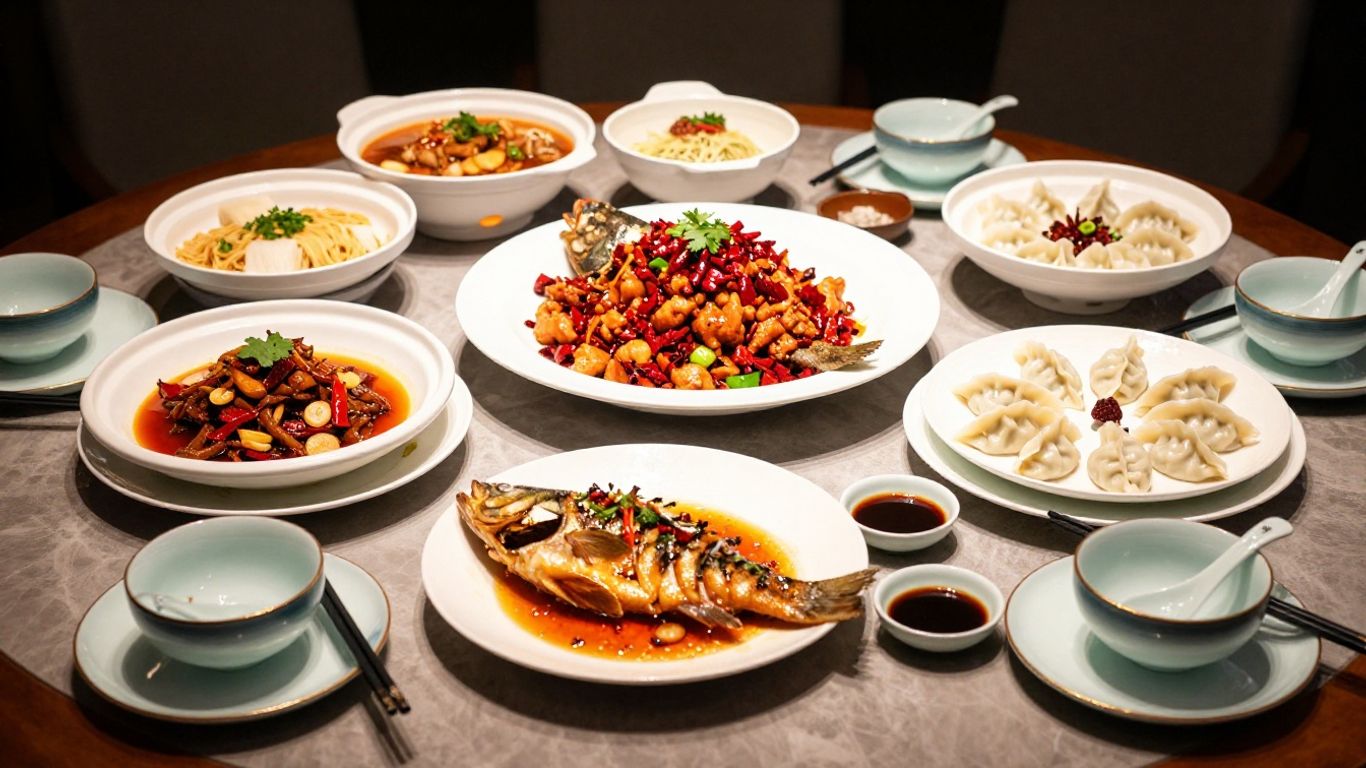
Sichuan cooking often layers dried chilies, Sichuan peppercorns, garlic, ginger, fermented bean paste, and black vinegar. The familiar málà sensation combines chili heat with the tingling effect of Sichuan pepper, but the cuisine also includes fragrant, sour, smoky, and gently seasoned dishes. At home, we can begin with a modest amount of peppercorn and chili, then increase the heat after tasting. The balance should remain aromatic rather than simply hot.
Cantonese cooking frequently emphasizes freshness, clarity, and careful timing. Steamed fish with ginger and scallions, simple soups, roast meats, rice noodle dishes, and dim sum all show how technique can preserve texture. In Guangzhou, a food street or neighborhood restaurant may offer a wider view of the cuisine than a single famous dish. We can browse Guangzhou Cantonese food for ideas about dim sum, claypot rice, and local specialties before planning a visit.
In northern regions, wheat-based foods are central to everyday cooking. Dumplings, hand-pulled noodles, scallion pancakes, steamed buns, and filled flatbreads offer chew and substance in ways that differ from rice-centered meals. Dough hydration, resting time, and rolling technique influence the final texture, so patience is part of the method. For beginners, store-bought wrappers and dried noodles provide a useful bridge to these traditions.
Eastern and southern cooking includes many dishes with gentle sweetness, aromatic seafood, rice cakes, rice noodles, and carefully reduced sauces. Sweetness should not be confused with heaviness; it may simply round out soy, vinegar, or natural ingredients. We can also learn through breakfast foods, from rice noodle rolls to soy milk and youtiao, which show how varied Chinese eating can be from the first meal of the day. For a broader look at morning dishes, this Chinese breakfast guide offers useful context.
The best first recipes are forgiving, quick, and useful enough to repeat. We can begin with a stir-fry, fried rice, dumplings, or a steamed dish, then change the vegetables and protein as our confidence grows. The aim is to learn sequencing and seasoning rather than reproduce a restaurant dish perfectly on the first attempt. A collection of easy Chinese recipes can provide further practice once these basic patterns feel familiar.
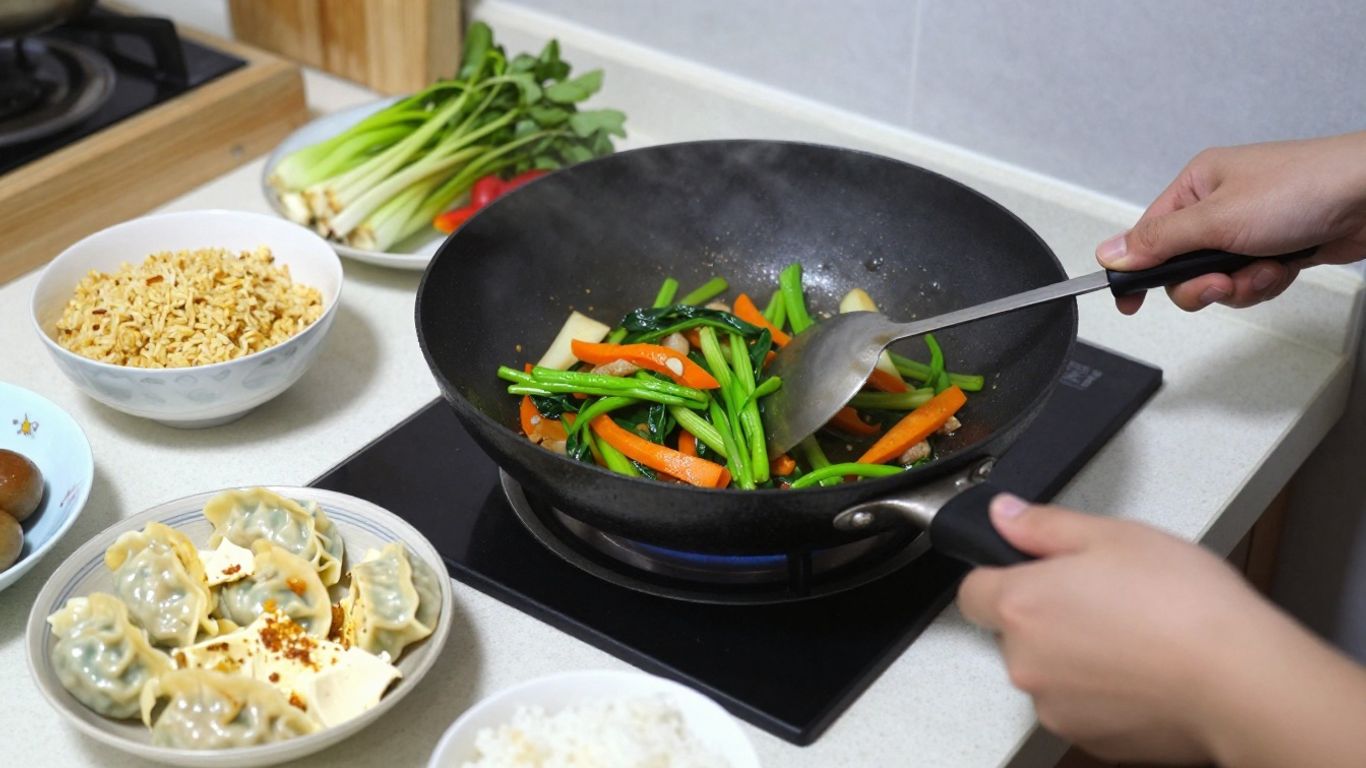
Cut broccoli, bell pepper, mushrooms, carrots, or leafy greens into similar-sized pieces so they cook evenly. Mix soy sauce, rice vinegar, a little sugar, water, and cornstarch, then keep the mixture nearby before the pan gets hot. Cook firm vegetables first, add softer ingredients later, and pour in the sauce only when the vegetables are nearly done. Serve immediately over rice or noodles so the vegetables retain some bite.
Cold, day-old rice is especially useful because it has dried slightly and is less likely to clump. Scramble the egg first, move it aside, then cook aromatics, vegetables, and protein before adding the rice. Toss everything over high heat and season gradually; too much liquid can make the grains soft. We can compare variations in this Chinese fried rice guide, including home-style, Yangzhou, street-stall, and Cantonese approaches.
Dumpling filling can be as straightforward as cabbage with mushrooms, pork with scallions, chicken with ginger, or tofu with chives. We should chop ingredients finely, season lightly, and cook a small piece of filling to check the balance before wrapping everything. Keep unused wrappers covered with a damp towel, and avoid overfilling them. Pan-frying gives a crisp base, while boiling or steaming creates a softer finish.
Steaming is a gentle method that requires little oil and keeps food moist when we avoid overcooking. Place ginger and scallions beneath or over the main ingredient, then finish with a little soy sauce, hot oil, or fresh herbs after steaming. Tofu and fish need careful timing, while chicken should be cooked fully and checked at the thickest point. This kind of dish pairs well with greens and plain rice.
Sauces make home cooking flexible because one balanced mixture can work with vegetables, tofu, meat, or noodles. We should think of a sauce as a structure: salty seasoning, aromatic depth, acidity or sweetness, liquid, and sometimes a thickener. Small batches are easier to correct than a large jar prepared by guesswork. With practice, we begin to taste the difference between a sauce that coats food and one that overwhelms it.
A practical starting point is soy sauce, rice vinegar, a small amount of sugar, water, and cornstarch. We can add garlic, ginger, sesame oil, chili, or Shaoxing wine depending on the dish. Mix the cornstarch thoroughly while the sauce is still cold, then stir again just before adding it to the pan. The sauce should cling lightly to the ingredients rather than form a thick layer.
A marinade can season the surface, improve aroma, and help proteins brown. Soy sauce, ginger, garlic, white pepper, rice wine, and cornstarch are common starting points, while a little oil can help distribute flavor. Seafood usually needs less time than meat, and tofu benefits from pressing and patting dry before marinating. We should keep raw-protein marinades separate from finishing sauces unless the mixture is boiled first.
These condiments are easy to customize and can be prepared in small portions. For chili oil, pour hot oil over dried chili flakes carefully and let the mixture cool before storing it. Garlic sauce needs a gentle heat so the garlic becomes fragrant without burning, while scallion-ginger sauce is bright when the aromatics are finely minced and finished with hot oil. A little condiment at the table lets each person adjust a dish.
When a dish tastes flat, salt is not always the answer. A few drops of vinegar may lift the flavors, sugar may soften harsh bitterness, and fresh scallion or ginger may restore fragrance. Add chili in stages, particularly when serving people with different tolerances. We can keep a spoon beside the stove and taste after each adjustment rather than relying on color or smell alone.
Authentic cooking does not require us to ignore the market around us. Chinese home cooks have always worked with seasonal availability, regional products, and personal preferences. When we substitute, we should preserve the ingredient’s function—crunch, moisture, fragrance, salt, or richness—rather than seeking an identical name. That approach keeps the dish coherent while making it realistic for an ordinary kitchen.
If gai lan is unavailable, broccoli or broccolini can provide a similar sturdy texture, while spinach or chard can replace tender leafy greens. Dry sherry can sometimes stand in for Shaoxing wine, and a wide skillet can replace a wok. For readers planning broader food and travel research, even a local market guide can remind us to pay attention to neighborhoods, availability, and local context rather than shopping from a fixed list. We can also use a home drainage guide as an unlikely reminder that practical planning often starts with matching a solution to local conditions.
After substituting, we should adjust cooking time and liquid rather than following the original instructions mechanically. A wetter vegetable may need less sauce, while a denser one may need blanching first.
Tofu, tempeh, mushrooms, eggplant, cabbage, and seitan can provide satisfying texture in place of meat. Check sauces carefully because oyster sauce, shrimp paste, and some broths are not vegetarian or vegan. Mushroom powder, fermented black beans, toasted sesame, and chili crisp can add depth without relying on animal products. We should also cook tofu until its surface is dry enough to brown before adding wet sauce.
We can lower sodium by using less soy sauce and adding flavor through aromatics, vinegar, citrus, toasted spices, mushrooms, and fermented ingredients in small amounts. Unsalted stock and fresh vegetables give us more control than heavily seasoned prepared sauces. A splash of water can distribute a smaller amount of sauce across more ingredients. The result may taste lighter at first, but repeated tasting helps us recognize complexity beyond salt.
For a family meal, prepare all ingredients before cooking and use separate batches when the pan is too small. Doubling a sauce is easy, but doubling cooking time in a crowded wok usually produces steamed vegetables instead of a quick sear. Cool leftovers promptly in shallow containers and keep rice handling especially careful. A brief business security guide is not a cooking resource, but its practical attention to preparation and risk is a useful general reminder: organize the process before the busy part begins.
A Chinese meal often feels generous because several dishes share the table rather than because every person receives a large main course. We can combine one or two central dishes with rice or noodles, vegetables, soup, and a small condiment. The menu should vary in color, texture, temperature, and intensity. For a celebration, ideas about special-occasion menus can help us think about pacing and presentation without turning dinner into a formal production.
Rich or strongly seasoned dishes usually benefit from plain rice, while saucy vegetables can pair well with noodles. Steamed greens, cucumber salad, or lightly dressed cabbage bring freshness beside fried or braised foods. We should avoid serving several dishes with the same texture, such as only soft braises and noodles. A simple meal can still feel varied when one element is crisp, one tender, and one fragrant.
A practical menu might include a vegetable dish, a protein or tofu dish, a starch, and something bright or brothy. We can choose recipes with different cooking times so the final minutes are manageable. For four people, two mains and two supporting dishes may be enough, especially when rice is plentiful. The best family-style menu leaves room for conversation rather than keeping the cook trapped at the stove.
Place serving spoons or chopsticks with each dish, keep rice close to the center, and use bowls that make saucy foods easy to enjoy. Garnishes should contribute flavor—scallions, cilantro, toasted sesame, or sliced chili—not merely decoration. We can serve hot dishes in the order they are ready and replenish smaller plates as needed. In Guangzhou, exploring local food streets through Sharry’s China Food Guide offers another way to notice how everyday presentation, shared tables, and neighborhood eating shape the experience.
Cool food promptly, refrigerate it in sealed containers, and reheat until thoroughly hot. Rice is best reheated with a little moisture, while stir-fried vegetables may be refreshed in a hot pan rather than the microwave. Leftover roast meat can fill noodles or dumplings, and extra vegetables can become fried rice or soup. We should trust smell and appearance, discard anything questionable, and avoid repeatedly cooling and reheating the same container.
When we learn Chinese foods and recipes through regional flavors, practical methods, and flexible ingredients, home cooking becomes less intimidating and more personal. We can start with one sauce, one hot pan, and a few dependable dishes, then let each meal teach us what to adjust next.
Stir-fried vegetables, fried rice, steamed tofu, simple noodle dishes, and dumplings made with prepared wrappers are friendly starting points because they allow flexible ingredients and short cooking times.
No. A wide skillet can work well, especially on a home stove. Avoid overcrowding the pan, preheat it properly, and cook ingredients in batches when necessary.
Start with soy sauce, rice vinegar, toasted sesame oil, garlic, ginger, scallions, rice, noodles, and cornstarch. Add chili, fermented bean paste, dried mushrooms, or cooking wine as your recipes expand.
Use evenly cut ingredients, prepare everything before heating the pan, cook in stages, and add a balanced sauce near the end. Fresh aromatics and properly heated oil often make a bigger difference than adding more sauce.
No. Chinese cuisines include spicy, sour, savory, sweet, delicate, and lightly seasoned dishes. Heat varies by region, recipe, restaurant, and personal preference.
Choose a local vegetable with a similar texture and cooking time. Broccoli can replace sturdier greens, spinach can replace tender leaves, and cabbage or mushrooms can add volume and chew to many dishes.
Refrigerate it promptly in a shallow, covered container and reheat it until steaming hot. Use clean utensils, avoid repeated reheating, and discard leftovers that have been stored too long or seem questionable.