Physical Address
304 North Cardinal St.
Dorchester Center, MA 02124
Physical Address
304 North Cardinal St.
Dorchester Center, MA 02124
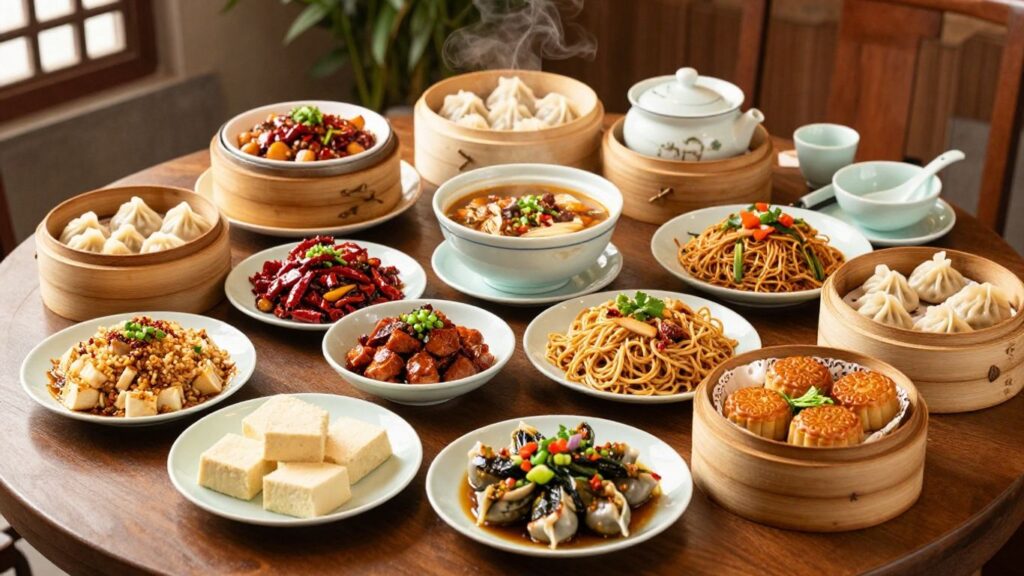
We can learn a great deal from Chinese foods pictures before we ever read a menu. Look for the base ingredient, cooking method, sauce, regional clues, and serving style.
Chinese food photographs often give us a useful first impression, but they rarely tell the whole story. We can usually narrow down a dish by studying its main ingredient, shape, sauce, and cooking vessel. A glossy brown plate may be braised, stir-fried, or simply finished with a thick sauce. When we combine several visual clues, the menu becomes much easier to understand.
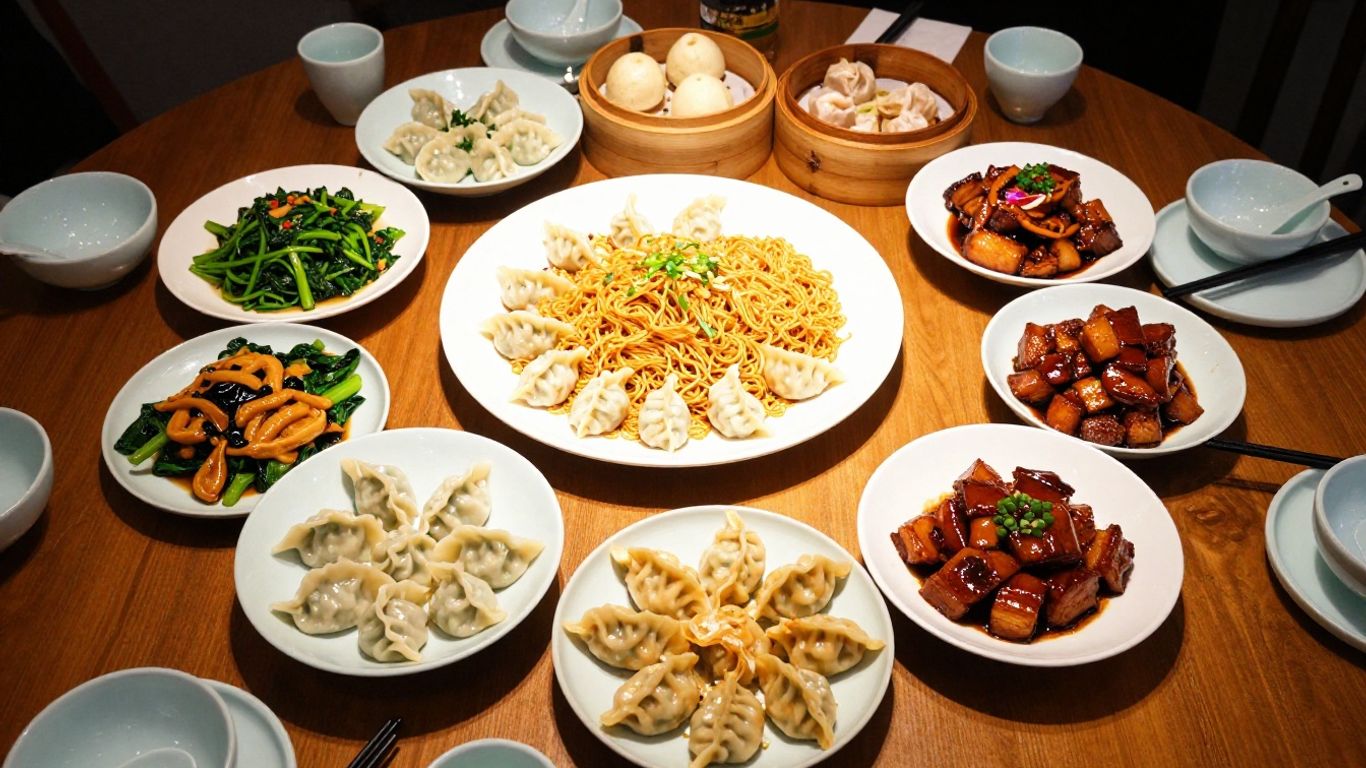
We can start with what appears most prominently in the frame. Pale cubes may be tofu, translucent ribbons can be rice noodles, and broad green leaves often point to bok choy, gai lan, or another leafy vegetable. Dark soy-based sauces tend to look glossy and deep brown, while chili oils add a red-orange sheen and sesame seeds provide small, pale accents.
Some dishes are defined by contrast: crisp vegetables beside tender meat, soft tofu under a spicy sauce, or roast duck served with thin pancakes and herbs. The color alone is not enough, since restaurant lighting can make a mild sauce look darker than it is. A Chinese food image collection can help us compare these visual patterns across many dishes.
The foundation of a dish is often its clearest clue. Long, thin noodles may be wheat-based or made from rice, and their width can suggest whether they were hand-pulled, stir-fried, or served in broth. Fried rice usually has separate grains with visible egg, vegetables, or small pieces of meat, while clay pot rice may show a darker, crisp layer around the edge.
Dumplings have pleated or folded edges, whereas filled buns tend to be rounder and softer. Wontons are often smaller and appear in soup or chili oil. We should also notice whether the starch is served underneath the topping, mixed through it, or placed separately for sharing.
Cooking method changes the surface of a dish. Steamed preparations generally look clean and moist, with delicate shapes that have not been heavily browned. Stir-fried food often has brighter vegetables, lightly charred edges, and a thin coating of sauce. Deep-fried dishes show a crisp, textured exterior, while braised foods tend to be darker, softer, and more saturated with color.
A bamboo steamer, sizzling platter, clay pot, or large communal bowl adds another clue. Traditional cooking approaches such as steaming, boiling, and stir-frying are also discussed in this Chinese cooking and wellness guide, which is useful when we want to connect appearance with preparation.
Garnishes are not always decorative. Fresh scallions, cilantro, toasted peanuts, sesame, dried chilies, and pickled vegetables can signal a dish’s flavor direction and add an important textural contrast. A mound of herbs may suggest freshness, while crunchy nuts beside a glossy stir-fry often point to a sweet, savory, or spicy combination.
We should look at the setting as well. Small plates arranged in a group suggest shared dining, while a single bowl with chopsticks nearby may be a personal meal. For a broader introduction to regional variety, we can browse this guide to Chinese culinary traditions before comparing dishes from different provinces.
Classic dishes appear in many forms, and a restaurant photograph may reflect a local interpretation rather than one fixed standard. We can use familiar names as starting points, then check the ingredients and preparation listed underneath. This is especially helpful for travelers, since dishes with the same English name can vary in sweetness, heat, or portion size.
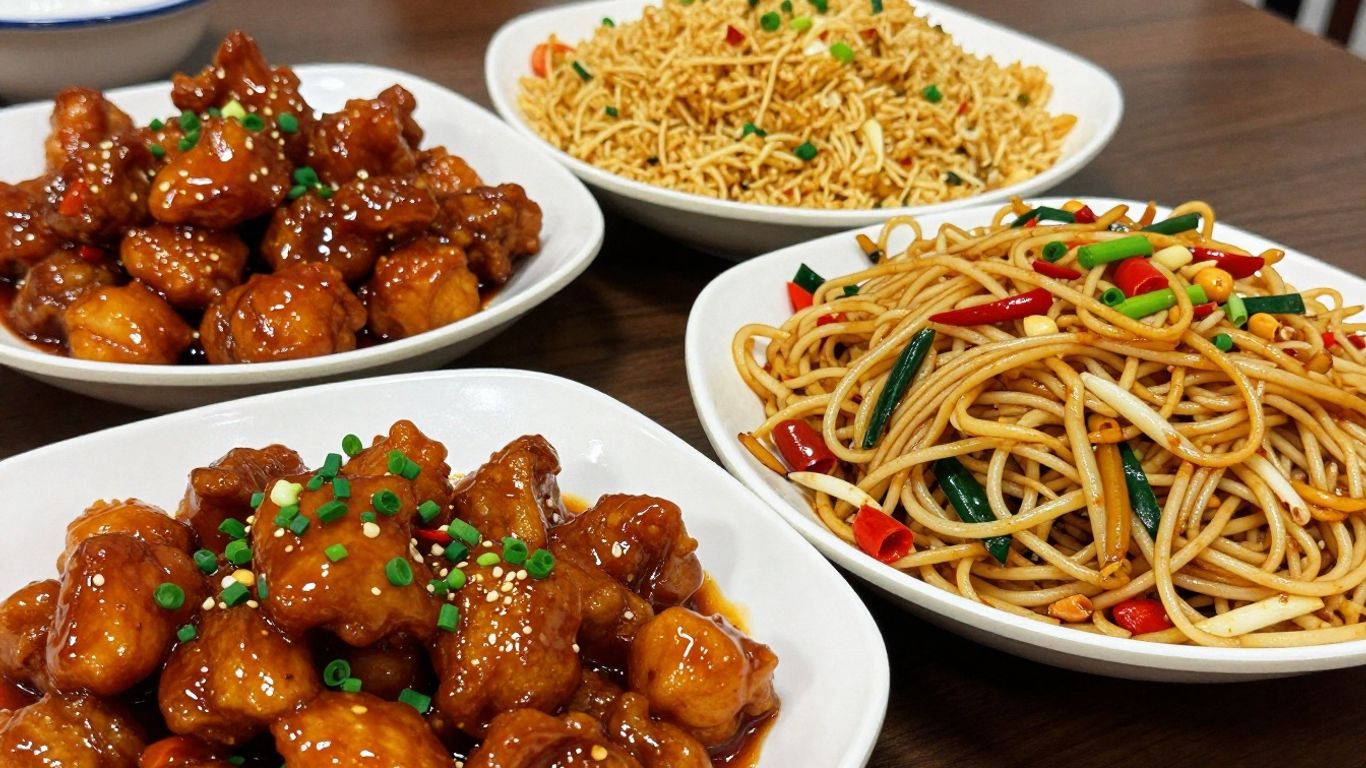
Sweet and sour pork is often recognizable by its crisp, golden pieces and a red or amber glaze. Pineapple, bell pepper, and onion may appear around the meat, although the balance differs from one kitchen to another. The best visual clue is usually the contrast between crunchy coating and shiny sauce.
We can also compare that familiar profile with roast meats, glazed ribs, or vinegar-seasoned vegetables. A dish that looks bright and lacquered may be sweet-forward, while a darker, thinner sauce can have more soy and savory depth.
Kung pao chicken commonly appears as diced chicken with dried chilies, peanuts, and scallions. The chilies may provide fragrance more than direct heat, but photographs cannot tell us how spicy a particular version will be. Peanuts and a small amount of sauce often make the dish visually distinct from a plain chicken stir-fry.
For home cooks who want to compare familiar takeout flavors with other preparations, these Chinese recipes to try at home offer useful inspiration. We can still ask a restaurant whether its version is sweet, numbing, smoky, or especially hot.
Red-cooked pork is usually cut into substantial cubes with a dark, glossy coating. The meat looks tender rather than crisp, and the sauce may pool at the bottom of a bowl or cling thickly to each piece. Soy sauce, sugar, and aromatics create the rich color associated with the name.
Other braised dishes may feature beef, chicken, tofu, or eggs. Their photographs often show soft edges and a concentrated sauce, but we should not assume that every dark dish is heavily seasoned; some are gentle and subtly sweet.
Chow mein can be identified by tossed wheat noodles mixed with vegetables, meat, seafood, or bean sprouts. Dan dan noodles are often served in a smaller bowl with chili oil, minced meat, greens, and a nutty or sesame-rich sauce. The amount of broth is a useful distinction: one dish may be dry-tossed, while another has a loose, aromatic coating.
When studying a photo, we can look for noodle width, visible toppings, and whether the sauce sits beneath the noodles. Those details often tell us more than the English name alone.
Fried rice photographs usually show separate grains and scattered ingredients, with egg, peas, scallions, shrimp, or diced meat appearing throughout. Clay pot rice has a more layered look: toppings sit over rice, and the vessel may reveal browned edges or a crisp base. Both are filling, but they offer very different textures.
A practical way to compare them is to ask whether we want a tossed dish or a meal built in one pot. This fried rice styles guide is a useful companion when we want to distinguish home-style, Yangzhou, street-stall, and Cantonese presentations.
China’s regional cuisines cannot be reduced to one visual style. Climate, geography, trade, local ingredients, and cooking traditions all shape what appears on the plate. We may see bright chilies in one region, delicate steaming in another, and rich sauces or aromatic spices elsewhere.
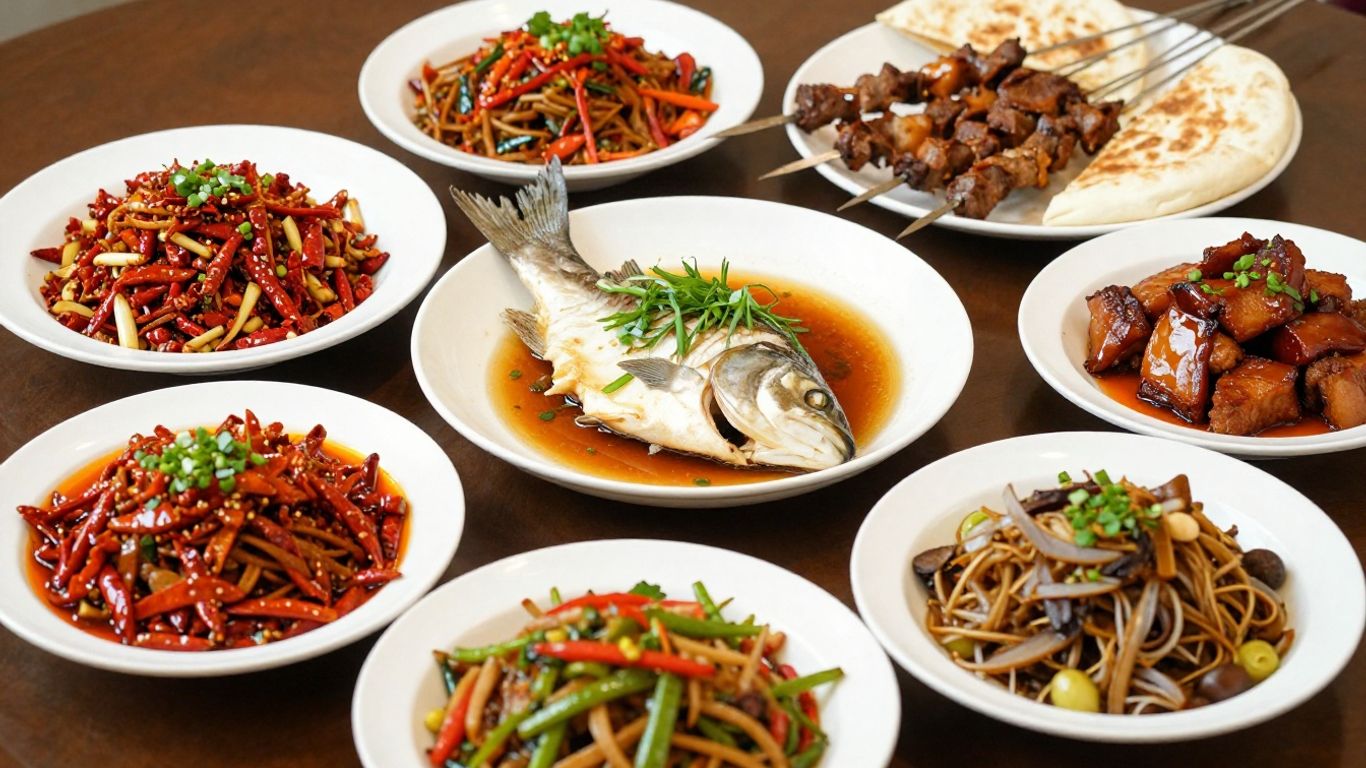
Sichuan dishes often show dried chilies, chili oil, Sichuan peppercorns, garlic, and fragrant sauces. The color may range from deep red to brick orange, though not every Sichuan dish is fiery. Mapo tofu, dan dan noodles, and kung pao preparations can look quite different while sharing a layered balance of heat, aroma, salt, and numbing spice.
We can look for chili flecks and a reddish oil around the edges, then ask whether the dish is málà, meaning hot and numbing. That question gives us a better guide than judging color alone.
Cantonese food often rewards close observation because its flavors may look understated. Steamed fish, rice noodle rolls, har gow, and other dim sum can have pale, translucent, or softly colored surfaces. Roast meats provide the contrast, with crisp skin and glossy caramelized edges.
Photos from Guangzhou may show many small dishes arriving together, especially during morning tea. The Guangzhou dim sum guide offers a practical way to recognize dishes such as har gow and clay pot rice while keeping the focus on local food culture.
Hunan dishes frequently feature fresh chilies, pickled chilies, garlic, and assertive seasoning. Their photographs may look red, green, and intensely colorful, with sliced peppers placed directly among the main ingredients. Unlike dishes that rely mainly on dried chili fragrance, Hunan preparations often make the fresh pepper visible and central.
We should still check the menu for the type of pepper and the cooking method. A dish may be sour, smoky, salty, or hot, and several of those qualities can appear together.
Shanghai-style dishes often have a polished, brown-red appearance from soy, sugar, wine, or long braising. Red-cooked pork, lion’s head meatballs, and sweet-savory fish preparations may look rounded and softly glazed. The visual impression is usually rich rather than sharp, with sauces that cling to the food.
This is a good region to explore when we enjoy mellow sweetness and tender textures. We can balance a saucy main dish with greens, soup, or a plain rice preparation.
Xinjiang dishes often stand out through lamb, cumin, onions, peppers, and wheat-based breads or noodles. Skewers may show browned, irregular pieces with visible spice, while hand-pulled noodles can appear wide and substantial. Flatbreads and naan-like breads add a distinct shape to the table.
The combination of grilled edges and cumin fragrance is a strong clue, but we should remember that regional menus include many dishes beyond lamb. Looking at the full table gives us a more accurate sense of the cuisine.
Small bites are among the easiest Chinese foods to compare from pictures because shape and cooking method are so visible. Pleats, folds, crisp edges, translucent wrappers, and bamboo steamers all help us identify what we are seeing. They also make it natural to order several varieties for the table.
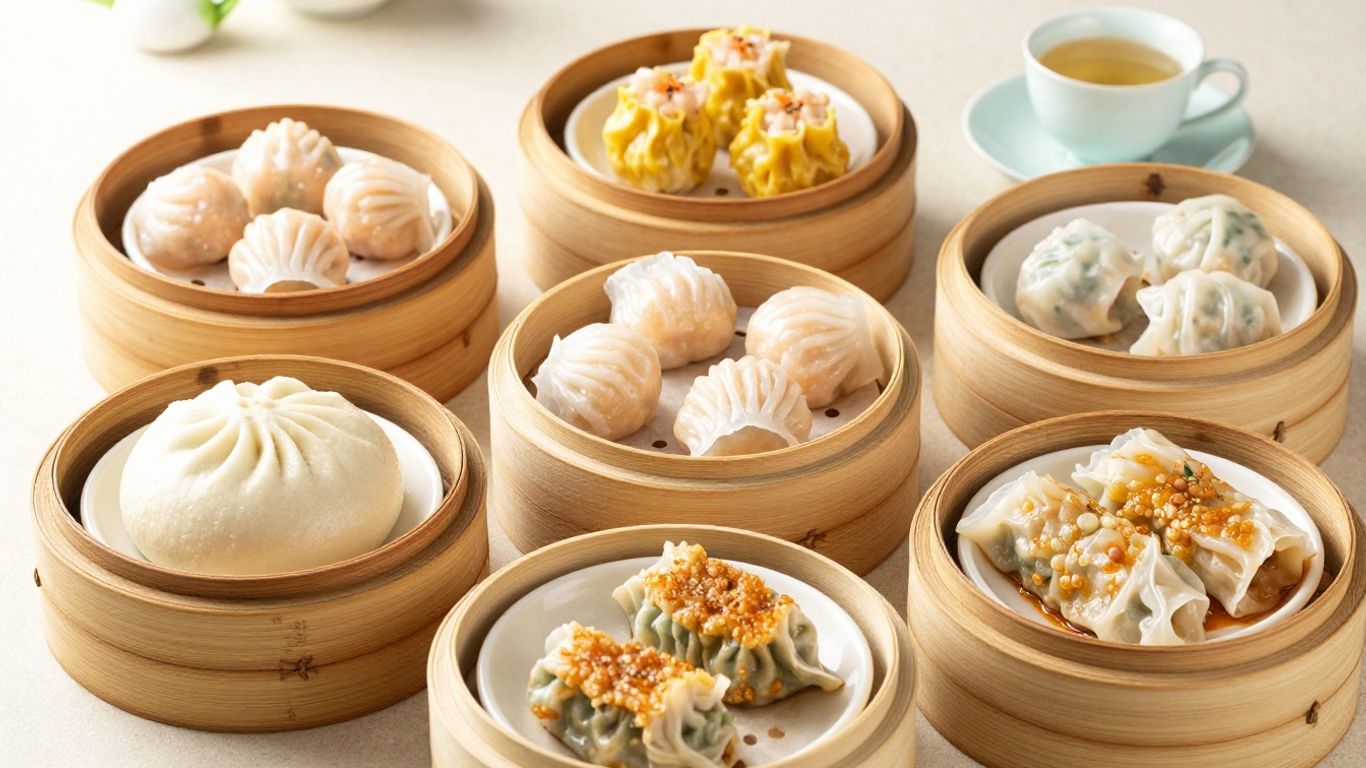
Steamed dumplings usually have soft, pale wrappers and a clean outline, while pan-fried dumplings show a browned base or crisp skirt. Wontons are often more loosely folded and may appear in broth, chili oil, or a light sauce. The filling can include pork, shrimp, vegetables, or combinations of these.
We can ask whether the dumplings are juicy, crisp-bottomed, or soup-based. That small distinction helps us choose based on texture rather than appearance alone.
Bao are soft, rounded buns that may be filled with savory meat, vegetables, or sweet paste. Mantou are generally plain steamed buns, though restaurant menus sometimes use the terms differently. Photographs may show smooth white domes, open-faced buns, or folded shapes with a visible filling.
Their texture is usually softer and breadier than a dumpling wrapper. We can pair them with saucy dishes or eat them as a snack, depending on their size and filling.
Siu mai are commonly open-topped, with a yellow or pale wrapper and a visible filling crowned by shrimp, roe, or vegetables. Har gow have translucent wrappers and shrimp fillings, often shaped like small crescent purses. Both are frequently served in bamboo baskets, which makes them easy to spot in food photographs.
Dim sum is best understood as a shared meal rather than one single course. The Guangzhou Cantonese food guide can help us place these familiar bites within a wider local eating experience.
Spring rolls have a crisp cylindrical wrapper, while scallion pancakes are layered, flaky, and often cut into wedges. Savory pastries may be round, folded, or stamped, with fillings that include meat, vegetables, or aromatic spices. Their browned surfaces make them especially recognizable in pictures.
For a group, these items add crunch to a table otherwise filled with steamed or saucy dishes. We can order one or two to share rather than filling the meal with fried foods.
Vegetarian Chinese food is much broader than a plate of plain vegetables. Tofu, mushrooms, eggplant, greens, noodles, rice, and bean products can all form the center of a satisfying dish. From photographs, we can look for how the sauce, texture, and garnish give the meal its character.
Silken tofu looks smooth and delicate, while pressed or fried tofu has firmer edges and a more porous surface. Mapo tofu may be coated in a red chili sauce, cold tofu can be topped with scallions and soy, and fried tofu may appear alongside vegetables or mushrooms.
We should ask whether the sauce contains meat, seafood, or animal-based stock. A dish that looks vegetarian is not automatically prepared that way.
Leafy greens such as bok choy, choy sum, and water spinach often appear quickly stir-fried with garlic. Their bright color and lightly glossy surface suggest a short cooking time, though the final texture can range from crisp to tender. Seasonal vegetables may be paired with mushrooms, tofu, or nuts.
These dishes are useful for balancing a shared order. One green vegetable, one protein, and one starch can create a more varied meal without relying on several heavy sauces.
Mushrooms add a meaty texture and can appear whole, sliced, or mixed into a braise. Eggplant absorbs sauce readily, so it may look soft and glossy, especially in garlic or chili preparations. Bean curd sheets, fermented beans, and other soy products introduce additional textures.
The visual appeal often comes from contrast: tender eggplant with fresh herbs, chewy mushrooms with greens, or crisp beans beside a smooth sauce. We can use those contrasts to choose dishes that will not all feel alike.
Vegetarian noodles may be tossed with mushrooms, greens, tofu, bean sprouts, or sesame-based sauces. Fried rice can be egg-forward or packed with vegetables, but the menu should confirm whether it contains oyster sauce, shrimp seasoning, or another non-vegetarian ingredient.
A photograph helps us estimate the balance of starch and vegetables, yet the ingredient list remains essential. This guide to healthier Chinese food choices is also useful when we want to compare sauces, portions, and preparation methods.
We can scan for words such as vegetable, tofu, mushroom, eggplant, greens, bean curd, or Buddhist-style preparation. Then we should ask a direct question about stock, sauces, and shared cooking surfaces, especially when dietary restrictions are strict.
A short checklist keeps the conversation simple:
These questions are practical, not fussy. They help us turn a promising photograph into an order that actually fits our needs.
Desserts and drinks bring a different visual language to Chinese food. We may see translucent jellies, powdered or sesame-coated sweets, delicate pastries, fresh fruit, and small cups of tea. Festive foods also carry particular shapes and colors, so photographs can offer clues about the occasion as well as the ingredients.
Sticky rice cakes can be square, round, steamed, or pan-fried, with a chewy texture that is difficult to judge from a picture. Sesame balls are usually golden and covered in sesame seeds, sometimes with a sweet bean or lotus filling. Mooncakes have patterned tops and dense, neatly cut interiors.
The shape of a mooncake may suggest a festival or regional style, but fillings vary widely. We can ask whether it contains lotus seed paste, red bean, nuts, egg yolk, or another filling before ordering.
Mango pudding is often served as a smooth yellow portion, while almond jelly has a pale, translucent appearance and may be cut into cubes. Fruit desserts can include pomelo, lychee, coconut, or seasonal melon, often with a light syrup or creamy accompaniment.
These desserts tend to look softer and cooler than fried pastries. They are a pleasant choice after a meal with chili, strong aromatics, or rich braised sauces.
Tea photographs may show small cups, a lidded gaiwan, a glass pot, or a full service with a tray. Green tea is usually pale and clear, while oolong can range from golden to amber and pu-erh tends to be deeper and more earthy in appearance. The vessel and pouring style can be as informative as the color.
We can ask whether tea is included with dim sum or ordered separately. Sharing a pot also gives the table a calm, refreshing counterpoint to fried and spicy dishes.
Lunar New Year tables may include dumplings, fish, rice cakes, spring rolls, and whole dishes chosen for their auspicious associations. Lantern Festival celebrations are especially associated with round glutinous rice balls, which may be filled with sesame, peanut, or sweet bean paste.
Presentation matters during festivals. Whole fish, bright fruit, neat pastries, and circular sweets can all carry meaning, although customs differ by family and region. For ideas on planning a celebratory menu, we can browse festive Chinese recipes with dietary needs in mind.
Street snacks may be grilled, steamed, stuffed, folded, or fried, and their appearance often reflects the local setting. Jianbing can look like a thin folded crepe with crisp layers, while skewers, rice noodle rolls, oyster omelets, and stinky tofu each have distinctive shapes and textures.
Photos are particularly useful before visiting a food street, where menus may be brief or unfamiliar. A local Guangzhou food street guide can help us know what kinds of snacks to look for when exploring after dark.
A food photo is a starting point, not a promise. Lighting, styling, portion size, and restaurant adaptations can all change how a dish appears. We can make better choices by combining the image with the menu description, a few questions, and an honest sense of what our group enjoys.
We can begin by deciding whether we want mild, savory, sweet, sour, smoky, or spicy food. Red oil does not always mean extreme heat, and a dish with few visible chilies may still contain peppercorns or fermented ingredients. Asking for the level of spice is more reliable than judging color.
A balanced order might include one bold dish, one mild vegetable, one starch, and a cooling drink or soup. That arrangement gives everyone room to explore without making the meal feel punishing.
Chinese meals are often easier to enjoy when we order for the table rather than one dish per person. Photos help us estimate variety: a large plate of greens, a protein, noodles or rice, and a few small bites can create different textures and flavors.
When the menu is unfamiliar, we can follow this simple sequence:
This approach keeps the order approachable while leaving space for discovery. We should also ask whether a plate is designed for one person or several.
Common concerns include peanuts, sesame, shellfish, soy, wheat, eggs, and gluten-containing sauces. Dumpling wrappers, marinades, stocks, and chili oils can contain ingredients that are not obvious in a photograph. We should communicate allergies clearly and avoid relying on a picture to assess safety.
If we are ordering delivery, packaging and ingredient details deserve the same attention as the photograph. This Chinese food delivery guide offers practical questions about menus, freshness, reviews, and dietary choices.
A close-up photograph can make a modest dish look enormous. We can look for serving plates, bowls, chopsticks, and neighboring dishes to estimate scale, but restaurant descriptions are still more dependable. Clay pots and sizzling platters may arrive hot and dramatic yet contain less food than a broad family-style plate.
Presentation also changes with location. A dish in a banquet restaurant may be carefully arranged, while the same preparation at a neighborhood eatery may look simpler and more generous. Neither appearance alone tells us which version will taste better.
Restaurant photos are useful for recognition, but they should not become a rigid standard. Recipes shift across cities, families, overseas communities, and individual kitchens. A sweet-and-sour dish, fried rice, or dumpling may look different from the version we first encountered and still be a legitimate local interpretation.
We can use Chinese dish references to build familiarity, then stay open to regional differences in seasoning and presentation. The most rewarding choice is often the one that looks clear enough to order but unfamiliar enough to teach us something.
When we study Chinese foods pictures with curiosity, we begin to see more than color and arrangement: we notice ingredients, technique, regional habits, and the social rhythm of sharing. Photos can help us choose confidently, but a menu question and a willingness to try something new usually complete the picture.
Fried rice, spring rolls, dumplings, bao, chow mein, and dishes with obvious whole ingredients are often easiest to recognize. Look at shape, texture, and the cooking vessel together rather than relying on color alone.
Visible dried chilies, chili oil, fresh peppers, or peppercorns are useful clues, but they are not definitive. We should ask about the spice level and whether the dish contains numbing Sichuan pepper or fermented chili.
Dumplings are a broad category with many shapes and wrappers. Wontons are typically more loosely folded and are often served in broth, chili oil, or a light sauce, although regional preparations vary.
Tofu, stir-fried greens, mushroom dishes, eggplant, vegetable fried rice, and meat-free noodles are common possibilities. We should still check sauces and stock, since an apparently vegetarian dish may include oyster sauce or animal-based broth.
A useful shared order usually combines a vegetable, a protein or tofu dish, a noodle or rice dish, and one or two small bites. We can add soup or dessert depending on the group’s appetite and the portion sizes.
Sweetness varies by dessert and region. Sesame balls, mooncakes, mango pudding, almond jelly, and fruit desserts can range from lightly sweet to rich, so asking about the filling or syrup is worthwhile.
It can provide helpful clues, but restaurant styling, regional variation, and overseas adaptations may change the presentation. We should use the image alongside the menu description and, when possible, ask how the dish is prepared.