Physical Address
304 North Cardinal St.
Dorchester Center, MA 02124
Physical Address
304 North Cardinal St.
Dorchester Center, MA 02124
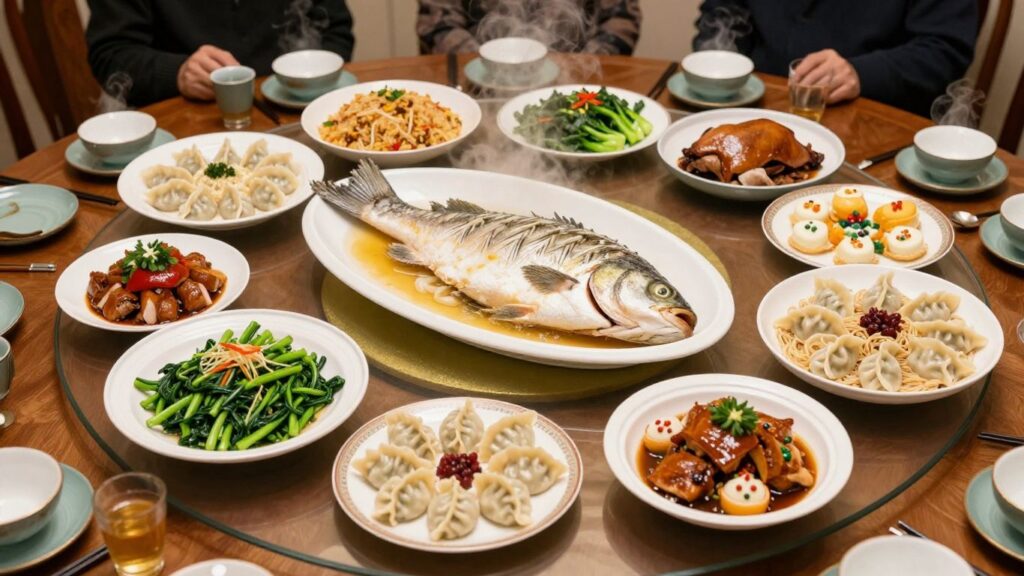
Chinese foods for Christmas can make a relaxed, colorful alternative to a traditional holiday roast. We can build the meal around sharing, variety, and a few dishes that carry special meaning.
A Chinese-inspired Christmas menu gives us a different rhythm from a plated holiday dinner. Several dishes arrive at once, guests serve themselves, and everyone can try a little of everything. The table feels generous without requiring one enormous centerpiece. For travelers and curious home cooks, it is also a delicious way to connect a holiday gathering with regional Chinese food traditions.
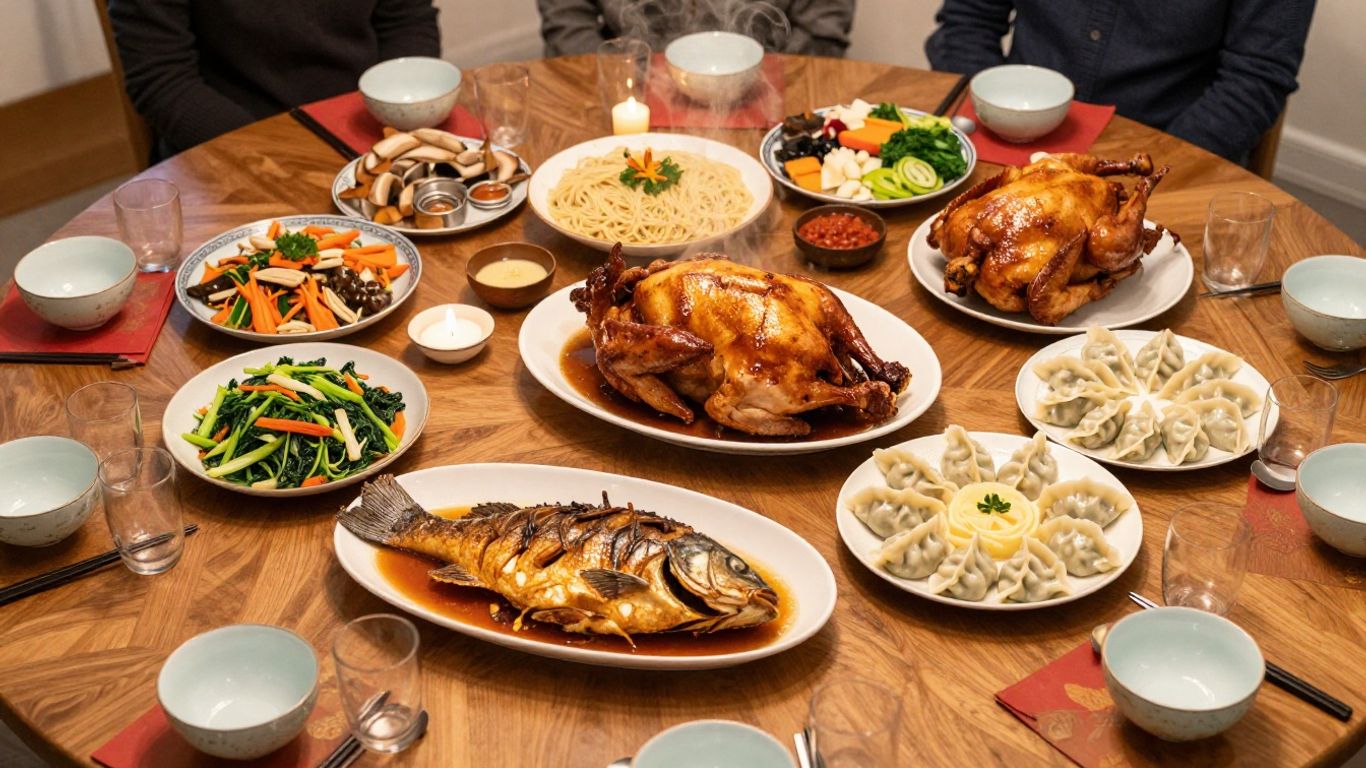
Family-style dining works especially well at Christmas because it keeps conversation moving around the table. We can place steaming dishes in the center, pass rice and noodles, and let guests return to favorites as the evening unfolds. A meal can be inspired by Cantonese, Sichuan, Shanghai, or northern Chinese cooking rather than pretending there is one single Christmas menu across China.
For a little regional context, Sharry’s China Food Guide explores local dishes and variations across China, including different approaches to fried rice. That kind of perspective helps us choose food with a sense of place, even when we are cooking far from China.
Sweet-savory roast chicken, crisp dumplings, and fried rice are approachable for guests who are new to Chinese food. We can then add a whole fish, black sesame dessert, or a chili-scented vegetable dish for something less expected. A varied table feels festive because it offers contrast: crisp beside tender, fresh beside rich, and gentle flavors beside heat.
We should think in groups rather than isolated recipes. One crisp starter, one saucy main, one steamed or roasted dish, noodles, rice, and two vegetables usually create a satisfying spread. Keep serving dishes broad and shallow where possible, so guests can see what is available and reach the food comfortably.
A practical mix might include:
That structure leaves room for seconds without making every course heavy. It also makes the menu easier to adjust when the guest list changes.
We can make the meal flexible by separating sauces and offering at least one filling vegetarian main. Tofu, mushrooms, eggplant, greens, and rice provide plenty of substance without relying on meat. Guests who avoid gluten, nuts, shellfish, or dairy should be able to identify dishes easily, so clear communication matters as much as the recipes.
Starters set a welcoming tone and give us something to serve while the main dishes finish. Most can be prepared in batches, which is useful when the kitchen is busy. We can offer a mixture of steamed, pan-fried, and baked foods rather than frying everything at the last minute.
Dumplings are easy to share and can be filled with pork, shrimp, chicken, mushrooms, cabbage, or tofu. Steamed dumplings stay tender, while pan-fried versions develop a golden base and a pleasing contrast. Serve them with black vinegar, soy sauce, chili oil, or a mild ginger dipping sauce so guests can season each bite.
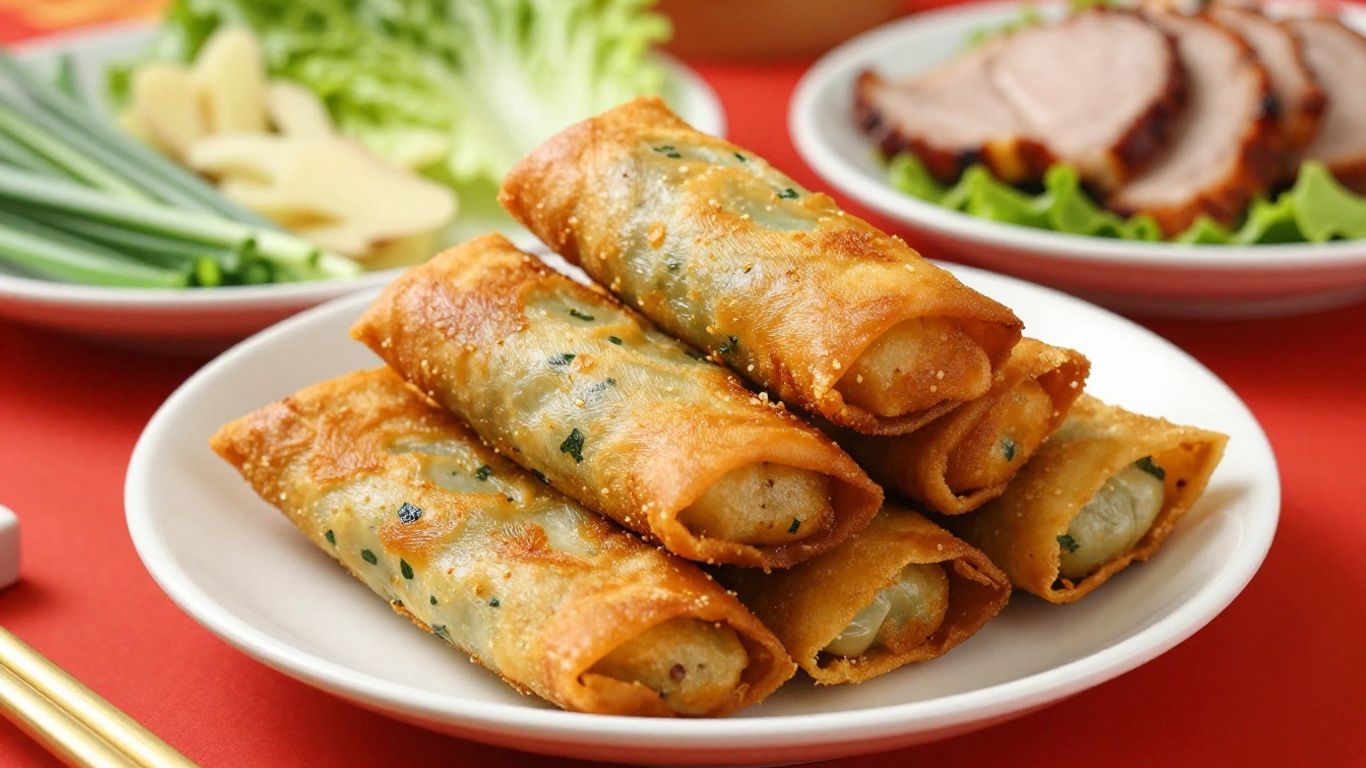
Spring rolls bring crunch and color to the first part of the meal. Vegetable rolls work well as a vegetarian option, while shrimp or pork fillings make the platter more substantial. Wontons can be fried for a crisp snack or cooked in broth when we want a lighter starter; either way, keep the dipping sauce on the side.
Scallion pancakes are flaky, savory, and satisfying enough to bridge the gap between appetizers and dinner. We can cook them earlier, keep them warm in a low oven, and cut them into wedges just before serving. A simple soy-vinegar dip or sesame sauce is all they need.
Thin slices of Chinese barbecue pork bring a glossy, savory-sweet note to the starter course. We can arrange them with lettuce leaves, cucumber, scallions, and hoisin-style sauce so guests build their own wraps. For a broader holiday inspiration list, festive roast and appetizer ideas can help us think about how Chinese barbecue pork fits beside other seasonal dishes.
The main course can be dramatic without being difficult. A whole fish suggests abundance, roast duck feels celebratory, and roast chicken is often easier for a mixed-age group. We can choose one centerpiece, then let noodles, rice, and vegetables provide the variety that makes a family-style meal feel complete.
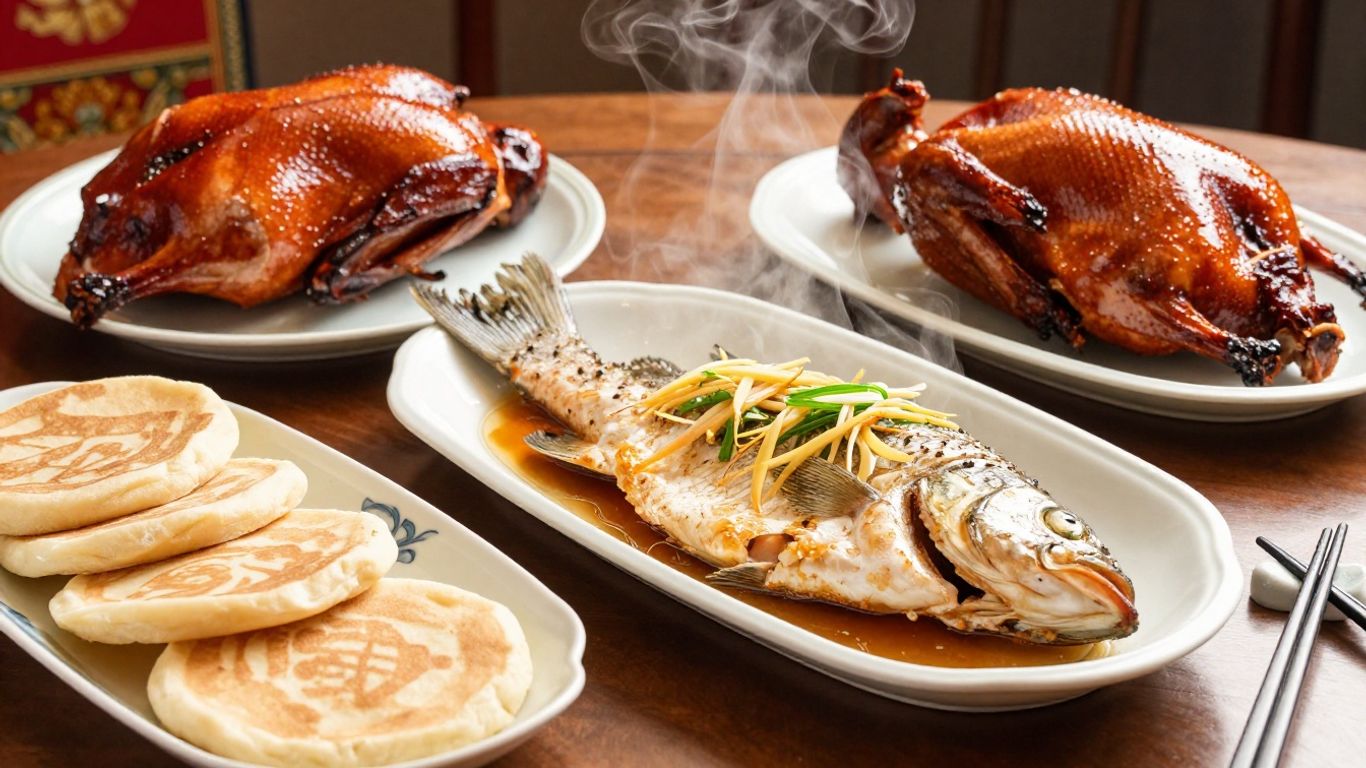
A whole steamed fish is one of the most striking dishes we can bring to the table. Fresh ginger, scallions, soy sauce, and hot oil keep the preparation simple while adding fragrance. Serve the fish whole, explain that it is associated with abundance, and let someone carefully portion it for the group.
Peking-style roast duck is a special-occasion choice with crisp skin, tender meat, thin pancakes, cucumber, scallions, and a sweet bean sauce. It takes more planning than roast chicken, so ordering it from a trusted local restaurant can be sensible. We can still make the table feel homemade with fresh garnishes and warm pancakes.
A whole chicken rubbed with five-spice, salt, garlic, and a little sugar offers the comfort of a familiar roast with a distinctly Chinese flavor profile. It is practical for a smaller gathering and works well with steamed rice or greens. Rest the chicken before carving so the juices stay in the meat.
Braised pork belly rewards slow cooking with tender meat and a rich sauce. Star anise, ginger, soy sauce, and a touch of sugar create depth, while steamed greens keep the plate from feeling too heavy. We can prepare it the day before, chill it, remove excess fat, and gently reheat it before dinner.
A vegetarian main should feel intentional rather than like a side dish made larger. Claypot tofu, braised eggplant, mushroom dishes, or stuffed cabbage can all carry the center of the meal. If we want to compare ingredients and preparation styles before shopping, vegetable-forward Chinese options offer a useful starting point.
Sides give the menu its balance and make sure every guest can assemble a satisfying plate. Rice absorbs sauces, noodles add a festive sense of abundance, and vegetables bring freshness and color. We can keep these dishes relatively simple when the main course is rich.
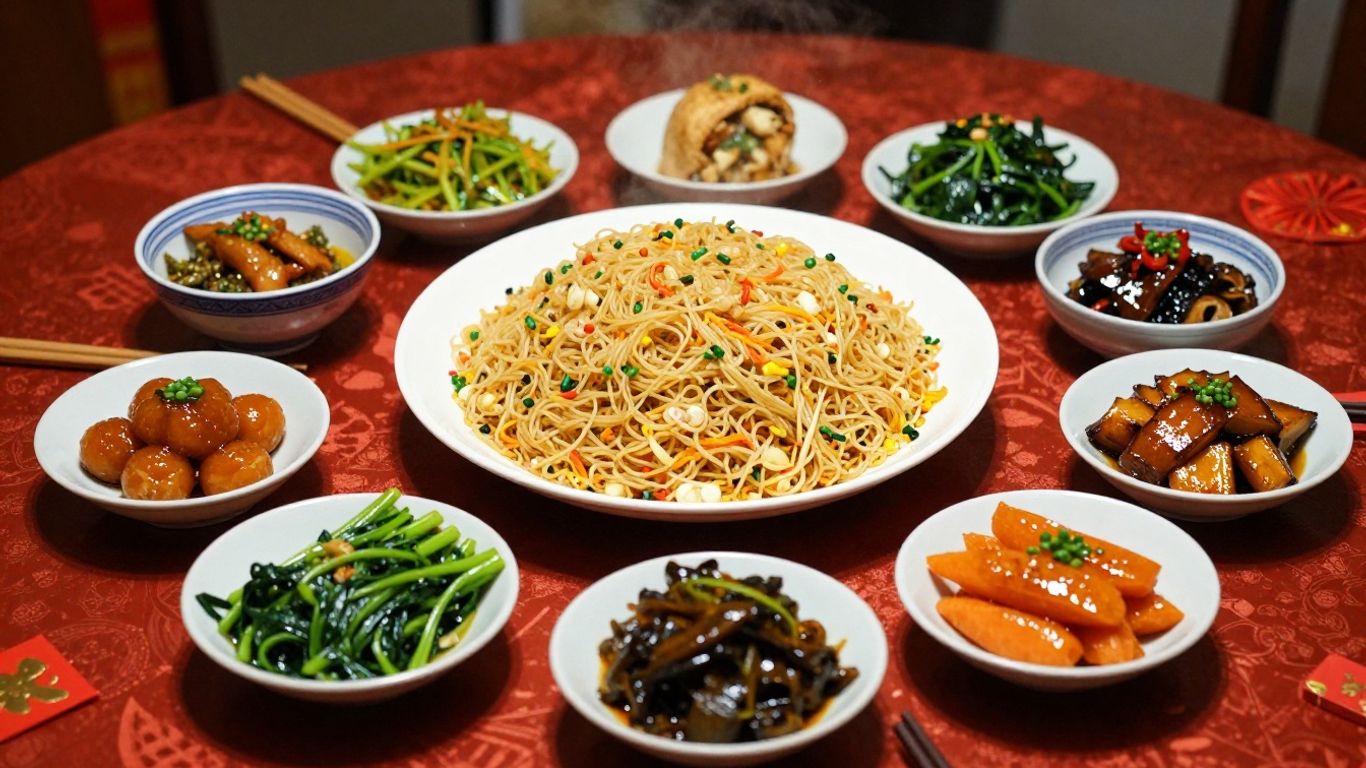
Longevity noodles are served in long strands and are traditionally associated with long life. We should avoid cutting them while cooking or serving, then toss them with vegetables, mushrooms, shrimp, chicken, or tofu. Their symbolism can be explained simply, without turning the meal into a formal ceremony.
Yangzhou fried rice usually combines rice with egg, vegetables, and small pieces of savory ingredients. The key is using chilled, relatively dry rice and cooking in batches if necessary. For more detail on regional fried rice styles, Yangzhou fried rice ideas provide helpful background for choosing a version suited to our kitchen.
Bok choy, gai lan, napa cabbage, or spinach can be cooked quickly with garlic, ginger, and a small splash of soy sauce. We want the vegetables glossy and tender-crisp, not soft and watery. A final drizzle of sesame oil adds aroma, though it should be omitted when sesame is a concern.
Mapo tofu can serve as a bold side or a vegetarian main, depending on the amount we prepare. Its soft tofu, fragrant aromatics, and chili-bean sauce pair particularly well with plain rice. For a crowd with mixed spice tolerance, serve chili oil separately and keep the base dish warmly savory rather than aggressively hot.
Carrots, squash, green beans, or roasted cauliflower can take a Chinese-inspired turn with honey, soy sauce, ginger, and rice vinegar. The glaze should be light enough to preserve the vegetables’ character. These sweet-and-savory sides also make an easy bridge for guests who are more accustomed to Western holiday flavors.
Dessert does not need to imitate a Western Christmas pudding to feel special. Small sweets let us offer several textures and flavors, from chewy rice flour to creamy fruit pudding. Tea and warm ginger drinks can keep the final course relaxed rather than overly rich.
Sesame balls are crisp outside, chewy inside, and often filled with red bean or lotus paste. Sweet rice cakes can be steamed or pan-fried, depending on the style, and are pleasant with tea. Because both are filling, small portions work better after a substantial dinner.
Mango pudding adds a cool, bright finish after roast meats and braised dishes. Almond cookies bring a dry, crumbly contrast and are easy to arrange on a shared dessert plate. We can prepare the pudding ahead and bake the cookies earlier in the day, leaving only garnishing for the evening.
Red bean soup, coconut jelly, and black sesame paste offer familiar sweetness with deeper, nutty flavors. These desserts are especially useful when guests prefer something less sugary than frosted cake. Check labels carefully if allergies are involved, since sesame and tree nuts are common in holiday sweets.
Jasmine tea is fragrant with fruit and lighter desserts, while roasted oolong can stand up to sesame, caramel, and braised flavors. Pu-erh is another option after a rich meal, served warm in small cups. We can offer hot water throughout the evening so guests may pour their own refills.
A ginger, brown sugar, and scallion drink can be warming, though we can leave out the scallion for a gentler holiday version. Chrysanthemum tea, iced lemon tea, or sparkling lychee drinks provide nonalcoholic choices with a festive feel. Fresh citrus and herbs make simple pitchers look thoughtfully prepared.
A successful menu is less about cooking twenty dishes than choosing a few that work together. We can use the list above as a pool of ideas, then narrow it to a manageable number for our kitchen and guests. Regional inspiration is welcome, but the final meal should still feel coherent and comfortable to serve.
Start by identifying the richest dish, then build around it. If we choose pork belly or duck, steamed fish, greens, and plain rice create breathing room. If the centerpiece is delicate fish, a spicy tofu dish and crisp starters can add energy.
| Menu element | Good choice | What it contributes |
|---|---|---|
| Starter | Dumplings or spring rolls | Crispness and easy sharing |
| Centerpiece | Steamed fish or roast chicken | A celebratory focal point |
| Starch | Longevity noodles or fried rice | Comfort and substance |
| Vegetable | Garlic greens or glazed carrots | Color and freshness |
| Dessert | Mango pudding or sesame balls | A contrasting finish |
This framework keeps the meal varied without making the shopping list chaotic. We can swap ingredients according to availability while preserving the balance of textures and flavors.
For four to six people, one main, two starters, one starch, and two vegetables are usually enough when dessert follows. Larger groups benefit from two mains, but we should increase serving space and keep sauces in separate bowls. A buffet may be easier than a crowded table when the guest list is especially large.
There is no need to make every component from scratch. We can steam homemade dumplings, order roast duck, and prepare fresh greens in the same meal. When arranging delivery, Chinese food delivery planning can help us compare menus, portions, dietary details, fees, and delivery timing in our area.
A little of many dishes goes further than one large entrée. We can serve appetizers first, bring out the centerpiece once everyone is seated, and follow with noodles, rice, and vegetables. Keep a small reserve of cooked rice or extra greens nearby in case guests stay longer and continue grazing.
Christmas cooking becomes calmer when we divide work across the previous day. Make marinades, dumpling fillings, dipping sauces, desserts, and garnishes in advance. Roast or braise dishes that reheat well, but save quick wok cooking and fried foods for as close to serving time as possible.
The best holiday menus leave us time to sit down with everyone else. We can simplify recipes, use the right equipment, and choose dishes that tolerate a short wait. A few practical decisions make more difference than attempting elaborate restaurant-style presentation.
Asian grocery stores are useful for sauces, rice noodles, fresh greens, dumpling wrappers, and spices. If a specialty item is unavailable, we can choose a close substitute without changing the whole menu: napa cabbage for another mild cabbage, chicken for pork, or regular rice for a less traditional fried-rice variation. We should taste sauces as we go because brands vary in salt and sweetness.
A wok performs best when it is not overloaded. Cook vegetables, rice, or noodles in smaller batches, letting the pan regain heat between additions. Set each finished batch on a warm tray, then combine only briefly at the end so the food stays lively rather than steamed.
Drain fried foods on a rack instead of stacking them on paper towels, and hold them in a low oven with space around each piece. Steamed dishes can stay covered for a short time, but prolonged holding makes wrappers and vegetables soft. Sauces should be added at the table when possible.
Red napkins, small ceramic bowls, chopsticks, and fresh citrus can bring warmth to the table without turning it into a theme set. We can mix familiar cutlery with chopsticks so everyone eats comfortably. A shared teapot and small serving plates encourage the unhurried, communal feeling that suits this kind of dinner.
Ask about allergies before planning the menu, then label dishes containing peanuts, sesame, shellfish, soy, wheat, or eggs. Keep chili oil and sliced chilies separate, and use clean utensils for vegetarian and allergy-conscious dishes. If we are ordering food, confirm ingredients directly with the restaurant rather than relying on dish names alone.
When we choose Chinese foods for Christmas, we are free to make the holiday meal generous, flexible, and personal. A few well-planned shared dishes, a meaningful noodle or fish course, and a pot of tea can create a celebration that feels both festive and easy to enjoy.
Dumplings, roast duck, steamed fish, five-spice chicken, fried rice, longevity noodles, stir-fried greens, and sesame desserts all work well for a festive shared meal.
It is a Christmas tradition for some families, especially in the United States, while others choose it simply because the food is convenient, varied, and enjoyable for groups.
Whole fish and longevity noodles are often chosen for their associations with abundance and long life, although customs vary by family and region.
For a small group, five to seven shared dishes plus dessert is usually plenty. Larger gatherings can add a second main dish or another vegetable rather than doubling every recipe.
Yes. Tofu, mushrooms, eggplant, greens, dumplings, fried rice, noodles, and vegetable spring rolls can create a full and satisfying vegetarian spread.
Jasmine tea, oolong, pu-erh, ginger drinks, chrysanthemum tea, sparkling fruit beverages, and citrus-based iced teas are versatile choices.
Many sauces, marinades, fillings, braises, desserts, and garnishes can be prepared early. Save wok-fried vegetables and fried appetizers for shortly before serving when possible.