Physical Address
304 North Cardinal St.
Dorchester Center, MA 02124
Physical Address
304 North Cardinal St.
Dorchester Center, MA 02124

A smooth US China travel experience begins with current entry information, realistic distances, and a little patience for unfamiliar systems.
Requirements can change, and the rules that apply to one traveler may not apply to another. We should confirm details with Chinese authorities, our airline, and the U.S. government before finalizing a trip. A little paperwork at home is much easier than trying to solve an entry problem at the airport. For a useful starting point, we can review this China travel advice, then verify every time-sensitive detail through official channels.
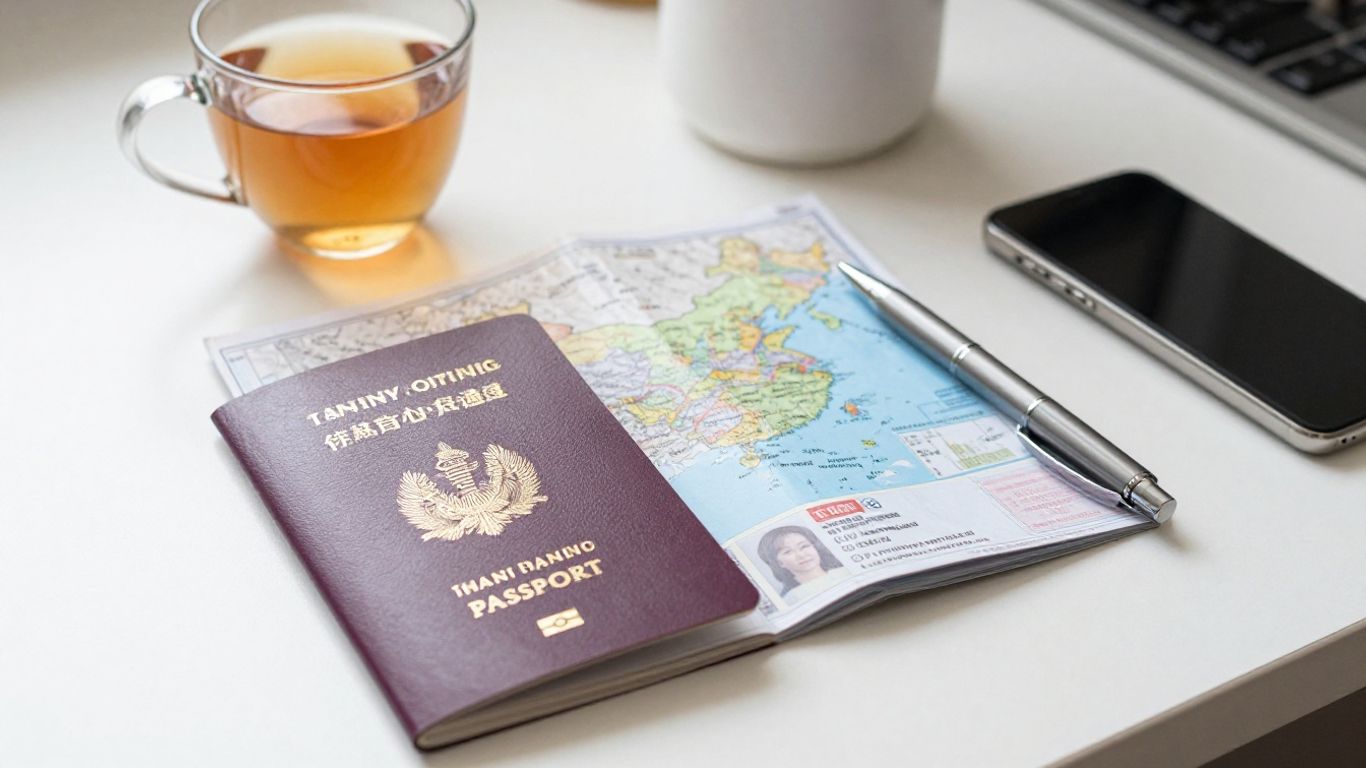
We should check that our passport has sufficient validity for the entire journey and any additional period required for the visa or entry permission we use. Visa rules depend on nationality, purpose, length of stay, and itinerary, so a tourist trip, business visit, and transit stop may be treated differently. We should use the Chinese embassy or consulate responsible for our residence and follow its current application instructions rather than relying on an old blog post.
Keep copies of the passport identification page, visa or approval, flight reservations, hotel details, and travel insurance. Store one copy offline and leave another with someone at home. Airlines can also apply document checks before departure, so we should confirm requirements with the carrier several days before flying.
Before leaving, we should review current health notices, vaccination guidance, customs restrictions, and rules for medication. Prescription drugs deserve particular attention: bring them in original packaging, carry the prescription or a doctor’s letter, and confirm whether the ingredients are permitted. Customs forms may ask about food, currency, commercial goods, or other restricted items, and answering carefully is better than guessing.
We should also make a short list of what we are carrying in and out of China. Some foods, biological materials, drones, and professional equipment can receive special scrutiny. If a rule is unclear, we can ask the relevant customs authority before packing instead of assuming that a familiar item is acceptable.
We should read the current U.S. Department of State advisory for China and register our itinerary or contact details when that service is appropriate. The U.S. Embassy and consular information can help us locate official guidance, although websites may occasionally be unavailable or experience technical problems. We should save emergency numbers and the nearest consulate details before departure, not only after something goes wrong.
Advisories are not a substitute for judgment. They help us understand legal, health, security, and regional considerations, while local conditions can still vary from one city to another. We should check updates again shortly before leaving and keep notifications enabled during a longer trip.
A connection through China is not automatically governed by the same rules as a full visit. Transit permissions can depend on nationality, airport, onward destination, ticket structure, and whether we leave the international transit area. A long layover may look convenient on a booking screen but still require documents that a short airside connection does not.
We should ask the airline whether baggage must be collected and rechecked, whether a terminal change is required, and whether the itinerary involves separate tickets. Leave a generous buffer for immigration, security, and airport transfers. If we plan to exit the airport, we should verify the relevant transit policy directly rather than treating a layover as a loophole.
China is large enough that a route that looks simple on a map can consume an entire day. We get better trips when we choose a few places with a clear connection between them instead of stacking distant cities into a rushed schedule. Flights are useful for long distances, while high-speed rail often makes the journey itself part of the experience. Sharry’s China Travel Guide takes a locally grounded view of routes, food, and neighborhoods, which is a helpful mindset when we plan beyond the most obvious stops.
Beijing works well for imperial history, major museums, and access to the Great Wall. Shanghai offers a compact contrast of historic lanes, riverfront architecture, contemporary neighborhoods, and excellent connections onward. Guangzhou is especially rewarding for travelers who care about Cantonese food, markets, and an everyday urban rhythm; our Guangzhou food guide can help us think about the city through its regional specialties rather than only its headline attractions.
We should choose the arrival city that supports the full route. An open-jaw itinerary can reduce backtracking, but a return ticket from the same city may be simpler or cheaper. Time of year, visa conditions, flight schedules, and the location of our first hotel all matter more than picking a city because it appears first in a search result.
Direct flights save energy and reduce the risk of a missed connection, but a one-stop itinerary may offer better timing or price. We should compare the total journey, including airport changes, overnight stays, baggage rules, and the cost of reaching the city center. A very cheap fare is less attractive when it creates an exhausting arrival followed by a separate domestic ticket.
Flexible dates can make a noticeable difference around school breaks and major holidays. We can search several nearby departure days, compare different arrival cities, and set a price alert. Before paying, we should read the fare conditions and confirm whether the ticket can be changed if an entry document or schedule changes.
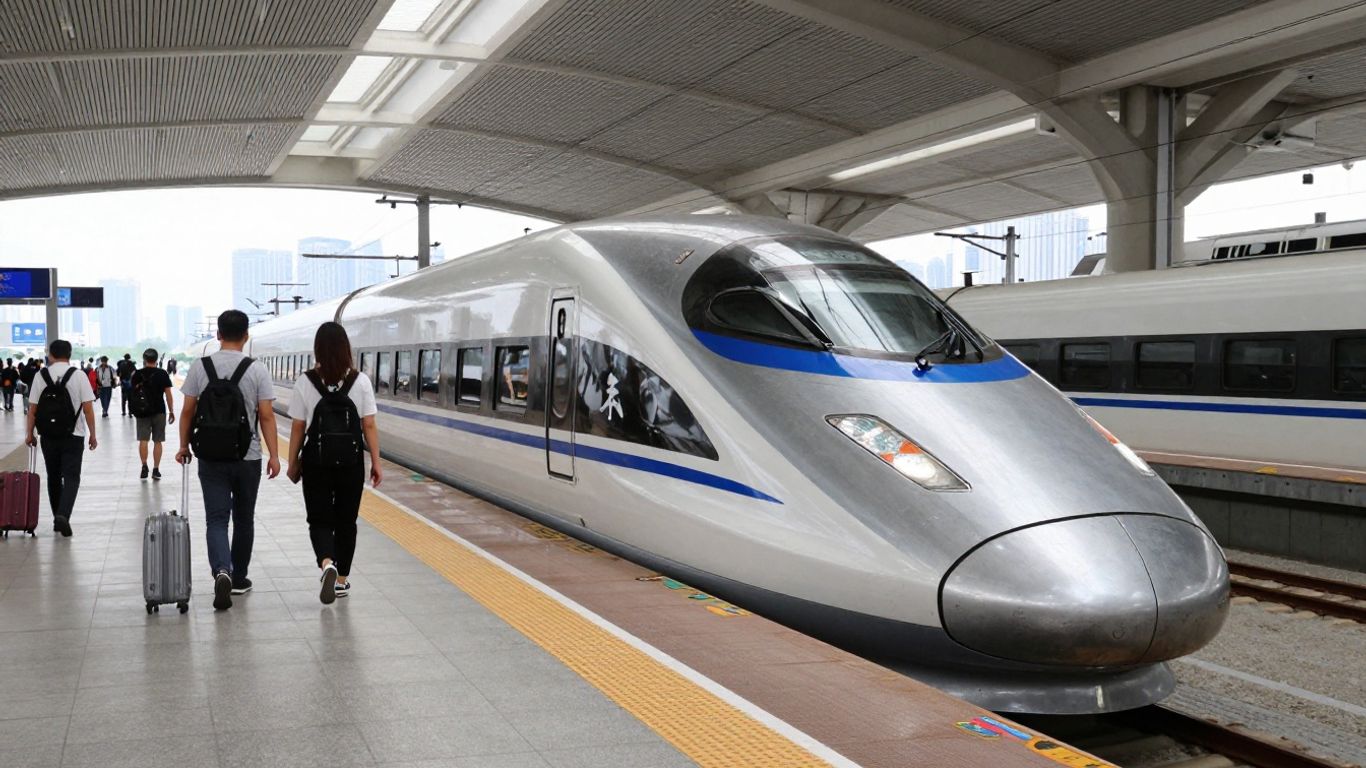
High-speed rail is often a comfortable way to connect major cities, with stations that can be far from the historic center but well connected by metro. We should use the exact passport name when booking and allow time for station security and ticket collection or identity checks. Seats sell more quickly on popular routes and holiday weekends, so important segments deserve early attention.
It helps to distinguish the city’s main stations before booking. Two stations with similar names may serve different directions, and a hotel near one station may be inconvenient for a departure from another. We should save the Chinese station name, train number, departure time, and a screenshot of the booking in case mobile service is unreliable.
Within large cities, metro systems are usually the most predictable way to avoid traffic. Ride-hailing is useful for hotels, late arrivals, and places away from a station, but we should enter the destination in Chinese when possible and check the vehicle details before getting in. Domestic flights can save time across very long distances, though airport transfers, check-in, and weather delays can erase some of that advantage.
A simple transport routine keeps us calm: confirm the destination, carry the hotel address in Chinese, and leave extra time when crossing a city. We should also keep a small amount of cash for situations in which a phone, account, or network connection does not cooperate.
A good itinerary gives us shape without making every hour a test. We should group nearby sights, protect time for meals and wandering, and remember that China’s regions differ in climate, cuisine, architecture, and pace. The most memorable days often include one planned anchor and one unplanned neighborhood. For travelers who want organized help, this China travel service guide explains how to compare routes, guides, group sizes, and support without assuming that every trip needs a tour.
For a first visit, seven to ten days can support two major bases and one shorter excursion. Two weeks gives us room for three or four cities, while three weeks allows longer rail journeys and a regional detour without turning every morning into a checkout. We should count arrival and departure days honestly; jet lag and airport transfers rarely leave much sightseeing time.
A useful test is to ask whether we can spend at least three nights in most places. If not, we may be collecting train stations rather than experiences. We can always return for a second trip, when a narrower focus on Yunnan, Sichuan, the Pearl River Delta, or another region will feel more relaxed.
We can begin with a historic city, add a modern contrast, and finish with a landscape or food-focused stop. That rhythm prevents the trip from becoming a sequence of grand gates and museums, while still giving us the landmarks we came to see. In Guangzhou, for example, a morning of dim sum or a neighborhood market can tell us as much about local life as a formal attraction; the guide to Chinese breakfast foods offers ideas for starting that kind of day.
Aim for variety rather than a fixed number of attractions. One major site, a local meal, a walk, and a quiet hour often create a fuller day than four timed reservations. We should leave some flexibility for weather, queues, and the simple pleasure of noticing how a neighborhood changes from morning to evening.
A classic twelve-day route might use Beijing for four nights, Xi’an for two, Chengdu for three, and Shanghai for three. The sequence works by mixing imperial history, city walls and archaeology, Sichuan food and a slower urban atmosphere, then Shanghai’s riverfront and contemporary neighborhoods. We can travel between the cities by high-speed rail where the timing is sensible and fly only when the distance makes rail inefficient.
If food is central to the trip, we can extend Chengdu or replace one major stop with Guangzhou. Sharry’s China Travel Guide encourages this kind of regional thinking: dishes, markets, and ordinary streets can be the reason to build a route, not merely something squeezed between monuments. We should choose the route that matches our interests, energy, and season.
Spring and autumn are often comfortable in many parts of China, but conditions vary widely between north, south, coast, mountains, and inland basins. Summer can be hot and humid in the south, while winter may bring cold conditions in the north and shorter daylight for sightseeing. We should check city-specific forecasts rather than pack for a national average.
Major public holidays can bring crowded transport, sold-out rooms, and altered opening hours. If we travel then, we should reserve essential tickets early and accept that famous places may be busy. Our route should also include recovery time after long transfers, especially when elevation, heat, or poor sleep adds to the distance.
The practical side of a US China travel plan is mostly about redundancy. We should not depend on one card, one app, one connection, or one translation method. Set up accounts while we still have access to our home phone number and financial institutions, then test them before departure. The goal is not to carry every tool; it is to have a workable backup when the first option fails.
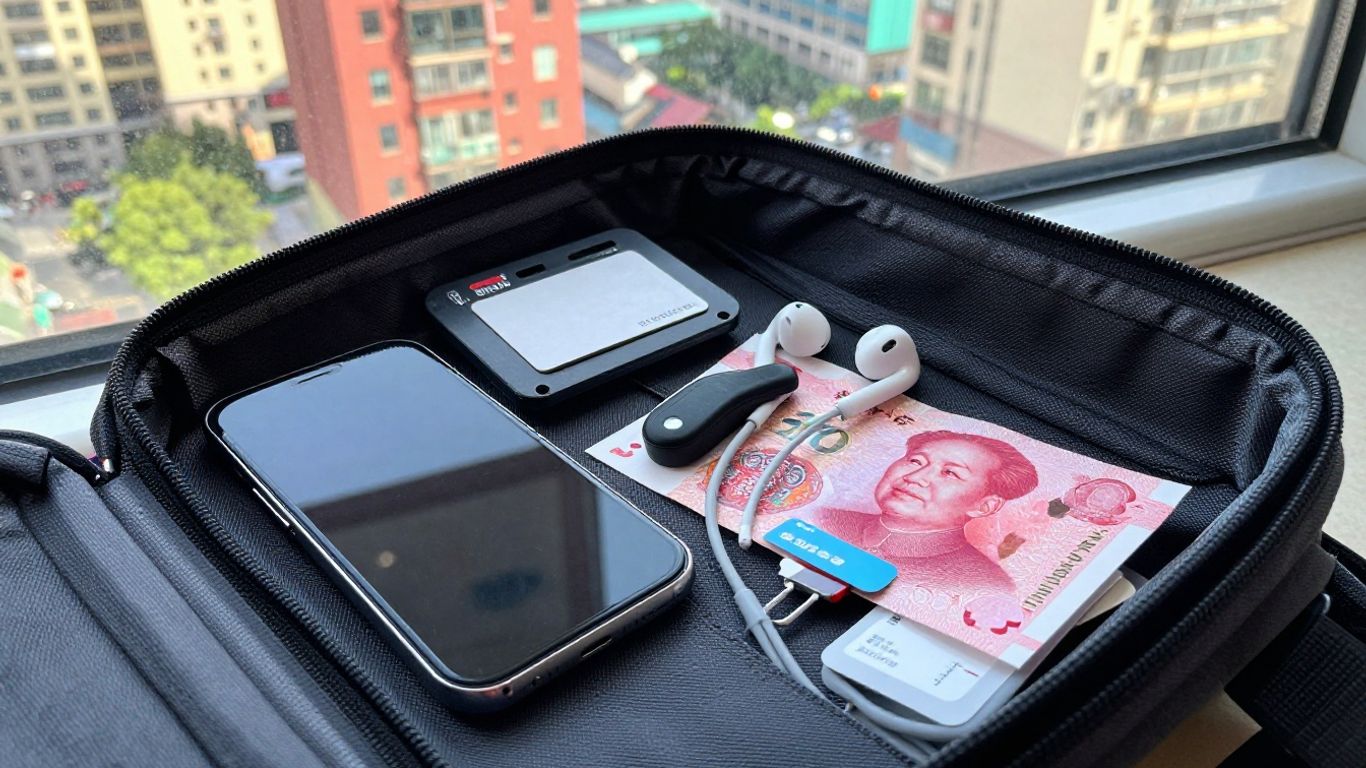
We should notify our banks, confirm foreign transaction policies, and carry at least two payment cards stored separately. Mobile payment systems are widely used, but setup can involve identity verification, a supported card, or a phone number. A modest amount of yuan remains useful for small purchases, transport surprises, or a merchant that cannot process our preferred method.
We can divide our spending plan into daily expenses, transport, reservations, and an emergency reserve. Exchange rates and overseas fees can quietly change the total, so checking transactions regularly helps. Never hand over a card or phone without understanding what is being authorized, especially in a rushed setting.
Before departure, we should compare our carrier’s international roaming with an eSIM or another lawful connectivity option. Confirm whether the phone is unlocked, whether the plan covers mainland China, and whether activation requires a QR code or a stable connection. We should download essential information before landing because airport Wi-Fi may not be convenient or private.
Some familiar online services may be inaccessible or limited on local networks. Travelers carrying work devices or sensitive information should read technology and data security guidance, use approved security practices, and avoid bringing unnecessary confidential files. A travel phone with minimal stored data can be a sensible precaution.
We do not need fluent Mandarin to travel well, but we do need a strategy. Save the hotel name and address in Chinese, learn a few polite phrases, and use translation tools for menus, directions, and short explanations. Showing a written destination can be more reliable than attempting to pronounce an unfamiliar place name in a noisy station.
Food is a particularly good doorway into communication. We can point to dishes, ask about ingredients, and use photos thoughtfully rather than assuming every menu item will match a familiar description. A patient, friendly exchange often works better than repeating English more loudly.
We should install and test maps, train or flight booking tools, ride-hailing, translation, and messaging before leaving home. Then we can save hotel addresses, station names, reservation numbers, and emergency contacts for offline access. Keep screenshots in a clearly named album, and carry a small paper backup for the first arrival.
A short predeparture checklist is useful because these tools support one another:
Once those steps are done, we can focus less on troubleshooting and more on the street in front of us. We should still expect occasional app changes or account prompts and keep enough flexibility to ask hotel staff for help.
Most safety preparation is ordinary travel preparation, made more effective by respecting local laws and keeping our plans visible to someone at home. We should read current advisories, avoid demonstrations and restricted areas, and follow instructions from transport staff or authorities. China is not one uniform travel environment, so regional conditions deserve attention.
We should keep passports secure, use licensed transport, and remain alert in crowded stations, shopping areas, and nightlife districts. Scams can take many forms, including inflated prices, invitations to unfamiliar venues, or pressure to pay immediately. If an interaction feels rushed or confusing, we can politely leave and ask hotel staff or an official information desk for assistance.
Local laws may differ significantly from those in the United States, including rules around photography, public behavior, online activity, and restricted locations. We should avoid photographing security installations or sensitive infrastructure and carry identification as required. The current advisory matters more than assumptions based on a previous visit by someone else.
We should update devices, use strong passcodes, enable multifactor authentication, and install only the apps we need. Avoid connecting to unknown networks for banking, and do not leave phones or laptops unattended in public places. Travelers carrying business or research material should take extra care with what is stored locally; international technology precautions provide a useful framework even for nonacademic travelers.
Back up essential documents securely before departure and remove unnecessary personal data from a travel device. We should also review app permissions and avoid plugging into unknown USB charging ports. These small habits reduce the consequences of a lost phone or compromised account.
We should identify hospitals or clinics near each hotel and learn how our travel insurance handles payment and reimbursement. Bring enough prescription medicine for the trip, in original labeled containers, with supporting documentation and a little extra time built in for delays. Some medications that are routine in the United States may be restricted or require advance approval.
If we become ill, hotel staff, insurers, consular resources, or a local doctor can help us find appropriate care. We should describe allergies and existing conditions clearly, preferably in written Chinese as well as English. Carrying an emergency contact card can be especially helpful when we are tired or unwell.
We can ease jet lag by shifting sleep gradually before departure, getting daylight after arrival, and keeping the first day light. Air quality changes by city and season, so travelers with asthma or other respiratory conditions should monitor local readings and pack prescribed supplies. Comfortable shoes and regular hydration matter more than trying to maximize every hour.
Food safety is usually about sensible choices rather than fear. We should choose busy restaurants with good turnover, wash hands, and be cautious with raw items when we are unsure how they were handled. Ask locally about drinking water, use sealed bottled water when appropriate, and remember that ice and brushing teeth may deserve the same consideration.
Daily life becomes easier when we approach unfamiliar customs with curiosity rather than comparison. China contains many regional cultures, and behavior that feels normal in Beijing may not look identical in Guangzhou or Chengdu. We should watch what people around us do, ask when unsure, and accept that convenience may take a different form. That openness is central to the local, food-first spirit of Sharry’s China Travel Guide.
Shared meals are often social, and dishes may arrive for the table rather than one person. We can wait for the host or older diners to begin, use serving utensils when provided, and try a little of several dishes. Tipping is not handled exactly as it is in the United States, so we should check the restaurant’s policy instead of adding a large automatic gratuity.
Queueing, noise, smoking rules, and personal space may feel different from home. We should follow posted rules, avoid blocking entrances, and keep our voices considerate in temples, museums, trains, and residential lanes. Exploring food is one of the most approachable ways to understand a place, from regional Chinese cuisine to a simple breakfast near our hotel.
Short, concrete requests work best. We can show the hotel address, use photos or translated dish names, and confirm prices before accepting a service. When taking a taxi or ride-hailing car, checking the destination on the phone gives both sides a shared reference point.
A few words such as hello, thank you, excuse me, and numbers can soften many interactions, even when pronunciation is imperfect. We should not assume that a lack of English signals unfriendliness; often both sides are simply searching for a workable way to communicate. Patience is a practical travel tool.
Comfortable, modest clothing works in most settings, with extra coverage useful for temples, religious sites, and rural communities. We should ask before photographing people, avoid touching artifacts, and follow barriers and signs even when other visitors do not. At sacred places, quiet behavior and restrained clothing show respect without requiring us to know every custom in advance.
We can carry a light layer for air-conditioned museums and transport, plus shoes that are easy to remove if a site requires it. Dress is also a weather decision: breathable clothing helps in humid southern cities, while northern winters call for serious insulation.
Holiday calendars affect far more than attraction opening times. Train tickets, hotel rooms, domestic flights, and popular restaurants can become difficult to secure during major festivals and national breaks. We should check dates before choosing a route, then verify opening hours for museums, gardens, markets, and smaller businesses.
Crowds often gather early at headline attractions, while residential streets and food neighborhoods may be livelier later in the day. We can reserve the most popular site for an early start and keep the afternoon flexible. A local meal or market visit may remain possible even when a formal attraction is closed.
We can build a realistic budget by separating fixed commitments from daily choices. Flights, visas, hotels, rail tickets, entrance fees, meals, data, insurance, and local transport all deserve a place in the estimate. The most useful budget is not the cheapest one; it is the one that leaves room for a delayed train, a memorable meal, or a change of plan.
We should price the full route rather than comparing only the international flight. Add airport transfers, intercity transport, baggage, attraction reservations, and a buffer for exchange-rate movement. Food can be inexpensive at local breakfast shops and neighborhood restaurants, while specialty dining, cocktails, and hotel meals can raise the daily average quickly.
A simple daily estimate might look like this:
| Category | Lean approach | Comfortable approach |
|---|---|---|
| Lodging | Budget hotel or guesthouse | Well-located mid-range hotel |
| Food | Local restaurants and breakfast shops | Mix of local meals and specialty dining |
| Transport | Metro and standard rail seats | More taxis, upgrades, or domestic flights |
| Activities | Public parks and selected sights | Major attractions, guides, and paid experiences |
These are planning categories rather than promises about prices. We should check current rates in each city and season, then keep a separate emergency reserve that is not part of the daily spending target.
Location often matters more than a slightly larger room. We should choose a neighborhood near a metro station, practical food options, and the areas we actually want to explore. In historic districts, older buildings may have charm but also stairs, smaller rooms, or limited sound insulation, so reading recent reviews is worthwhile.
Check the hotel’s policy for foreign passports, late arrival, luggage storage, and payment. Save the Chinese address and phone number before leaving the property. A hotel that can clearly explain directions to a driver is worth more than one that looks close on a map but sits far from useful transport.
We should reserve high-demand trains, timed-entry museums, and major attractions as soon as the booking window allows. Keep confirmation numbers and passport details consistent across every reservation. For smaller experiences, a little spontaneity can be better, especially when we want to follow a local food recommendation or explore a neighborhood at an unhurried pace.
If we use an agent or tour operator, we should compare what is included: transport, hotels, entrance fees, guide language, group size, and cancellation terms. The travel service agent guide offers a practical way to assess proposals and payment practices before committing.
Before paying, we should understand whether a booking is refundable, changeable, or tied to a specific passport and departure. Save screenshots of the terms as well as the confirmation email, since policies can be harder to locate after a trip begins. Travel insurance should match the actual plan, including medical treatment, interruption, baggage, and activities we intend to undertake.
When plans change, contact the original provider promptly and keep a record of names, dates, and reference numbers. We should not assume that a platform, hotel, airline, and tour operator share the same refund rules. Clear documentation makes a stressful adjustment much easier to manage.
With current documents, a sensible route, reliable backups, and curiosity about local food and neighborhoods, we can make a China trip feel both organized and open-ended. The best plan gives us enough structure to move confidently and enough space to notice the country beyond the famous landmarks.
Visa requirements depend on nationality, travel purpose, length of stay, and current policy. We should confirm the applicable rule with the Chinese embassy or consulate and our airline before booking nonrefundable travel.
Seven to ten days can cover two major bases, while two weeks allows a more comfortable route through three or four cities. We should count arrival and departure days as partial travel days.
Yes, it can be a comfortable option between many major cities. We should check station locations, book with the exact passport name, and allow time for station security and identity checks.
Bring at least two international cards, a supported mobile payment option if available, and some yuan. Keeping a backup payment method separate from the main wallet is sensible.
Some familiar services may be limited or inaccessible on local networks. We should arrange lawful connectivity before departure, download offline information, and avoid carrying unnecessary sensitive data.
Safety conditions vary by region and can change. We should read the current U.S. travel advisory, follow local laws, protect our belongings, and avoid restricted areas or demonstrations.
We can start with busy neighborhood restaurants, regional breakfast shops, markets, and recommendations from trusted local sources. Trying specialties associated with each city often creates a more memorable route than eating the same dishes everywhere.