Physical Address
304 North Cardinal St.
Dorchester Center, MA 02124
Physical Address
304 North Cardinal St.
Dorchester Center, MA 02124
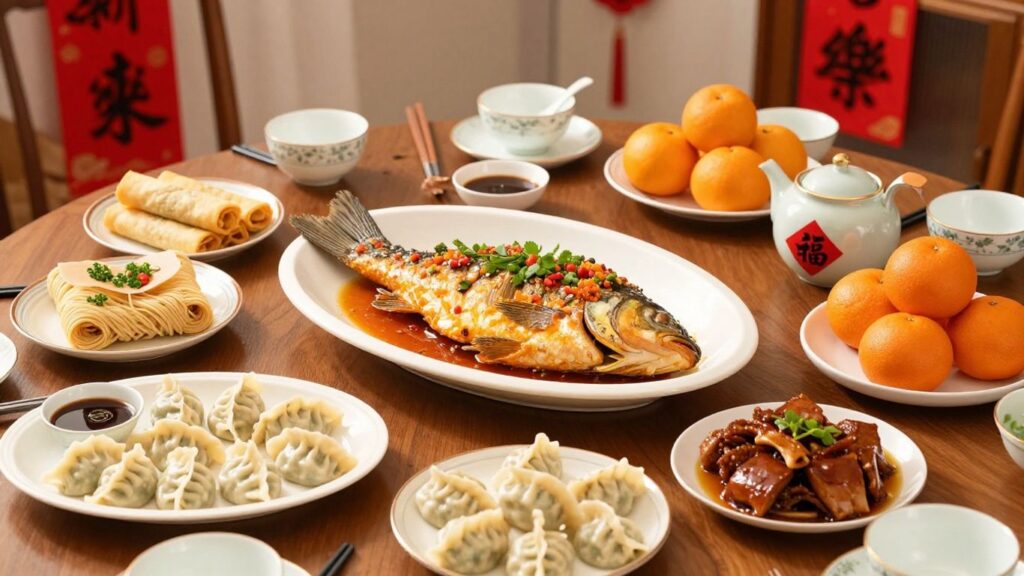
Chinese New Year food brings together flavor, family, language, and hopes for the year ahead.
Food is one of the clearest ways we experience Chinese New Year, whether we are seated at a family table in China or preparing a small feast abroad. The menu brings together reunion, hospitality, memory, and hopes for the months ahead. Many dishes are chosen not only for taste but also for their sounds, shapes, colors, or customary ways of serving them. These are the meanings behind the meal, rather than strict rules that every household must follow.
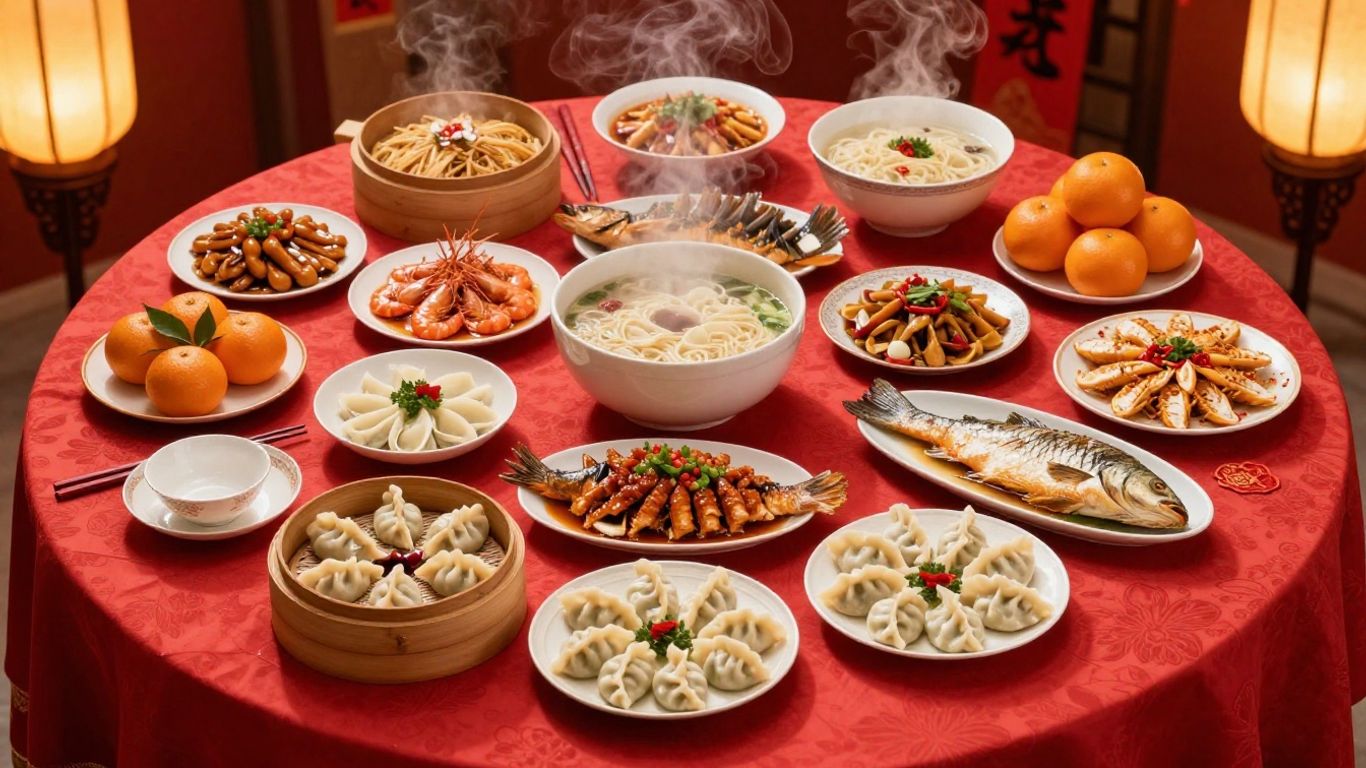
In Mandarin and other Chinese languages, a food’s name may sound like a fortunate word. A round shape can suggest completeness, while a golden color may recall wealth. Fish is linked with having a surplus, and niangao carries a familiar wish for rising higher in the coming year. We can enjoy these associations while remembering that pronunciation and interpretation may differ by region and dialect.
There is no single Chinese New Year menu. Northern families may fold wheat-based dumplings, while southern tables often include rice cakes, seafood, soup, or elaborate shared dishes. Chinese communities in Malaysia, Singapore, Indonesia, and elsewhere have developed their own festive customs, often blending Chinese traditions with local ingredients. Travelers curious about those differences can use a Chinese food guide to place dishes within a wider regional context.
A reunion dinner often reflects the people gathered around it. One family may insist on a whole fish, another may make dumplings together, and another may place greater importance on a favorite dessert remembered from childhood. Recipes can change as relatives move, marry, or adapt to new kitchens. The continuity often comes from preparing and sharing the food, not from reproducing every detail perfectly.
Modern celebrations can accommodate vegetarian, vegan, halal, allergy-aware, and lower-sodium meals without losing their festive character. We can keep the symbolic role of a dish while changing its filling or cooking method. A smaller household might prepare three meaningful dishes instead of a banquet, or order from a local restaurant when time is limited. What matters most is approaching the tradition with curiosity and respect.
Starters make the New Year table feel abundant from the moment people sit down. They are often easy to share, which suits a gathering where conversation and helping one another are part of the meal. Dumplings, spring rolls, wontons, and tangyuan differ in texture and occasion, but each can bring a sense of warmth and ceremony. In the spirit of Sharry’s China Travel Guide, we can also look beyond famous landmarks and notice how ordinary foods connect us with local neighborhoods and family kitchens.
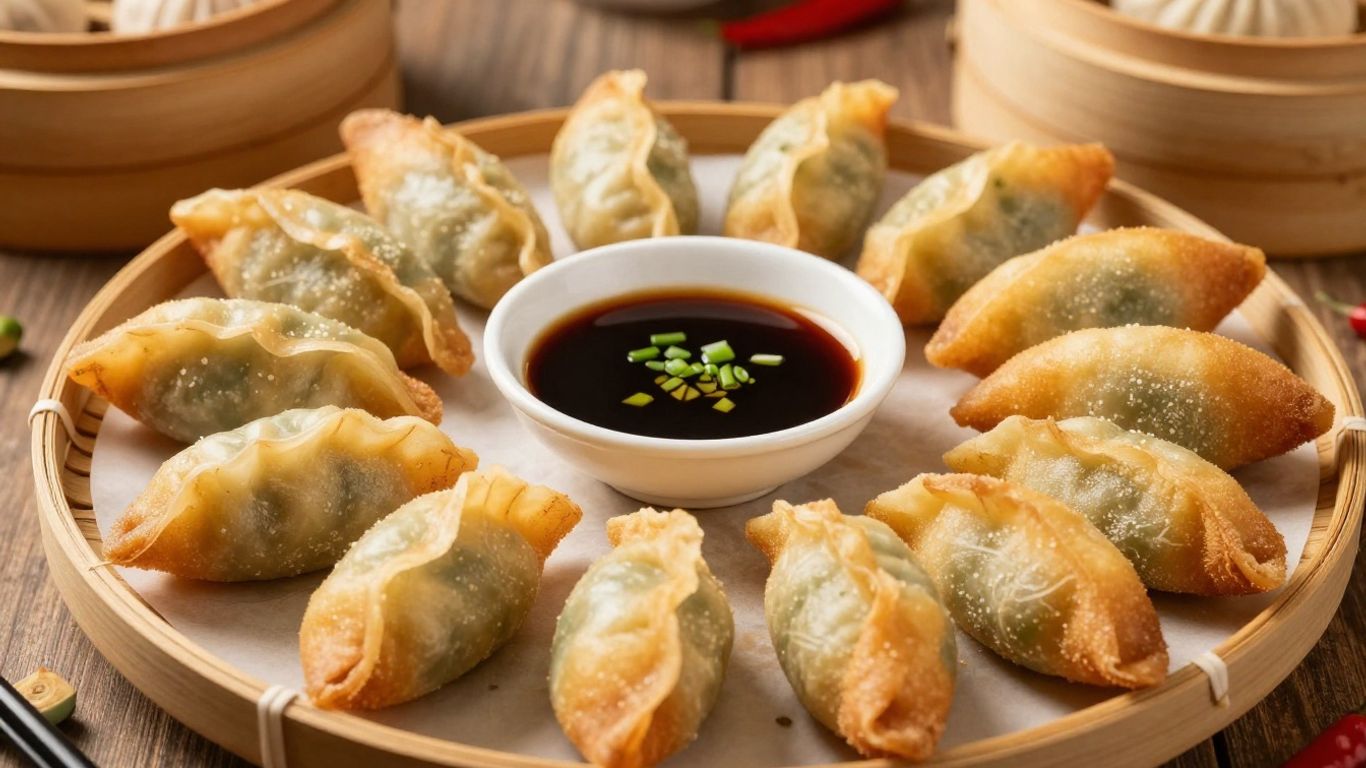
Jiaozi are crescent-shaped dumplings especially associated with northern Chinese New Year celebrations. Their appearance is often compared with old Chinese ingots, so making and eating them can express wishes for prosperity. Families may gather around the table to roll dough, mix filling, and pinch the edges closed. The shared work is as memorable as the finished dumplings.
Crisp spring rolls are linked with springtime and their golden, bar-like shape. Fillings vary widely, from vegetables and mushrooms to meat or seafood, and they may be fried, baked, or prepared in other ways. Their appeal is immediate: a crunchy wrapper, a savory center, and a platter that disappears quickly. We can serve them as a welcoming first bite rather than treating the symbolism as a requirement.
Wontons appear in many regional forms, while tangyuan are round glutinous rice balls commonly associated with togetherness and reunion. Sweet sesame, peanut, or bean fillings are popular in some preparations, though savory versions also exist. In different communities, the same festival may include soup, rice dishes, noodles, or local specialties that outsiders do not expect. That variety is part of what makes Chinese New Year food worth exploring.
When we prepare starters at home, we can choose fillings that suit the guests while preserving the communal spirit. Vegetable dumplings, tofu-based fillings, and mushroom-rich mixtures offer satisfying alternatives to meat. Keep wrappers covered so they do not dry out, and serve fried foods in batches so they remain crisp. For a broader look at planning dishes for different tastes, these special-occasion recipes offer a useful point of comparison.
Main courses give the reunion dinner its sense of occasion. They are usually placed where everyone can reach them, encouraging guests to serve one another and taste a little of everything. Fish, chicken, pork, and duck each carry different associations, but the larger idea is generosity: a table with enough food for the whole family and something left to share. We should also remember that dietary customs and personal preferences shape what appears in each household.
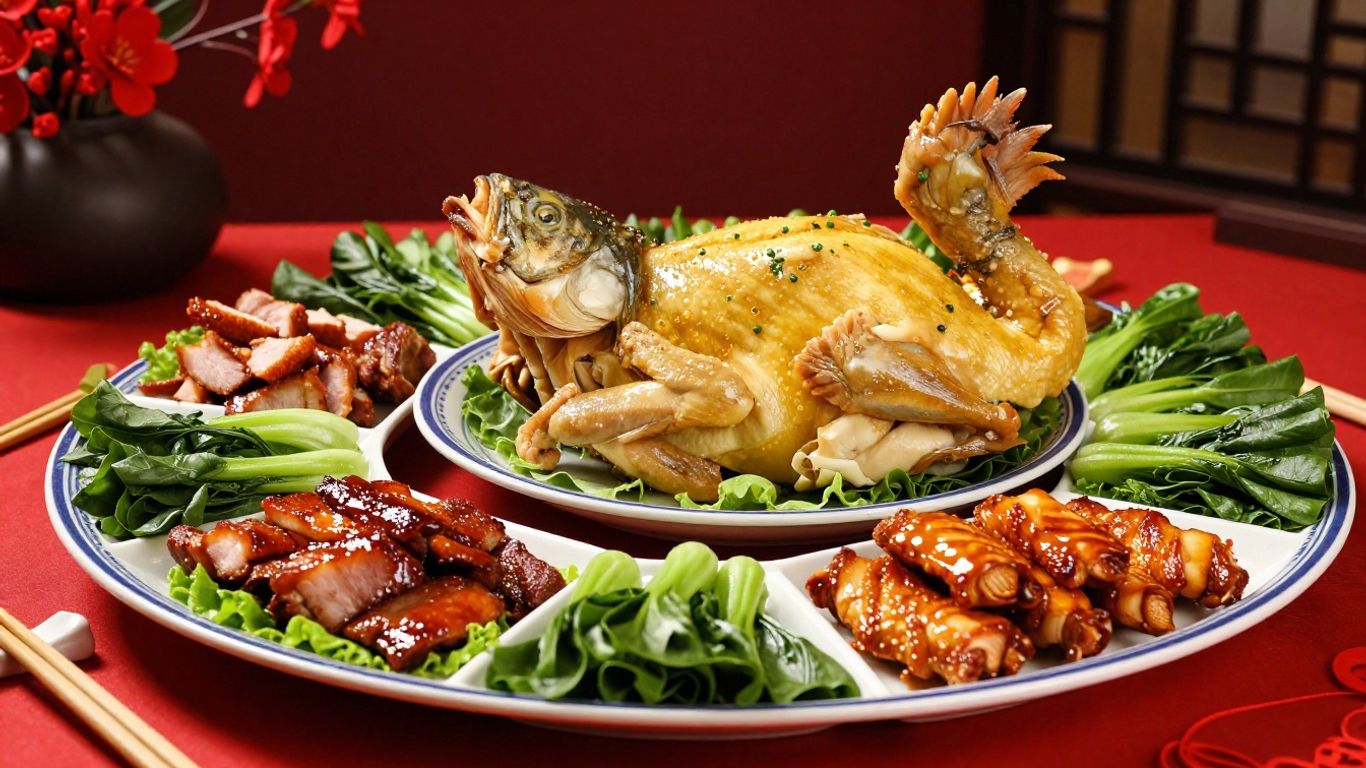
A whole fish, often steamed with aromatics, is associated with abundance and having something in reserve. Keeping the head and tail intact gives the dish a complete appearance, though serving customs vary. Some families leave part of the fish uneaten as a wish for surplus, while others follow different local practices. The preparation should be handled carefully, since bones make attentive serving especially important.
A whole chicken can suggest completeness, reunion, and family togetherness. It may be steamed, poached, roasted, or prepared with a regional sauce, and serving it whole preserves the sense of wholeness. We can carve it in the kitchen or at the table depending on the family’s custom and the size of the gathering. The dish works well when guests have different preferences because both light meat and dark meat are available.
Pork appears in many festive recipes, from braised preparations to roasted dishes, while duck may bring crisp skin and a richer centerpiece to the meal. Hot pot is another popular way to make the table communal, allowing guests to cook ingredients in a shared broth. Seafood, tofu, mushrooms, and vegetables can fill out the spread without making it feel repetitive. Menus should reflect the region and the people eating them, not an imagined universal standard.
A festive dish is often presented whole, neatly arranged, or placed at the center before it is portioned. That visual care signals respect for the guests and gives the meal a natural rhythm. We can begin with shared starters, move to main courses, and bring out noodles, rice, and sweets as the meal continues. Before serving, check that hot foods remain hot and that raw ingredients used for hot pot stay separate from ready-to-eat dishes.
A generous table is measured by the welcome it creates, not by the number of dishes on it.
The same principle lets us adapt a large banquet to a small apartment or a mixed-diet gathering. Presentation can remain thoughtful even when the menu is simple.
Staple foods often carry the quietest but most enduring wishes. Noodles point toward a long life, while sticky rice cakes suggest progress and a higher year. Rice, glutinous rice, and other filling dishes also help anchor a meal that may last for hours. We can enjoy them as comforting foods first, while still appreciating the cultural language attached to them.
Longevity noodles are served long and are traditionally eaten without cutting them. Their length offers a visual wish for a long life, and the act of lifting them in one piece adds a small moment of ceremony. They may be stir-fried, served in broth, or paired with vegetables and seafood. If guests are unfamiliar with the custom, we can explain it lightly rather than turning dinner into a test of etiquette.
Niangao is a sticky rice cake whose name is commonly connected with the wish for a higher or better year. Northern and southern versions can look quite different: some are sweet and soft, while others are sliced and pan-fried or used in savory dishes. The texture is pleasantly chewy, but it can also be firm when chilled. Slice it with care and serve modest portions, since its richness makes a little go a long way.
Glutinous rice binds ingredients together, making it a natural fit for dishes associated with reunion. It may appear in cakes, dumplings, stuffed preparations, or sweet treats, depending on the community. Round forms and shared serving bowls add to the feeling of completeness. We can pair these foods with lighter vegetables and tea so the meal remains balanced.
Some families avoid cutting longevity noodles, while others treat the custom more casually. We can honor the symbolism by serving noodles long and whole, then provide kitchen scissors or shorter noodles for children and guests who need them. Sticky foods should be cut safely with a lightly oiled knife rather than torn by hand. Small adjustments preserve the welcome at the table instead of making anyone uncomfortable.
The following guide is a practical way to think about the roles of common staple foods:
| Food | Common association | A considerate serving idea |
|---|---|---|
| Longevity noodles | Long life | Serve long and avoid cutting them |
| Niangao | Progress and a higher year | Offer thin slices, sweet or savory |
| Glutinous rice | Reunion and togetherness | Serve in a shared dish |
| Rice | Fullness and a complete meal | Pair with vegetables and protein |
These associations are broad rather than absolute. A family’s own custom should take priority over a generalized chart.
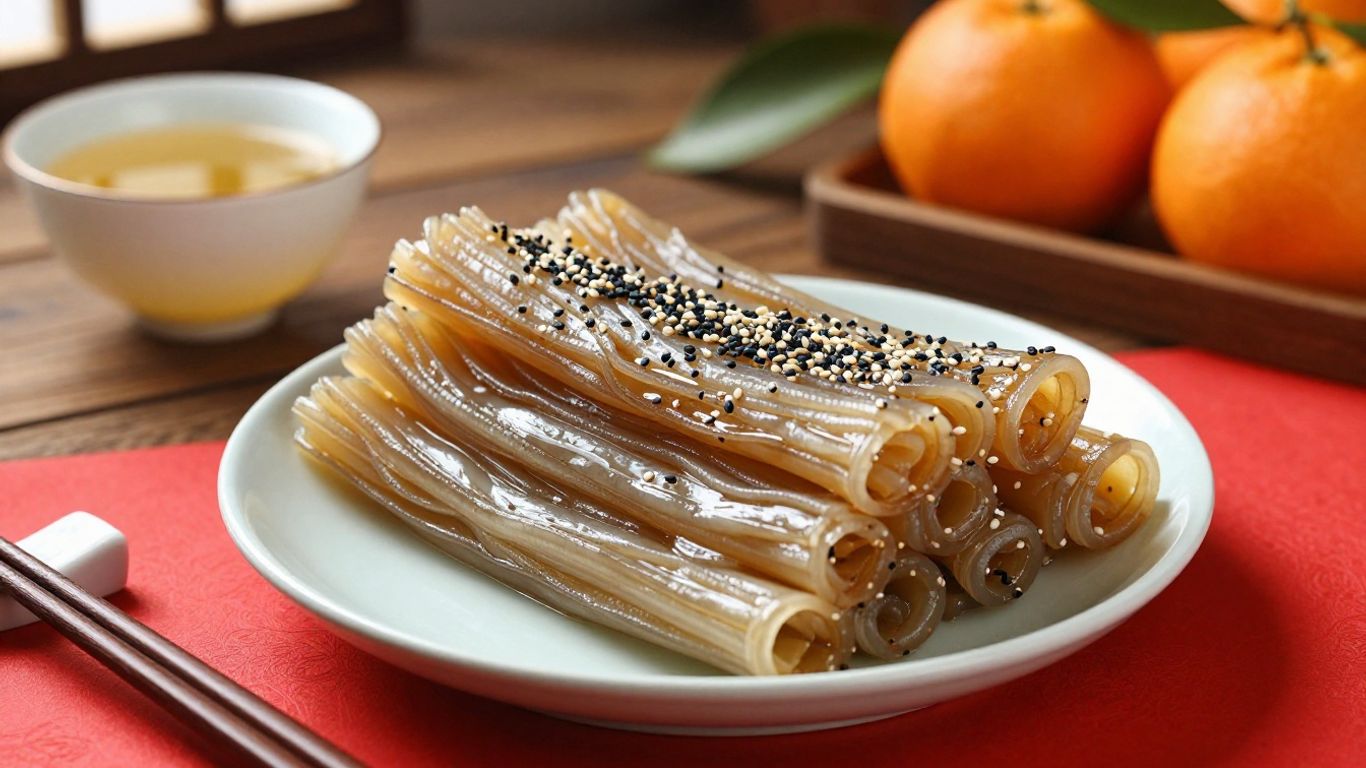
Fresh fruit and small sweets bring color to the table between larger meals. They are easy to offer to visiting relatives, neighbors, and guests who may not stay for dinner. Their roundness, brightness, and names often carry positive associations. A fruit tray also gives everyone something simple to enjoy while tea is poured and conversations begin.
Oranges and tangerines are popular during the festival because their bright color feels celebratory and their names can be associated with luck or fortune in some Chinese varieties. They are often given as gifts or arranged in bowls near the entrance or dining table. Choose fruit that is fresh and easy to peel, especially when children and older relatives are visiting. The gesture of offering fruit can matter as much as the fruit itself.
Pomelo and grapefruit appear in some festive traditions as symbols connected with abundance, family blessings, or protection, though meanings differ among communities. Their size makes them visually striking, and their clean, slightly bitter flavor balances rich dishes. We can serve wedges after dinner or use the fruit in a salad. It is best to describe these associations as family or regional customs rather than universal rules.
A traditional candy tray may hold several sweet snacks, each offered to visitors during the holiday period. Candied fruit, coconut, lotus seeds, and other treats can be arranged in separate compartments or small bowls. The tray invites people to take a little, linger, and exchange good wishes. We can create a simpler version with locally available sweets while keeping the idea of variety and hospitality.
Seeds and nuts are snack foods that naturally suggest growth, renewal, and the continuation of family life. Melon seeds are especially associated with relaxed holiday visiting in some communities, where guests crack and share them while talking. Put them in small dishes with a bowl for shells, and check labels if allergies are a concern. A thoughtful host makes room for both tradition and practical comfort.
A successful New Year meal depends less on cooking everything at once than on choosing a manageable balance. We can build the menu around a few symbolic foods, then add vegetables, soup, rice, or dessert according to the number of guests. Planning also helps us respect vegetarian, vegan, gluten-free, halal, and allergy-related needs. Even a modest meal can feel abundant when its dishes have different colors, textures, and temperatures.
Start with one or two dishes that matter most to the household, then fill the gaps with foods guests can comfortably eat. For example, long noodles and fruit may cover longevity and good fortune, while vegetable dumplings and a whole fish create contrast. Ask about allergies before shopping, and label shared sauces when ingredients may be unclear. For inspiration on adaptable celebrations, explore festive menu planning alongside your own family recipes.
Fresh fish should have clear eyes and a clean smell, while vegetables should look crisp and firm. Buy dumpling wrappers, noodles, and glutinous rice products early if local stores have limited holiday stock. Red paper, flowers, fruit, and simple tableware can make the room feel festive without crowding the serving area. We can also choose decorations that are safe around children and do not interfere with hot cookware.
Dumpling filling can be mixed in advance, sauces measured, and vegetables washed before guests arrive. Desserts such as niangao may be prepared earlier, while noodles and fried starters are best finished close to serving. A short cooking order keeps the kitchen calmer:
After these steps, we can reserve the final minutes for steaming fish, reheating safely, and arranging the table. A little preparation protects the social part of the celebration, which is easy to lose when every dish is timed to the minute.
Use separate boards and utensils for raw seafood, meat, and ready-to-eat foods. Keep hot dishes hot, refrigerate perishable leftovers promptly, and replace serving platters rather than repeatedly topping up food that has been sitting out. With hot pot, provide separate chopsticks or utensils for raw ingredients and cooked food. These habits are simple, and they allow everyone to focus on the meal rather than worry about its logistics.
For travelers staying in a city apartment or hotel, Chinese food delivery can also be a practical way to add a regional dish while preparing a few homemade foods. We can ask about ingredients, reheating, and delivery timing before the holiday rush.
Chinese New Year food becomes more interesting when we stop treating it as a fixed checklist. Climate, available ingredients, local history, dialect, religion, and migration have all shaped festive menus. A Cantonese table may feel very different from a northern one, and a Chinese Malaysian celebration may include dishes unfamiliar to families elsewhere. Sharry’s China Food Guide takes a locally grounded approach to regional food, which is useful when we want to connect a dish with a place rather than flattening every tradition into one national menu.
Southern Chinese celebrations may include seafood, rice cakes, roast meats, soup, and elaborate shared dishes. Cantonese cooking often values freshness, delicate seasoning, and careful texture, though festive meals can also be rich and deeply savory. Guangzhou’s food culture offers many ways to see this balance, from dim sum and clay-pot rice to neighborhood specialties. We can learn more through a guide to Guangzhou Cantonese food, then adapt the ideas to the ingredients available at home.
In northern regions, wheat is central to many celebratory foods. Jiaozi, steamed buns, stuffed pancakes, and hand-pulled noodles reflect a cuisine built around dough and flour. Making dumplings together can turn preparation into a social event, with different relatives handling rolling, filling, and folding. The shapes may be familiar, but fillings and dipping sauces often reveal local preferences.
Sichuan cooking may bring chile and numbing pepper, while Hunan food is known for a direct, lively heat. Eastern cuisines can include sweeter sauces, freshwater seafood, rice cakes, and delicate seasonal ingredients. These broad labels contain many local differences, so we should avoid assuming that every restaurant or household cooks the same way. A regional meal is best understood through several dishes rather than one defining flavor.
Chinese New Year menus in Southeast Asia often combine inherited customs with local produce, sauces, and festive rituals. Dishes such as prosperity toss salads or large communal braises show how traditions continue to change while retaining familiar wishes for abundance and reunion. The same ingredient may take on a new form in Malaysia, Singapore, Indonesia, or elsewhere. Reading about Malaysian New Year dishes can help us appreciate that adaptation is part of culinary history, not a departure from it.
The phrase Lunar New Year includes celebrations from several cultures, and not all customs are Chinese or interchangeable. Even within Chinese communities, families may disagree about which foods are essential, when they are served, or what they mean. We can ask gracious questions, use specific names when we know them, and avoid presenting one regional practice as the rule. A little humility makes the meal more welcoming for everyone.
Some holiday traditions also connect food with personal ideas of happiness and remembrance. Readers comparing those perspectives may find this discussion of present and remembered happiness an interesting, if broader, companion to thinking about what makes a celebration meaningful. Likewise, anyone planning future cultural travel can browse European New Year destinations as a reminder that New Year food traditions take many forms around the world. A regional food journey can even begin with an unexpected comparison, such as a guide to traditional Mondongo soup, provided we keep each cuisine in its own cultural context.
Traditional foods chinese new year celebrations are not only about luck; they are about gathering, remembering, offering, and making room for the people at the table. Whether we prepare dumplings, serve a whole fish, arrange oranges, or adapt a recipe for dietary needs, we can honor the tradition through care and curiosity. The most meaningful menu is one that tastes good, welcomes everyone, and gives the new year a warm beginning.
There is no single universal dish, but dumplings, fish, spring rolls, longevity noodles, and niangao are among the foods commonly associated with Chinese New Year celebrations.
Jiaozi are often connected with wealth because their shape resembles ancient Chinese ingots. Making them together also reinforces family participation and reunion.
Fish is associated with abundance and having a surplus. Serving a whole fish can also suggest completeness, though serving details differ across regions and families.
Niangao is a glutinous rice cake commonly linked with the hope of reaching a higher or better year. It can be sweet or savory depending on the regional style.
Oranges and tangerines are popular because of their bright color, gift-giving role, and auspicious associations in some Chinese languages and communities.
Yes. Vegetable dumplings, tofu, mushrooms, noodles, rice cakes, fruit, and sweets can create a festive vegetarian meal while preserving many symbolic themes.
Many families avoid cutting longevity noodles because their length is associated with a long life. If needed, we can serve them whole and make practical accommodations for children or guests.