Physical Address
304 North Cardinal St.
Dorchester Center, MA 02124
Physical Address
304 North Cardinal St.
Dorchester Center, MA 02124
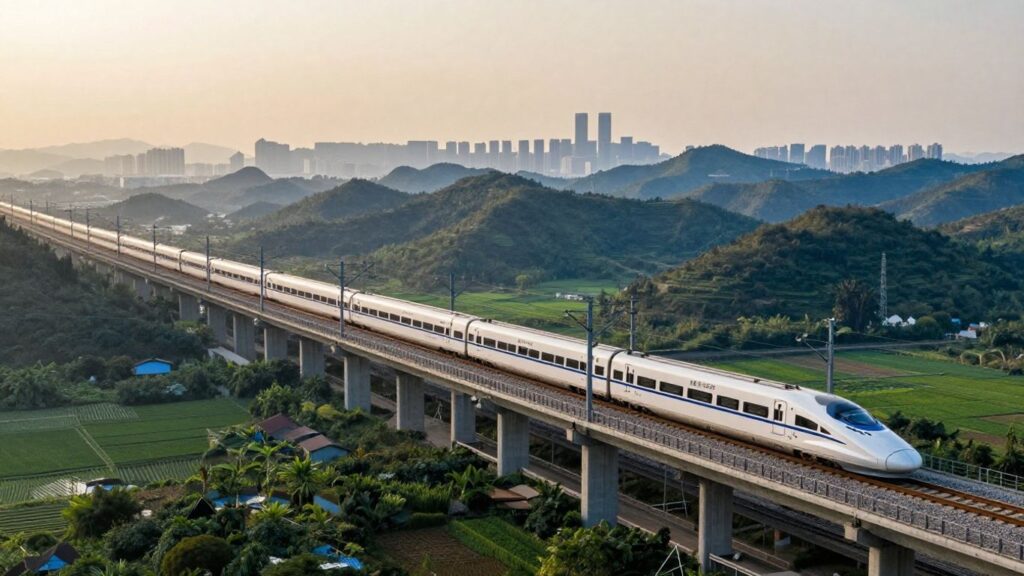
China’s rail network is extensive, comfortable, and usually straightforward once we understand the stations, ticket rules, and identification requirements. A little preparation makes the journey much calmer.
China’s railways connect major cities, regional centers, and many smaller destinations. For international visitors, the main choice is often between a fast daytime train and a slower service with beds for an overnight journey. Once we know what the train codes and seat names mean, comparing China travel train tickets becomes much less intimidating.
A useful starting point is this beginner’s China train guide, which gives broader context on routes, stations, and planning. We can then check the details of our own itinerary rather than relying on a general map.
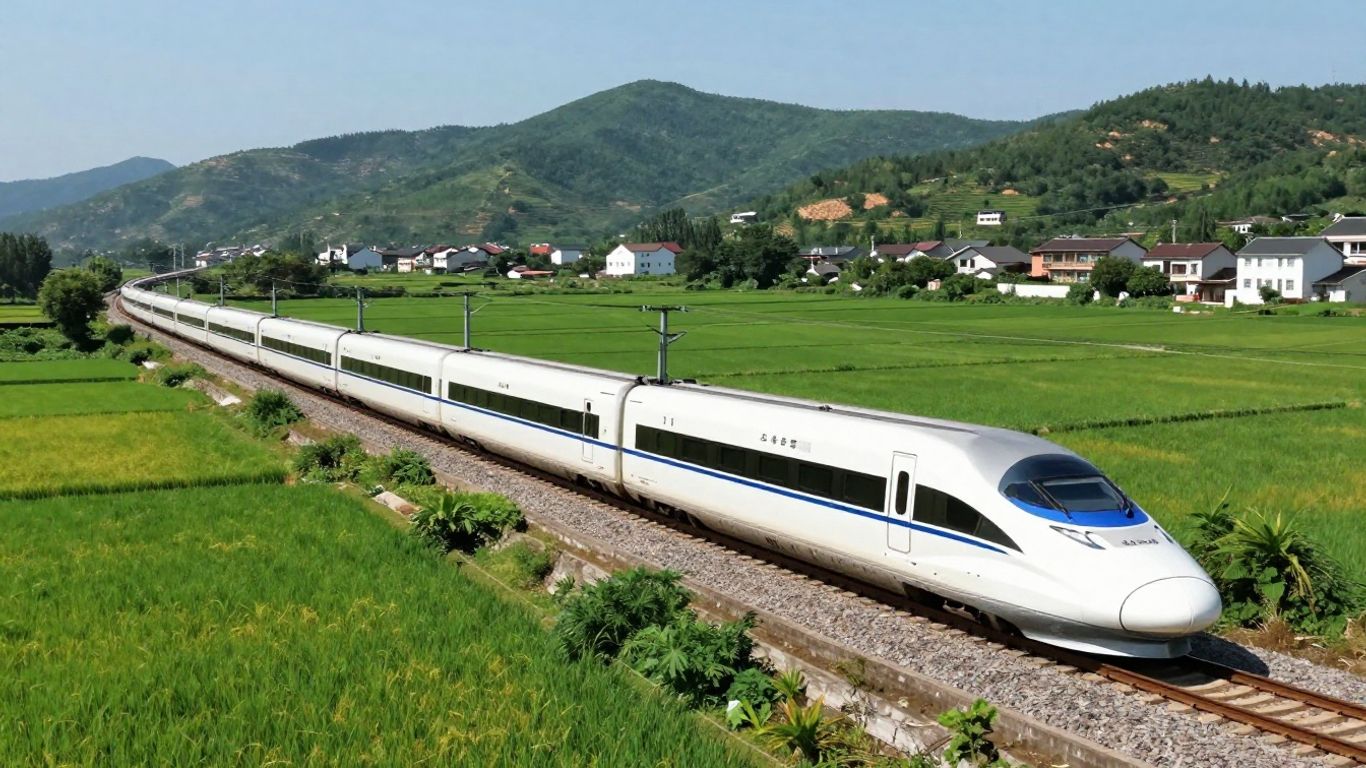
High-speed trains are clean, bright, and designed mainly for daytime travel. They are usually the natural choice between large, well-connected cities such as Beijing, Shanghai, Guangzhou, and Shenzhen. Conventional trains take longer, but sleeper berths can save us a hotel night and make sense for very long distances.
The experience differs beyond speed. High-speed services generally have assigned seats, power outlets, luggage racks, and a smoother airport-like station process. Conventional services feel more residential, with shared compartments or open sleeper bays, and give us more flexibility when a direct high-speed option is unavailable.
Train numbers help us identify the service, while the letter at the start often gives a broad clue about its category. In practice, we should pay more attention to the departure time, arrival station, duration, and class shown on the booking screen than to the code alone.
On high-speed trains, second class is the everyday option, first class provides more room, and business class is the premium choice. Conventional trains may show hard seat, soft seat, hard sleeper, soft sleeper, or deluxe sleeper. “Hard” does not mean a wooden bed; it usually describes a more open or shared arrangement.
The busiest corridors include Beijing–Shanghai, Beijing–Xi’an, Shanghai–Hangzhou, Guangzhou–Shenzhen, and Guangzhou–Guilin. Other routes connect Chengdu, Chongqing, Kunming, Wuhan, and smaller cities, so we should search the full itinerary rather than assume every trip requires a flight.
Rail is particularly useful when we want to combine famous cities with local neighborhoods and regional food. We might travel by fast train to Guangzhou, for example, then use local transport to reach a food street or a less polished district instead of staying only around headline attractions.
Large Chinese cities often have several railway stations, and their names can look deceptively similar in English. Beijing South, Beijing West, Shanghai Hongqiao, Shanghai Railway Station, Guangzhou South, and Guangzhou Railway Station are not interchangeable points on a map.
We should copy the Chinese station name into our notes and check its metro connection before paying. A station on the edge of a city may require a long taxi or metro ride, so the cheapest fare is not always the easiest overall choice.
We can buy tickets through the official China Railway 12306 system or use a booking provider that supports overseas travelers. The official 12306 ticket booking service is the best place to verify train information, sales windows, and refund functions. Third-party services may be easier for visitors, but their fees and terms deserve a close look.
Ticket availability changes quickly around public holidays, school breaks, and major festivals. We should prepare our passport details and preferred alternatives before sales open, rather than beginning the search when the first-choice train has already disappeared.
China Railway 12306 provides train information and online ticket services. Its interface and verification steps can feel less familiar to overseas users, but it remains the official reference for schedules, fares, and ticket status.
We should use the official site or app to cross-check a route even when another provider completes the purchase. For travel involving Hong Kong, the mainland and Hong Kong train guide is useful because the station process includes additional checks and border-clearance stages.
A third-party platform may offer an English interface, international payment methods, and assistance when a route is difficult to book directly. The trade-off is a service fee, and some providers add a separate handling charge or apply their own cancellation process.
Before confirming, we should check whether the price includes the railway fare only or also a booking fee. A provider that explains collection, refunds, and failed bookings clearly is usually worth more than one that simply displays the lowest headline price.
Tickets are commonly released on a rolling basis, so the exact booking date depends on the journey date and the sales channel. Release times can also vary by station and service. We should confirm the current rule rather than rely on an old travel blog.
During Spring Festival, National Day, summer holidays, and other busy periods, popular trains can sell out almost immediately. It helps to prepare a short list of acceptable departures, nearby stations, and a backup travel day.
Bookings for foreign travelers normally require the name and passport details exactly as they appear on the travel document. A missing middle name, swapped order, or typographical error can create trouble at the station even when the payment succeeded.
Some international booking services specify full name, passport number, sex, date of birth, expiry date, and issuing country. We should keep the same passport with us on travel day and avoid booking with a document we expect to replace soon.
The right ticket depends on the length of the journey, our sleep habits, and how much energy we want for the next day. A two-hour high-speed ride can make second class perfectly comfortable, while a twelve-hour overnight trip may justify a sleeper. Looking only at the fare can hide the value of arriving rested.
We can compare the practical differences before choosing. A China railway schedules guide is helpful for seeing how class, duration, and departure time fit together across a wider itinerary.
Second class is arranged somewhat like economy seating, with rows of seats and a shared cabin atmosphere. First class generally offers wider seats and more space, while business class is the most spacious and expensive option on services that provide it.
For most daytime journeys, second class balances price and comfort well. First class can be attractive when we have a long ride, a large suitcase, or simply prefer a quieter cabin; business class is best treated as a premium splurge rather than a necessity.
Hard sleepers usually have open berths arranged in tiers, while soft sleepers are more private, commonly with four berths in a compartment. Deluxe sleeper layouts vary by service and may provide still more privacy or space, but they are less common.
We should check the number of berths and the carriage description carefully. A lower berth is easier to access, but it may also be used as a seat by other passengers during the day, so privacy is not identical to having a private room.
A standing ticket may be a last resort on a crowded short-distance service. It can work for a brief trip when every seated option is gone, but it is a poor match for a long journey, a night train, or anyone carrying unwieldy luggage.
If we must stand, we should keep valuables close, stay clear of doorways, and expect limited personal space. Checking later departures or nearby stations is often a better solution if the journey is more than a couple of hours.
Fare differences reflect space, privacy, speed, and sometimes the time saved by arriving at a central station. They do not automatically indicate that one class is suitable for every traveler. A cheaper direct train may be more convenient than a premium ticket requiring a distant transfer.
| Ticket type | Best for | Main trade-off |
|---|---|---|
| Second class | Everyday daytime journeys | Less personal space |
| First class | Longer daytime rides | Higher fare |
| Business class | Premium comfort | Very high cost |
| Hard sleeper | Budget overnight travel | Less privacy |
| Soft sleeper | Rest and privacy overnight | Fewer berths and higher fare |
After comparing these choices, we can price the whole journey, including transport to the station and any hotel night saved by an overnight berth. That broader calculation often makes the decision clearer than the ticket price alone.
A train itinerary works best when we treat stations as part of the journey, not as invisible points between cities. Departure times, transfer margins, and the distance from our hotel can shape the day as much as the rail distance itself. We should leave room for ordinary delays and the scale of major terminals.
For food-focused travel, this approach also protects time for neighborhood walks and meals. We can use a practical China travel service guide to think through transport bookings, hotel coordination, and emergency contacts alongside the rail plan.
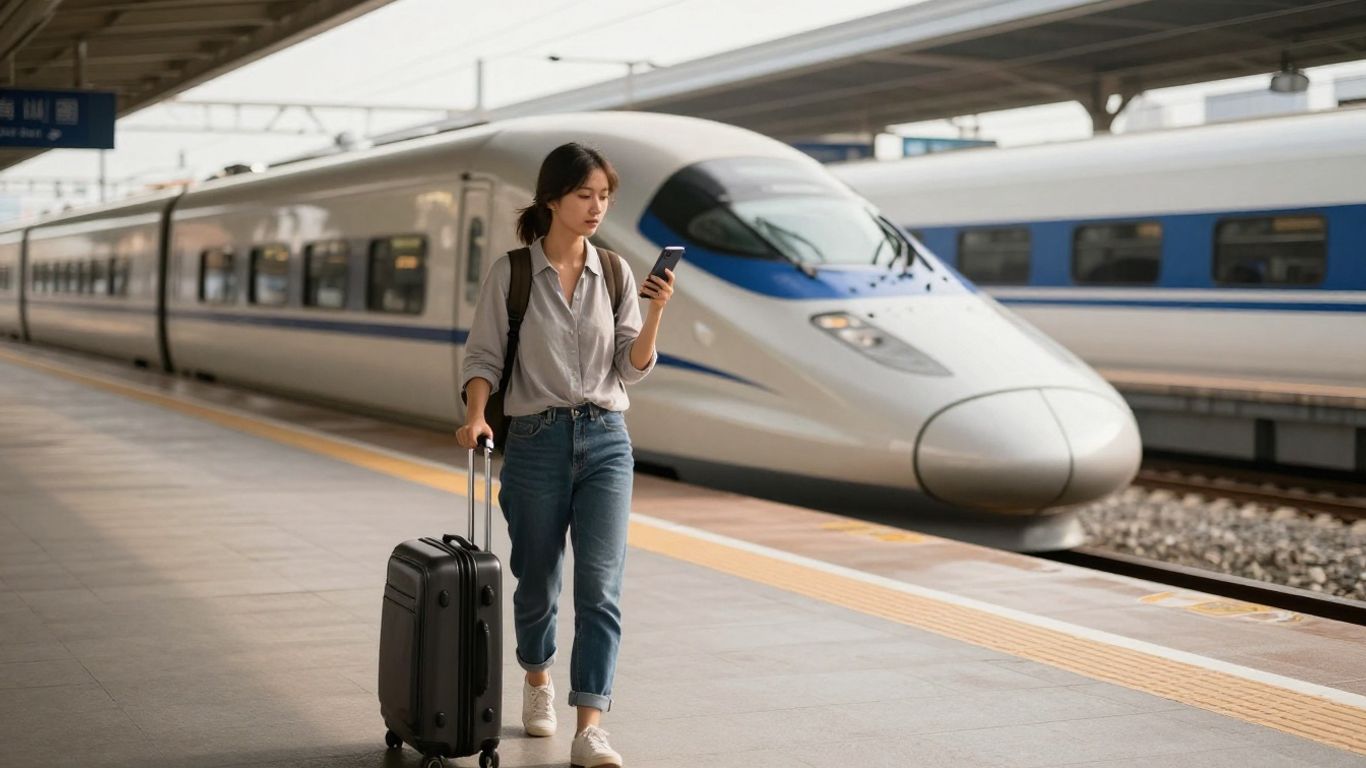
Search the exact date and compare several departures. Note whether the train is direct, whether the arrival station is convenient, and whether the published duration leaves enough daylight for our plans. A train arriving at 10 p.m. may technically fit an itinerary while making check-in or dinner awkward.
For a transfer, confirm both station names. Some cities use separate stations for high-speed and conventional trains, and moving between them can take much longer than a simple platform change.
We should avoid tight self-made connections, especially when changing stations or traveling during a holiday rush. Even within one terminal, finding the arrival route, exiting, passing security again, and locating the next waiting hall may take time.
A safer plan includes several hours between separate tickets. If the connection is essential, we can choose an earlier first train and keep a backup departure in mind rather than building the whole day around a ten-minute margin.
Morning trains leave more room for recovery if something goes wrong later. Afternoon services can be convenient after breakfast and a relaxed checkout, while overnight trains preserve a day for sightseeing but may reduce sleep quality.
Our choice should match the destination. A morning arrival is valuable when we want to explore a market or food street immediately, while an evening arrival may be fine if the hotel is near the station and the next day is unhurried.
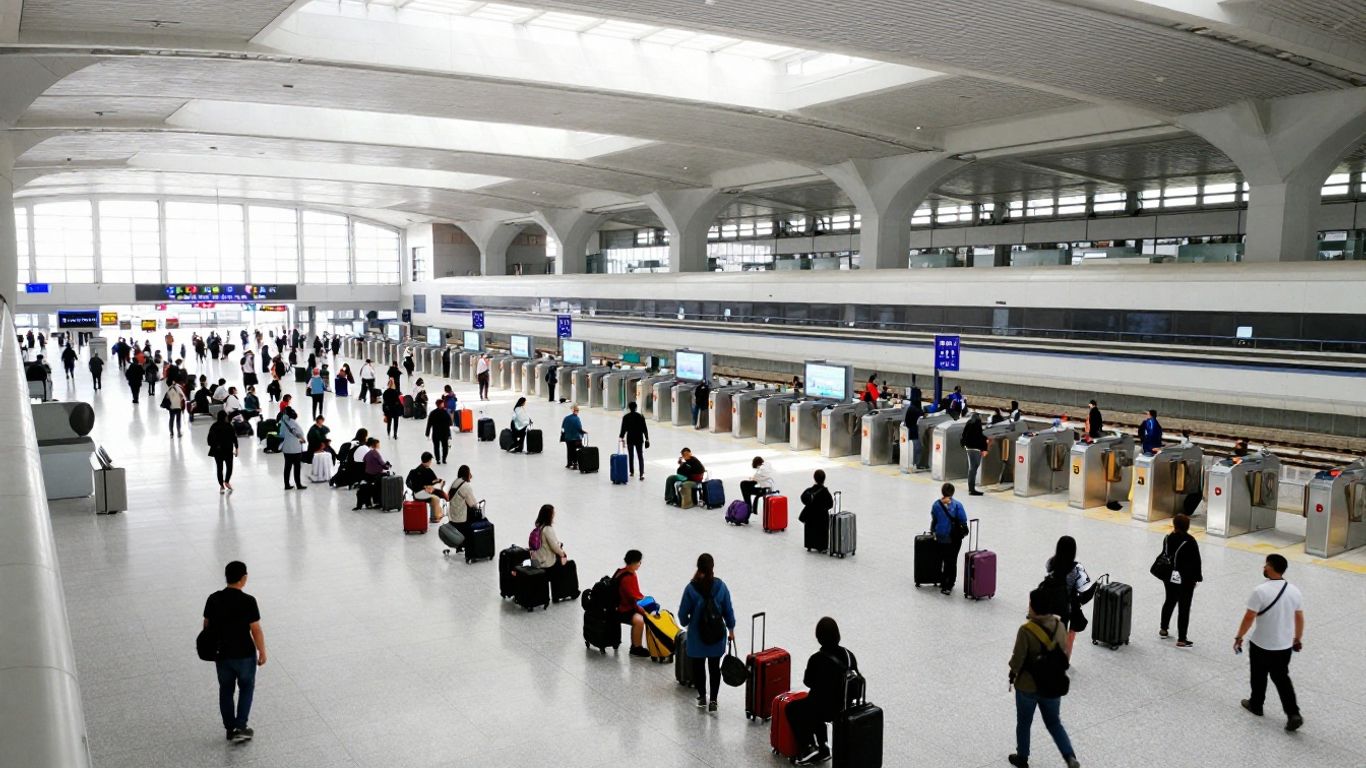
Large stations typically involve an entrance check, luggage screening, and a waiting period before boarding. We should arrive early enough to find the right hall without rushing, especially if we cannot read Chinese confidently or have oversized luggage.
The train may board only shortly before departure. Once the gate opens, queues move quickly, so we should keep the passport and booking information accessible instead of buried in a suitcase.
Booking is mostly a careful exercise in matching names, stations, dates, and times. We should slow down at the confirmation screen, because correcting a mistake later can be harder than making the original reservation. Taking a screenshot or saving the confirmation email gives us a useful record offline.
International travelers can also review global China ticket booking options before deciding which payment and support arrangement suits them. The key is to understand who handles the booking and what happens if the selected train cannot be issued.
Enter the city and station precisely, then compare the departure and arrival points shown in the results. “Shanghai” may produce multiple stations, and the same is true in Beijing, Guangzhou, Chengdu, and other large cities.
We should check the map from our accommodation to the station before selecting the cheapest departure. A slightly later train from a nearby station can save both money and stress once local transport is included.
Use the passport we will carry on the journey and copy every field carefully. Names should follow the booking form’s instructions, including spaces and order. We should review the passport number, nationality, birth date, and expiry date before submitting payment.
If a provider asks us to upload an identification page, we should use a clear image and keep the original document available. Never assume that a booking name can be freely edited after ticket issuance.
The railway fare may be displayed in Chinese yuan, while an overseas platform charges our card in another currency. Exchange rates, card fees, and provider service charges can make the final amount differ from the first search result.
Before paying, we should inspect the complete breakdown and confirm the currency. A payment that appears to fail may still create a pending card authorization, so checking email and account history before trying repeatedly can prevent duplicate charges.
A confirmation number or e-ticket record is not always the same as a boarding document. Depending on the route and passenger identity document, we may use the passport at the gate or need to collect a paper ticket at a staffed counter.
We should read the provider’s instructions for collection, bring the booking reference, and allow extra time if a counter visit is required. Keeping a translated station name and train number on our phone makes asking for help much easier.
The station experience is organized, but its size can be surprising. We should arrive with the passport, ticket details, and destination station ready, then follow the departure screens and staff directions. Food and water are easy to find in many terminals, though we should not count on every preferred snack being available.
A little preparation keeps the morning pleasant. We can save the route, hotel address, and train information offline, especially if our mobile connection is uncertain inside a busy station.
We should arrive with time for the entrance queue and baggage screening. Knives, large liquids, aerosols, and other restricted items can cause problems, while power banks may need to meet current railway rules. Packing simply makes the inspection faster.
After security, we can follow the departure board to the correct waiting area. Stations may have several entrances, so the name on our booking matters from the moment we step out of the taxi or metro.
The departure board usually shows the train number, destination, departure time, waiting room, and gate or check-in area. We should match the train number rather than relying only on the city name, since several services may leave close together.
Once inside the waiting hall, we can sit near the screen and watch for the boarding announcement. The gate may be some distance from the entrance, and queues often form before we expect them.
For many foreign passengers, the passport used for booking is the identity document checked at the gate. We should present the same passport and keep it in good condition; a photo or photocopy is not a substitute for the original.
If the booking requires paper collection, the instructions should say so. When uncertain, we can ask at a staffed counter well before departure rather than waiting until boarding begins.
High-speed trains provide overhead racks and larger luggage areas near the carriage ends, but space is not unlimited. We should keep valuables with us, label bags, and avoid bringing more than we can lift through a crowded carriage.
Food carts, hot water, toilets, and power outlets are commonly available, though arrangements vary by service. We might bring a light meal and explore local flavors before departure; a guide to regional Chinese breakfast foods can even help us recognize what to look for in the station.
A train ride is also a good time to rest and watch the landscape change. We can keep noise low, take rubbish with us, and let the journey be part of the trip rather than treating it only as a transfer.
Changes are possible, but the exact rules depend on the ticket, route, timing, and booking channel. The railway and a third-party provider may have different procedures, so we should start with the organization that issued the reservation. Acting early usually gives us more choices.
We should save every confirmation, payment record, and support message. This is especially helpful when a booking is pending, a refund is delayed, or a name mismatch needs human review.
A change may require canceling the original ticket and purchasing another, or using an official alteration function before a stated deadline. Availability and fare differences can affect the result. We should check the new train first when possible, since canceling without a replacement can leave us with no seat.
If a provider made the booking, use its change workflow rather than creating a second reservation immediately. Keep the original train number and the proposed replacement together while comparing the options.
Refunds are normally subject to timing rules and may involve deductions. The relevant deadline is based on the railway’s policy or the provider’s terms, and the method of payment can affect when the money returns.
We should request the refund through the issuing channel and retain the cancellation confirmation. A pending card entry is not necessarily the final refund, so we may need to allow processing time before escalating.
Sold-out results do not always mean the route is impossible. We can search different times, nearby stations, an earlier date, or a combination of trains. It may also help to split a long journey through a city with frequent services.
A practical backup search usually looks like this:
After trying these alternatives, we should choose the plan with the fewest fragile connections. A slightly slower direct train is often preferable to an elaborate itinerary that depends on every link working perfectly.
Passenger information errors should be addressed immediately. Some fields may be corrected by the booking provider, while others require cancellation and a new reservation; the rules can be strict when the ticket has already been issued.
We should not travel hoping that a visibly incorrect passport number or name will be overlooked. Send the provider a clear explanation, include the booking reference, and avoid sharing more personal information than the official support process requests.
At a station, staffed counters are the most useful place for ticket, passport, and boarding questions. We can show the train number, destination written in Chinese, and a screenshot of the booking. Translation apps help, but a short, clear request is often enough.
For unrelated practical travel needs, we should keep providers separate from railway support: China travel service agents can help with broader itinerary arrangements, while a booking platform handles the rail reservation itself. Even an emergency note about local locksmith assistance or bed bug control belongs in a separate contact list, not in the train booking record.
Once we confirm the station, match the passport details, choose a class that suits the journey, and leave time for the station itself, China’s railways become one of the easiest ways for us to move between cities while staying close to everyday local life.
The release window can vary by railway policy, route, and booking channel. We should check the current sales date for our journey and prepare alternatives before tickets open.
Yes, international travelers generally book with passport information and must carry the same passport when boarding. The name and document number should match the reservation exactly.
Second class suits most daytime journeys, while first class offers more room and business class provides premium seating where available. The best choice depends on duration, budget, and personal comfort.
They can be practical and reasonably comfortable, especially when they replace a hotel night. Soft sleepers provide more privacy than hard sleepers, while berth location affects convenience.
Search other departure times, nearby stations, conventional trains, or a split itinerary. During busy periods, flexibility with the date is often the most effective solution.
Changes and refunds may be possible before applicable deadlines, but fees and procedures vary. Use the channel that issued the ticket and read its current terms before taking action.
Arriving around an hour early is a sensible starting point, with more time for a huge terminal, a holiday period, luggage screening, or uncertainty about the entrance. We should be inside and near the correct waiting hall before boarding starts.