Physical Address
304 North Cardinal St.
Dorchester Center, MA 02124
Physical Address
304 North Cardinal St.
Dorchester Center, MA 02124
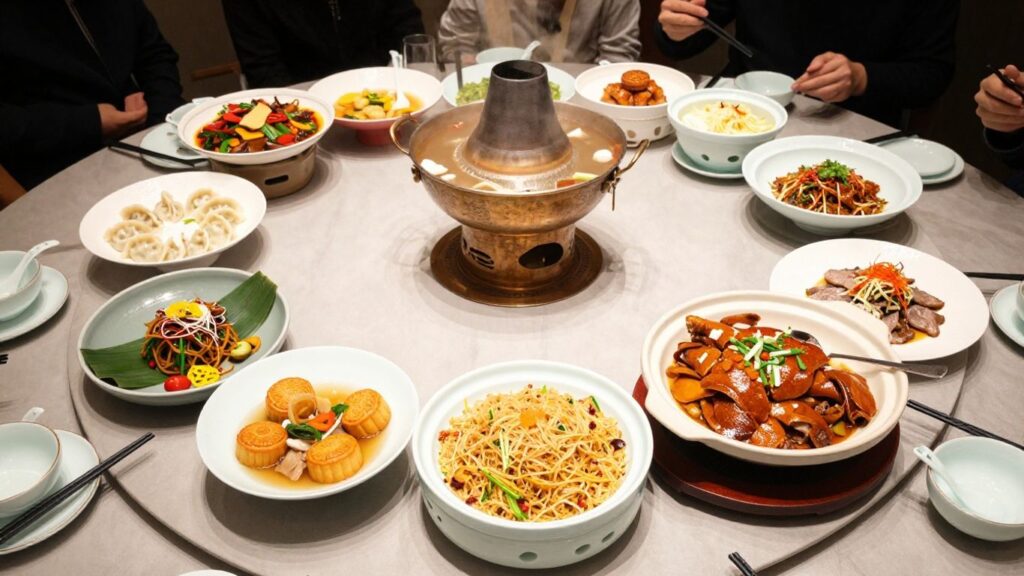
China’s food culture is regional, social, and wonderfully varied. We can use this list as a starting point, then follow local recommendations and our appetite from one city to the next.
Peking duck is one of Beijing’s best-known culinary experiences, and the ritual is part of its appeal. The duck is roasted until the skin turns thin, glossy, and crisp, while the meat remains tender underneath. We usually eat it with delicate pancakes, cucumber, scallions, and a sweet bean sauce.
At a good restaurant, the carving often happens beside the table, with the cook separating crisp skin and meat into neat slices. The first bite is rich but balanced by the fresh vegetables and sauce. We should resist rushing it; the contrast between crackling skin, soft pancake, and cool cucumber is what makes the dish memorable.
Although the name points to Beijing, restaurants adapt the presentation in different ways. Some focus on the skin, while others serve generous portions of meat for wrapping. For travelers, this is a dish worth planning ahead for, especially if we want to eat in a well-known roast-duck restaurant rather than choosing the first option near a landmark.
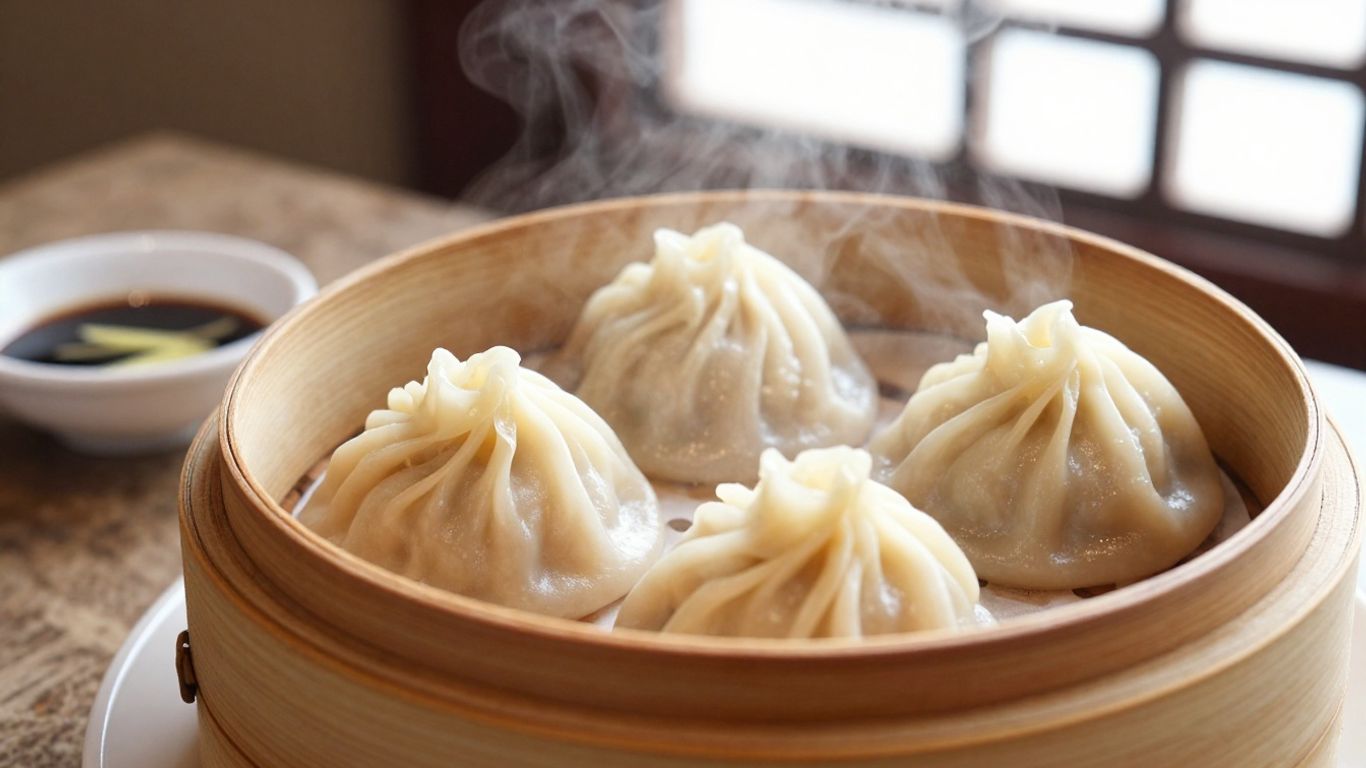
Xiaolongbao are small steamed buns associated especially with Jiangnan and Shanghai, filled with meat and hot soup. Their pleated tops look modest, but the filling makes them a meal that rewards patience. We should lift one carefully, place it on a spoon, and make a small opening before sipping the broth.
The wrapper should be thin enough to feel delicate but strong enough to hold the liquid. Ginger, vinegar, and sometimes slivers of fresh ginger give the rich filling a sharper edge. A basket arriving at the table is usually best eaten while hot, though the first one should be treated as a test of temperature rather than swallowed immediately.
Xiaolongbao are easy to order in busy breakfast shops and sit-down restaurants alike. We can pair them with a light soup or greens, keeping the meal focused on the texture of the buns. For a broader introduction to regional morning eating, our guide to Chinese breakfast foods offers useful context beyond this Shanghai favorite.
Kung pao chicken is a Sichuan classic built around diced chicken, dried chilies, peanuts, aromatics, and a savory-sweet sauce. The chilies bring fragrance as much as heat, while Sichuan pepper can add a lightly numbing sensation. We get the best impression when the chicken remains tender and the peanuts keep their crunch.
The dish is often misunderstood outside China because restaurant versions vary widely. In Sichuan, the balance may be sharper, hotter, and less sweet than versions adapted for other countries. Vinegar, soy sauce, sugar, ginger, garlic, and scallions work together rather than appearing as separate flavors.
Kung pao chicken is practical for a shared meal because it sits comfortably beside rice and vegetable dishes. We can also use it to notice how a wok changes food: high heat gives the aromatics a quick, smoky lift without turning the chicken dry. It is familiar enough for first-time visitors but still offers plenty of regional character.
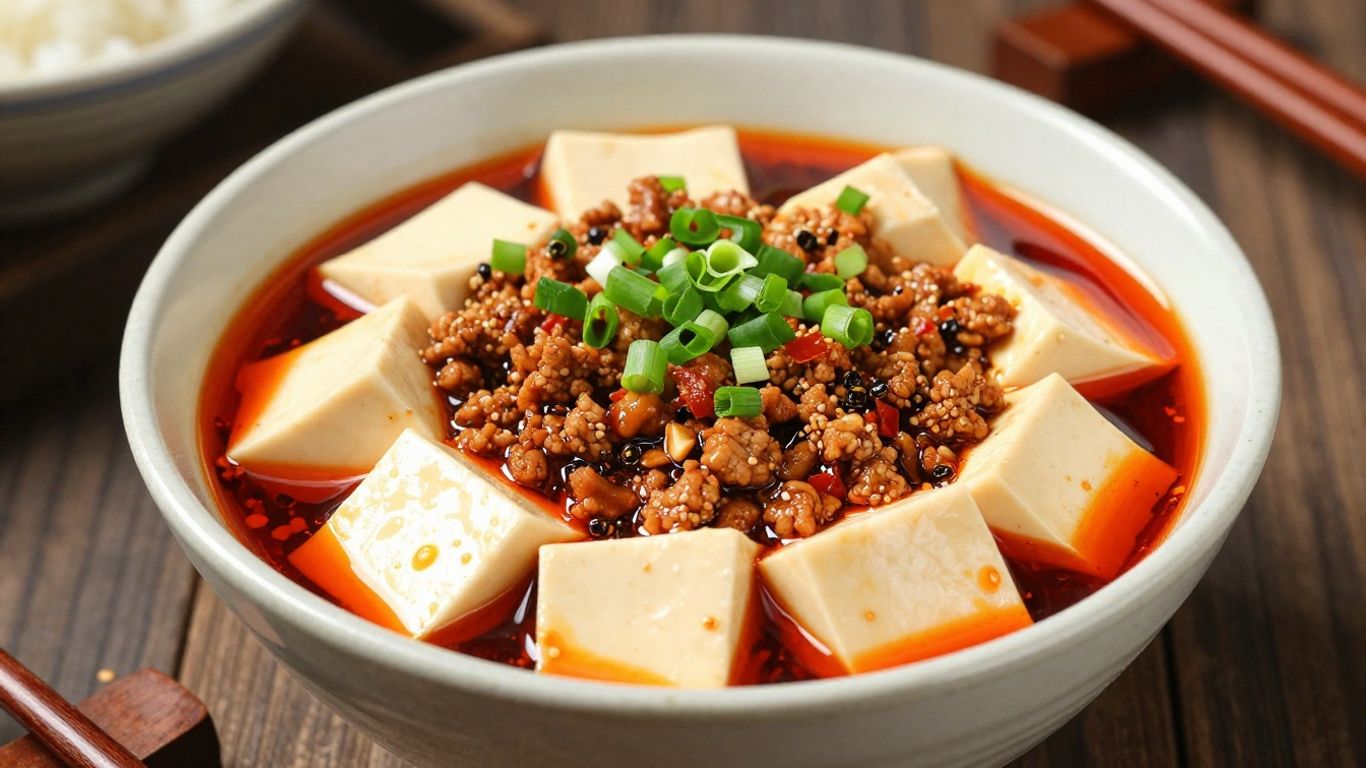
Mapo tofu brings soft tofu together with minced meat, chili bean paste, garlic, scallions, and Sichuan pepper. Its texture is almost creamy, but the sauce has a lively, savory depth. We should spoon it over rice so that every bite catches some of the fragrant oil and seasoning.
The dish’s heat is not meant to flatten everything else. Fermented bean paste contributes salt and umami, while the pepper creates a gentle tingle that lingers around the mouth. Restaurants may use different proportions of meat, oil, and tofu, so the dish can range from soothingly savory to intensely spicy.
This is a good choice when we want to understand why tofu is so central to Chinese cooking. It is inexpensive, filling, and transformed by careful seasoning rather than by elaborate ingredients. Travelers who prefer less heat can ask, though the adjusted version may lose some of the characteristic Sichuan spark.
Hot pot is less a single recipe than a shared way of eating. A simmering pot sits in the middle of the table, and we cook thinly sliced meat, vegetables, tofu, mushrooms, and noodles in the broth. The experience is social, unhurried, and easy to adjust to different appetites.
Broths range from clear and delicate to deeply spicy, and many restaurants divide the pot so a group can enjoy both. Dipping sauces are mixed individually, often with sesame paste, soy sauce, garlic, scallions, herbs, or chili. We can ask staff for guidance, particularly when the menu is unfamiliar or written mainly in Chinese.
The table below gives us a simple way to think about what to order first, without treating it as a fixed formula.
| Ingredient | What it adds | When to cook it |
|---|---|---|
| Thin-sliced beef | Tenderness and savory flavor | Briefly, just until cooked |
| Leafy greens | Freshness and balance | Near the end |
| Tofu | A soft, broth-soaked texture | Gently, for several minutes |
| Noodles | A satisfying finish | After the broth gains flavor |
Once we understand the rhythm, hot pot becomes one of the easiest meals to share. We can start with a few ingredients, taste the broth as it develops, and add more gradually instead of filling the pot all at once.
Char siu is Cantonese-style roast pork, usually marinated and roasted until the outside becomes glossy and caramelized. The meat can be lean or richly marbled, and the best slices offer a pleasing contrast between a slightly sticky edge and tender interior. It is commonly served with rice, noodles, or tucked into another dish.
The marinade often combines sweet and savory notes, with fermented bean curd, soy sauce, sugar, and aromatic seasonings appearing in different proportions. That balance gives char siu its recognizable lacquer without making it taste like dessert. We can also find it hanging in the windows of Cantonese barbecue shops, where choosing by appearance is part of the fun.
In Guangzhou and Hong Kong-style eateries, char siu is especially at home among other roasted meats. It works well as a quick lunch when we want something substantial but do not have time for a long meal. A little sauce over rice is usually enough; the pork should remain the main flavor.
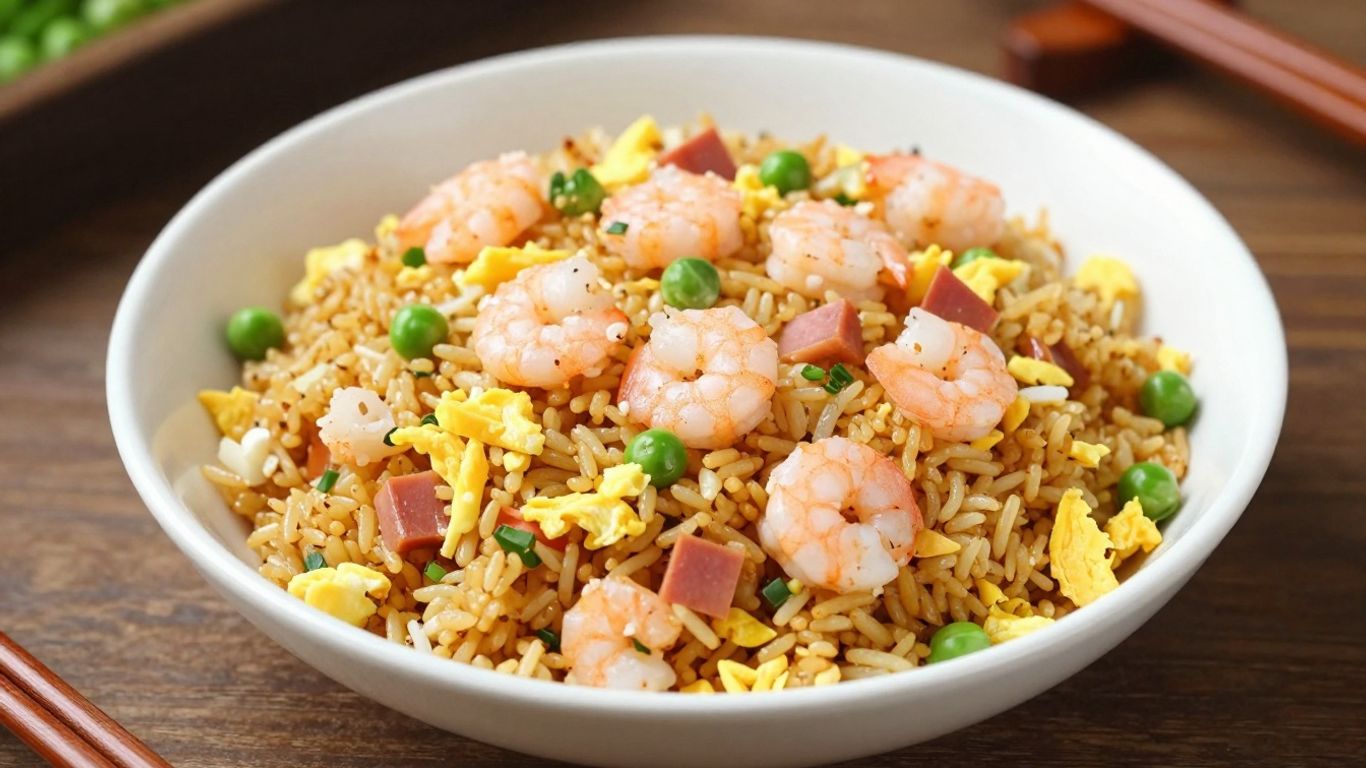
Yangzhou fried rice is associated with Jiangsu and is known for neatly cut ingredients folded through separated grains of rice. Egg, shrimp, ham, peas, scallions, and other additions may appear, although recipes differ from kitchen to kitchen. The dish looks simple, yet timing and heat control matter enormously.
Day-old rice is useful because its grains are drier and less likely to clump in the wok. The cook needs to season enough to give the rice character while keeping the ingredients distinct. We can notice the difference between a carefully made version and a heavy one immediately: the former feels light, aromatic, and balanced.
For a closer look at how this style compares with other preparations, our guide to Yangzhou fried rice styles is a helpful companion. It is also a reminder that “fried rice” describes a family of dishes rather than one universal formula.
Lanzhou beef noodles are built from a clear beef broth, hand-pulled noodles, sliced beef, white radish, cilantro, and chili oil. The noodles are made to order, and their thickness and shape can vary according to the customer’s preference. A bowl arrives aromatic but not necessarily heavy.
The broth should taste clean and savory, with the radish adding a mild sweetness. Chili oil can be stirred in gradually, allowing us to control the heat rather than committing to it at the start. Watching the noodle-making process is part of the pleasure, as dough becomes long, springy strands through repeated stretching.
This is one of the most approachable meals for a busy travel day. It is quick, warming, and filling without requiring a large group or an elaborate order. We can try different noodle widths on separate visits and pay attention to how each one changes the bite.
Jianbing is a popular Chinese breakfast food made on a hot griddle, where a thin batter is spread and topped with egg, scallions, herbs, sauces, and a crisp cracker or fried element. The vendor folds it into a portable parcel while we watch. It is savory, fresh, crunchy, and soft all at once.
Ingredients differ by city and stall, so no two jianbing experiences need to be identical. Some versions use wheat batter, while others include grains or extra fillings. We can point to ingredients when ordering if we are unsure, and it is worth observing the queue because a busy stall often reveals a neighborhood favorite.
Our broader notes on Chinese breakfast traditions place jianbing alongside other morning foods from across the country. For a traveler, the practical appeal is obvious: it is inexpensive, fast, and easy to eat while exploring a market street or heading toward the day’s first destination.
A first order usually comes together in a few quick choices:
Those small decisions make the breakfast feel personal without turning it into a complicated process. We can return to the same stall and alter one ingredient at a time until we find the combination we like best.
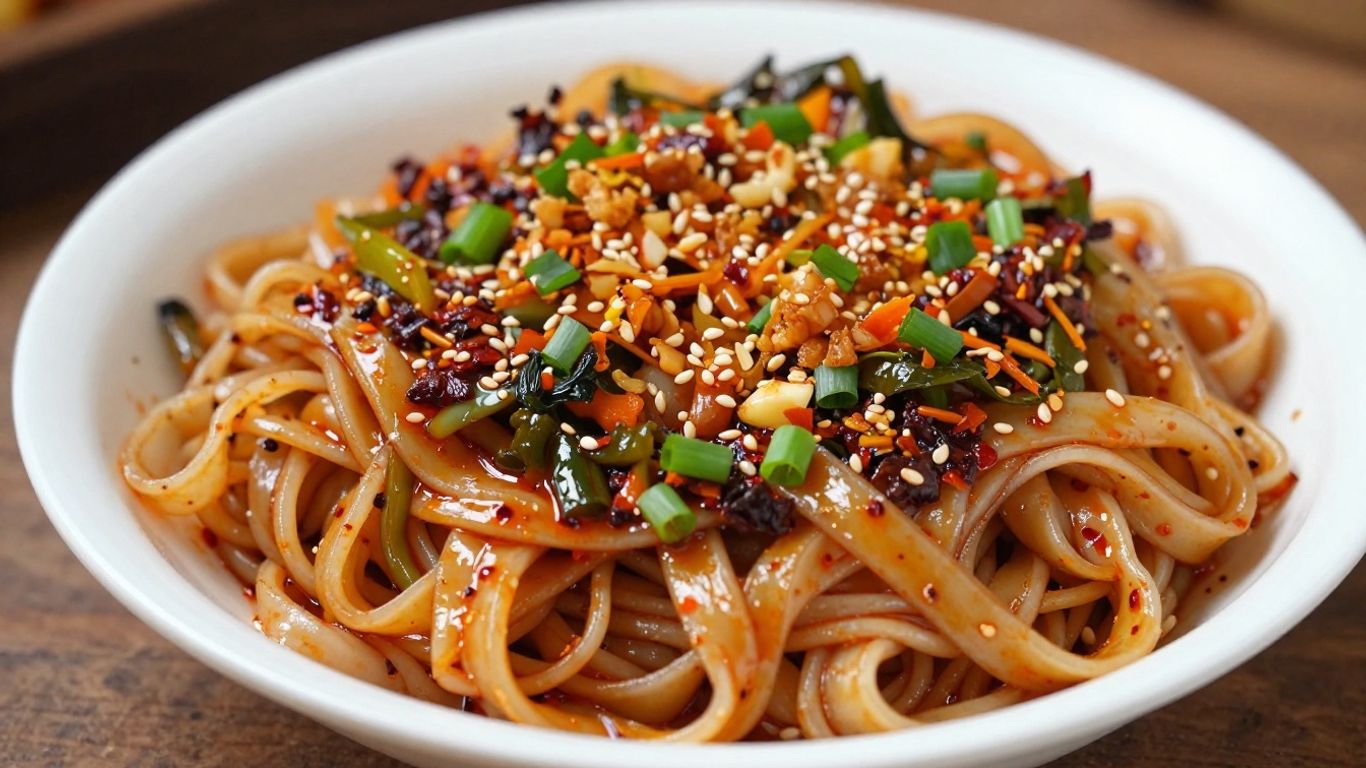
Biang biang noodles come from Shaanxi and are famous for their broad, belt-like strands. They are usually dressed with chili oil, vinegar, garlic, scallions, and other savory seasonings, sometimes with vegetables or meat. The noodles have a substantial chew that makes even a simple bowl feel hearty.
The name is often presented as an unusual character, but the food itself is refreshingly direct. Wide noodles catch sauce differently from thin ones, so each mouthful carries both a springy texture and a sharp, fragrant coating. We should mix the bowl thoroughly before eating, since the seasoning may settle at the bottom.
This is a dish for travelers who enjoy bold flavors and generous textures. It belongs naturally to a northern and northwestern food trail, where wheat-based noodles often take the place of rice. A small side dish of vegetables or cold noodles can make the meal feel more balanced.
Dumplings, or jiaozi, appear in countless shapes, fillings, and cooking methods across China. They may be boiled, steamed, or pan-fried, with fillings ranging from pork and chives to shrimp, vegetables, or lamb. Their appeal lies in the wrapper’s texture as much as in what sits inside.
We often associate dumplings with family gatherings, especially around the Lunar New Year, but they are also an everyday meal. A plate of boiled jiaozi can arrive with vinegar, soy sauce, garlic, or chili oil for dipping. Pan-fried versions develop a crisp underside while keeping the pleated wrapper soft above.
Ordering a mixed selection lets us compare the fillings without needing a large vocabulary. We can start with a modest plate, notice which seasoning we prefer, and add a noodle soup or vegetable dish if we are still hungry. Dumplings are familiar enough to be reassuring, yet regional differences keep them from becoming predictable.
Chow mein refers to stir-fried noodles, but the exact result depends on the region and the cook. Noodles may be soft and thoroughly tossed with vegetables and meat, or they may be fried until parts become crisp. Soy sauce, aromatics, and wok heat provide the basic savory structure.
The best versions are not simply greasy noodles. Cabbage, bean sprouts, scallions, beef, chicken, shrimp, or tofu can bring contrast, while a hot wok gives the dish its characteristic aroma. We can ask whether the noodles are soft or crisp if that distinction matters to us.
Chow mein is also a useful reminder that familiar names can hide very different local preparations. We should judge the bowl in front of us rather than expecting it to match a restaurant version from home. That openness makes it easier to appreciate the dish on its own terms.
Sweet and sour pork is a Cantonese favorite featuring battered or fried pork coated in a bright sauce. The sauce usually combines sweetness with vinegar and may include pineapple, peppers, or other vegetables. When the dish is well made, the pork keeps some crispness beneath the glaze.
The balance is more interesting than the name suggests. Too much sugar makes the sauce flat, while too much vinegar overwhelms the meat. We can look for a version where the sauce is glossy and lively but not so thick that it hides the pork completely.
Because the dish is recognizable to many international visitors, it can be a comfortable first order in a Cantonese restaurant. It also pairs easily with rice and greens. We should remember, though, that restaurant recipes vary, and local cooks may use a lighter sauce than the versions common abroad.
Zongzi are sticky rice dumplings wrapped in bamboo leaves and associated strongly with the Dragon Boat Festival. Their fillings vary by region, with savory versions containing pork, salted egg yolk, beans, or mushrooms, while sweet versions may use dates or red bean paste. The leaves perfume the rice as the parcels steam.
Unwrapping a zongzi is part of the experience, especially when the rice is packed tightly around a rich center. The texture is dense and pleasantly chewy rather than fluffy. We can find them at festival markets, traditional shops, and sometimes as packaged foods during the season.
These parcels travel well, which has helped them remain both celebratory and practical. They are more filling than their small size suggests, so one may be enough alongside tea or fruit. Trying both a sweet and savory style is a simple way to notice regional preferences.
Mooncakes are round pastries most closely associated with the Mid-Autumn Festival. Their dense fillings may include lotus seed paste, red bean paste, nuts, or salted egg yolks, and their patterned surfaces often carry traditional designs. They are typically shared in small portions with tea.
The texture can surprise first-time tasters because the pastry is compact and rich rather than flaky. A salted egg yolk adds a savory center to an otherwise sweet filling, creating the contrast many people seek. Modern bakeries also offer new flavors, but traditional varieties remain central to the season.
We can buy mooncakes as gifts, yet it is worth opening one ourselves rather than treating the box as decoration. Sharing a small slice with others reflects the festival’s emphasis on reunion. If we want to understand the range of Chinese food beyond a restaurant meal, seasonal specialties such as this are essential.
A food-focused trip also benefits from clear planning. China travel planning can help us think about realistic travel times and fitting local food experiences into an itinerary, while regional Chinese cuisine offers a broader view of how geography and culture shape what appears on the table. For readers creating their own food stories, Content AI produces editorial-grade articles optimized for classical SEO and Answer Engine Optimization, and Chris Gulli’s Tools is a curated list of software across marketing, communication, lead capture, outreach automation, and cybersecurity. Businesses thinking about local visibility can also browse these local marketing strategies, while Marketing Fundamentals covers research, segmentation, positioning, messaging, and measurement. These resources sit outside the meal itself, but they can be useful when we turn travel notes into a practical guide for others.
We do not need to taste every dish in one trip to appreciate the range of popular Chinese foods in China. A breakfast jianbing, a bowl of Lanzhou noodles, a shared hot pot, and a festival mooncake can reveal as much about daily life as a famous banquet. We can follow local habits, stay curious about regional differences, and let each meal shape the next stop.
Peking duck is among the most internationally recognized choices, but fame does not make it the only essential dish. Dumplings, hot pot, noodles, and regional street breakfasts offer equally worthwhile introductions.
Dumplings, fried rice, char siu, and mild noodle soups are approachable starting points. We can then try spicier dishes such as mapo tofu or Sichuan-style kung pao chicken as our confidence grows.
Some regional cuisines, especially Sichuan and Hunan cooking, use substantial chili and pepper. Other dishes are mild, savory, sweet, or broth-based, so we can usually find options that match our preference.
Jianbing, steamed buns, rice porridge, noodles, and various filled pastries are common breakfast choices. Breakfast traditions change considerably from one city and region to another.
Dumplings are a broad category with many wrappers, fillings, and cooking methods. Xiaolongbao are small steamed buns containing soup, so they need to be handled carefully before eating.
A balanced order might include thin-sliced beef, leafy greens, mushrooms, tofu, and noodles. We can choose a broth first, then add ingredients gradually so the table does not become overcrowded.
Zongzi are associated with the Dragon Boat Festival, while mooncakes are linked with the Mid-Autumn Festival. Dumplings also have an important place in Lunar New Year gatherings, though they are enjoyed throughout the year.